
3D imaging & planning
3D Imaging & Guided Implant Planning
An implant plan is only as good as the picture it was built on. Here's what a 3D scan shows, how it becomes a plan, and why we won't quote implant surgery without one.
The short answer
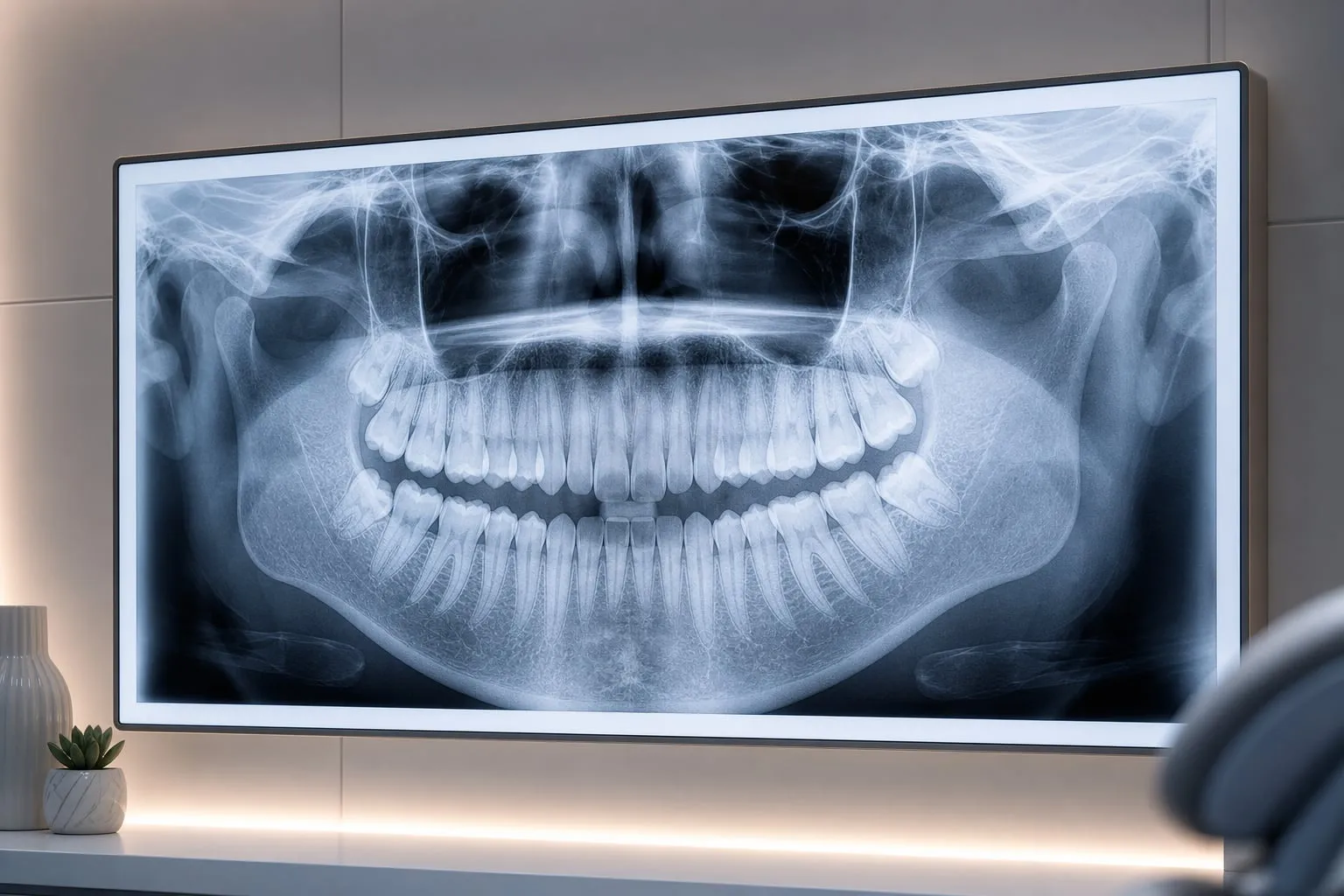
A flat X-ray shows shadows. A 3D scan shows anatomy.
A standard dental X-ray flattens a three-dimensional jaw into a single image. Everything front-to-back lands on top of everything else, so a thin ridge of bone and a thick one can look identical. That is fine for spotting decay or an abscess. It is not enough to decide where a titanium post should go.
A 3D CBCT scan records the same jaw as a volume instead of a picture. We can slice through it in any direction and measure real distances in millimeters — how much bone is there, how dense it looks, and what sits underneath or above it.
Why it matters to you: the difference between a plan and a guess is usually just whether someone measured. Imaging is part of every free consultation here, and it's a core part of our technology.
What a CBCT scan shows
Four things a 2D X-ray can't tell you
These are the measurements an implant plan actually depends on.
-
Bone height and width
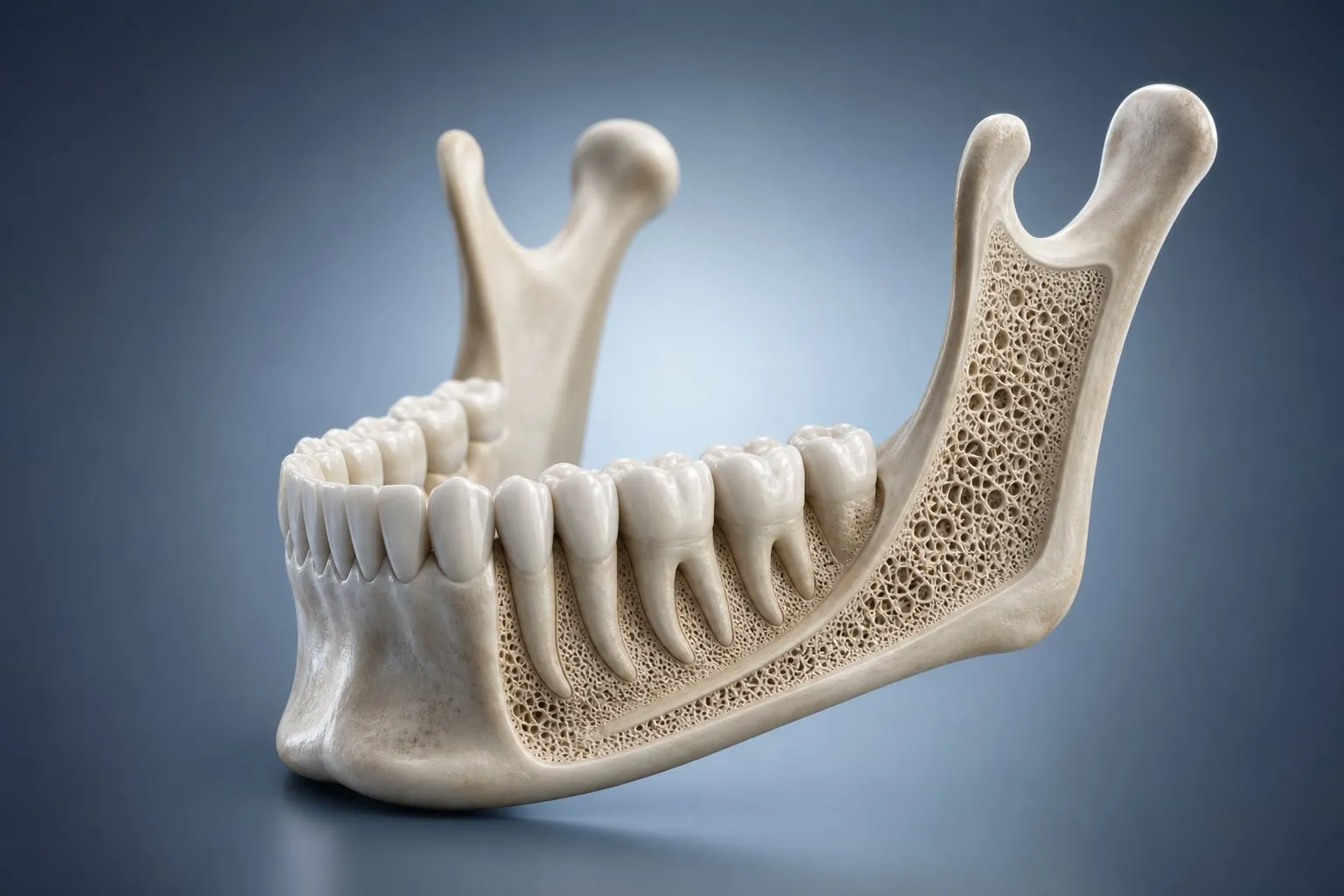
A flat X-ray shows how tall the bone is. It cannot show how thick it is front to back — and width is what decides whether an implant fits.
-
Bone quality
Dense bone and soft, spongy bone behave differently during healing. Seeing the difference ahead of time shapes how a site is prepared.
-
The nerve canal
A nerve runs through the lower jaw. On a 2D film its path is an estimate; on a 3D scan it can be traced and given a safety margin.
-
Sinus anatomy
In the upper back jaw, the sinus floor sits directly above the roots. Its true shape and position only appear in three dimensions.
Compare
2D dental X-ray vs. 3D CBCT scan
Both have a place. A 2D X-ray is still the right tool for routine checks — it is simply the wrong tool for planning implant surgery.

Digital scanning
No tray, no putty, no gagging
The old way to record your teeth was a tray of impression material held in your mouth while it set. It worked, but it was unpleasant, and if a corner pulled or a bubble formed, the whole thing had to be redone.
Digital scanning replaces that with a small handheld wand that builds a model of your teeth and gums on screen as it passes over them. If a section comes out incomplete, we rescan that section in seconds instead of starting over.
The practical value goes beyond comfort. The CBCT scan describes your bone; the digital scan describes your teeth, gums, and bite. Planning against both means an implant is positioned for the bone it sits in and for the tooth that will eventually sit on top of it — those are not always the same answer.
From images to a plan
How imaging becomes your treatment plan
Position, angle, and depth are decided at a screen — before anything happens in the chair.
- 1
Capture
A 3D CBCT scan records your jaw, and a digital scan records your teeth, gums, and bite.
- 2
Measure
Bone height, width, and quality are measured against the nerve canal and sinus floor at each planned site.
- 3
Plan
Position, angle, and depth are decided for every implant before surgery — including whether grafting is needed first.
- 4
Review together
You see the same images we do, and you get a written plan and cost before you agree to anything.
Where it matters most
Three sites where planning earns its keep
Some parts of the jaw leave very little room for error. These are the ones.
-
Upper back jaw, under the sinus
After a back molar is lost, bone height often shrinks while the sinus above expands downward. Imaging shows exactly how much bone is left and whether a sinus lift belongs in the plan.
-
Lower back jaw, above the nerve
The inferior alveolar nerve travels through the lower jaw toward the chin and lip. Locating it precisely — and planning depth around it — is one of the strongest arguments for 3D imaging.
-
Thin bone at the front
Front teeth sit in bone that is often thin on the lip side. A small error in angle can show at the gumline, so front-tooth planning is as much cosmetic as structural.

Being straight with you
A quote given without imaging is an estimate of a guess
You can be told a number after a quick look and a flat X-ray. What you cannot be told, at that point, is whether the bone is wide enough, how close the nerve runs, or whether the sinus has dropped into the space. Those answers change the plan — and the price.
That is where mid-treatment surprises come from. A plan built on measurements can still change if something unexpected turns up, but it starts from what is actually there rather than from what is likely.
- Bone measured before a number is quoted
- Grafting, if needed, priced up front rather than added later
- An honest answer if implants aren't the right call for you
- A written plan you can take away and think about
Single implants start at $1,995, covering consultation, surgery, and crown. See what drives implant cost for the full breakdown. Pricing may vary based on individual needs — contact the office for a personalized estimate.
Questions & answers
3D imaging & planning FAQ
Do I really need a 3D scan before implant surgery?
For implant planning, we think so. A standard X-ray can confirm a tooth is failing and show roughly how tall the bone is, but it cannot show bone width, trace the nerve canal, or map the sinus floor — and those three things decide whether an implant fits, how long it should be, and what angle it needs. Planning without them means finding out during surgery.
Does guided planning mean I leave with teeth the same day?
No. We do not offer same-day teeth or immediate loading. Detailed planning tells us where an implant should go and how well the bone can support it, but it does not shorten biology. Your final restoration is made and fitted after we have confirmed the implant has integrated with the bone, which usually takes several weeks to a few months.
Is a CBCT scan safe?
A CBCT scan uses X-rays, so it does involve radiation — more than a single dental X-ray, and generally well below a medical CT of the same region. It is taken when it will genuinely change the plan, not routinely. Tell us if you are pregnant or think you might be, and we will talk through timing.
What does the scan actually feel like?
The CBCT scan is quick and nothing enters your mouth beyond a small bite positioner. You sit or stand still while an arm rotates around your head, usually for well under a minute. There is no tunnel and no dye. The digital scan uses a small handheld wand passed over your teeth — no tray, no impression putty, and we can stop and restart whenever you need a break.
Will imaging tell me whether I need a bone graft?
It is the most direct way to answer that question. Measuring the bone in three dimensions shows whether there is enough volume to hold an implant, whether an angled approach could use the bone you already have, or whether grafting or a sinus lift should come first. You can read more on our bone grafting and sinus lift page.
Does imaging change what my treatment costs?
It defines it. Imaging is part of your free consultation, and the plan that comes out of it is what your written estimate is based on — including any grafting, which is quoted separately rather than added later as a surprise. Single implants start at $1,995, covering consultation, surgery, and crown. Pricing may vary based on individual needs — contact the office for a personalized estimate.
*Pricing may vary based on individual needs. The $1,995 single-implant fee covers your consultation, surgery, and crown; additional procedures such as bone grafting are quoted separately. Contact the office for a personalized estimate.
This page is general education about dental imaging and treatment planning, not a diagnosis or a promise of a particular result. Only a personalized evaluation can determine what is appropriate for you, and individual results vary.
Related treatments
Explore our implant treatments
- Dental Implants Replace one or more missing teeth with natural-looking titanium implants. Learn more
- All-On-4 Dental Implants A full arch of fixed teeth supported by just four implants. Learn more
- Full Mouth Dental Implants Rebuild an entire smile — upper, lower, or both — with implant-supported teeth. Learn more
- Single Tooth Dental Implant Replace one missing tooth without affecting the healthy teeth beside it. Learn more
- Multiple Tooth Dental Implants Replace several missing teeth with an implant-supported bridge — fewer implants needed. Learn more
- Implant-Supported Dentures Secure, snap-in dentures that stay put — no adhesives, no slipping. Learn more
Keep reading
- Our technology 3D CBCT imaging, digital scanning, and the rest of what we use.
- Am I a candidate for implants? What bone, gum health, and medical history actually decide.
- Bone grafting & sinus lift What happens when imaging shows the bone needs rebuilding first.
- Dental implant cost How a measured plan turns into a written estimate.
Book your visit
See your own scan, not a sales pitch
Your consultation is free and includes imaging. We'll show you what we see and give you a written plan — with no obligation to move forward.