
Part of implant treatment
Tooth Extraction & Socket Preservation in Mission Viejo, CA
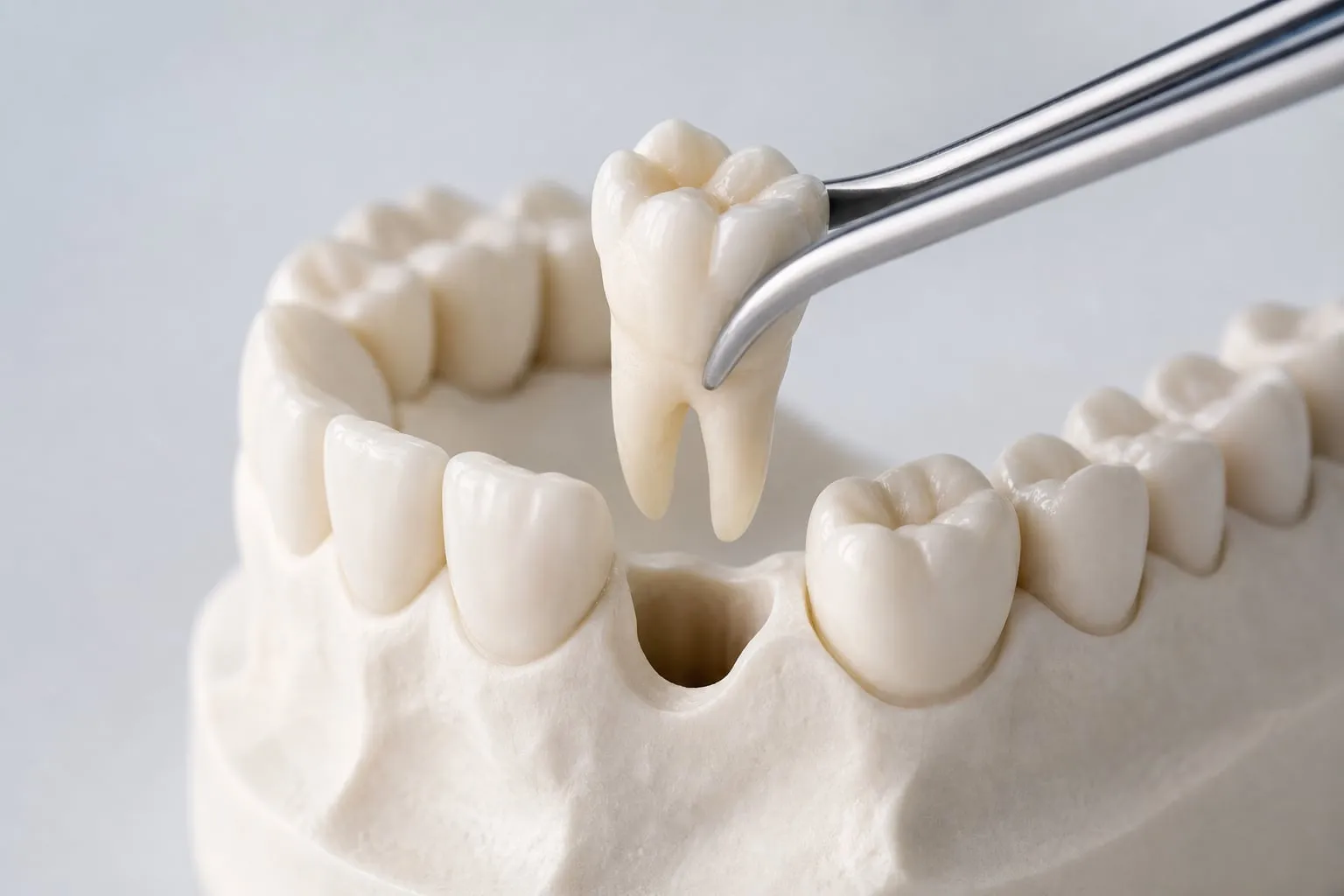
When a tooth has to come out, how it comes out shapes everything that follows. Removing it carefully — and protecting the socket afterward — keeps your implant options open.
Why we remove a tooth
Extraction is a step in the plan, not the end of it
A tooth that can be saved should usually be saved. Root canals, crowns, and periodontal treatment keep natural teeth working for years, and a natural root is still the most efficient thing to have in your jaw. We recommend removal only when the tooth has run out of predictable repairs.
When that point arrives, extraction stops being bad news and becomes the first step of a rebuild. Many of the people we remove teeth for are already planning a dental implant in that space — so we take the tooth out with the implant already in mind.
Not sure yet? If you're weighing whether a tooth is worth keeping, read what to do about a failing or broken tooth first.
Common reasons
When removal becomes the honest recommendation
These are the situations where holding onto a tooth usually costs more time, money, and bone than replacing it.
-
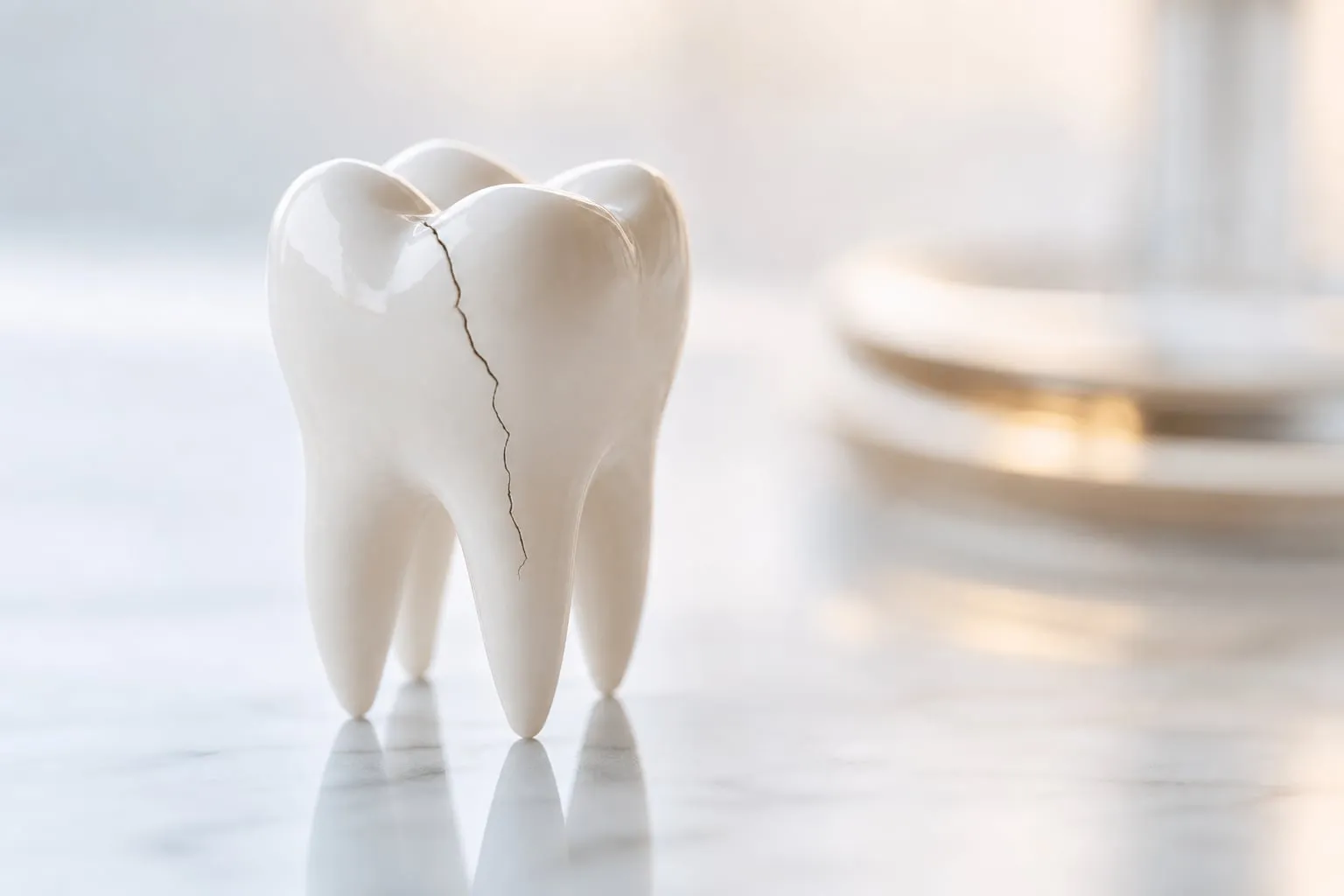
A fracture below the gum line
A crack that runs into the root usually cannot be sealed or crowned predictably, so the tooth keeps flexing and reinfecting.
-
Decay too deep to restore
When there is not enough solid tooth left above the bone, a filling or crown has nothing dependable to hold onto.
-
Advanced gum disease
If periodontal disease has already destroyed the bone that anchors a tooth, the tooth loosens no matter how healthy the crown looks.
-
A tooth that keeps failing
Repeated infections, a failed root canal, or a tooth that flares up every few months can cost more over time than replacing it.
Gentle removal
What careful extraction is trying to protect
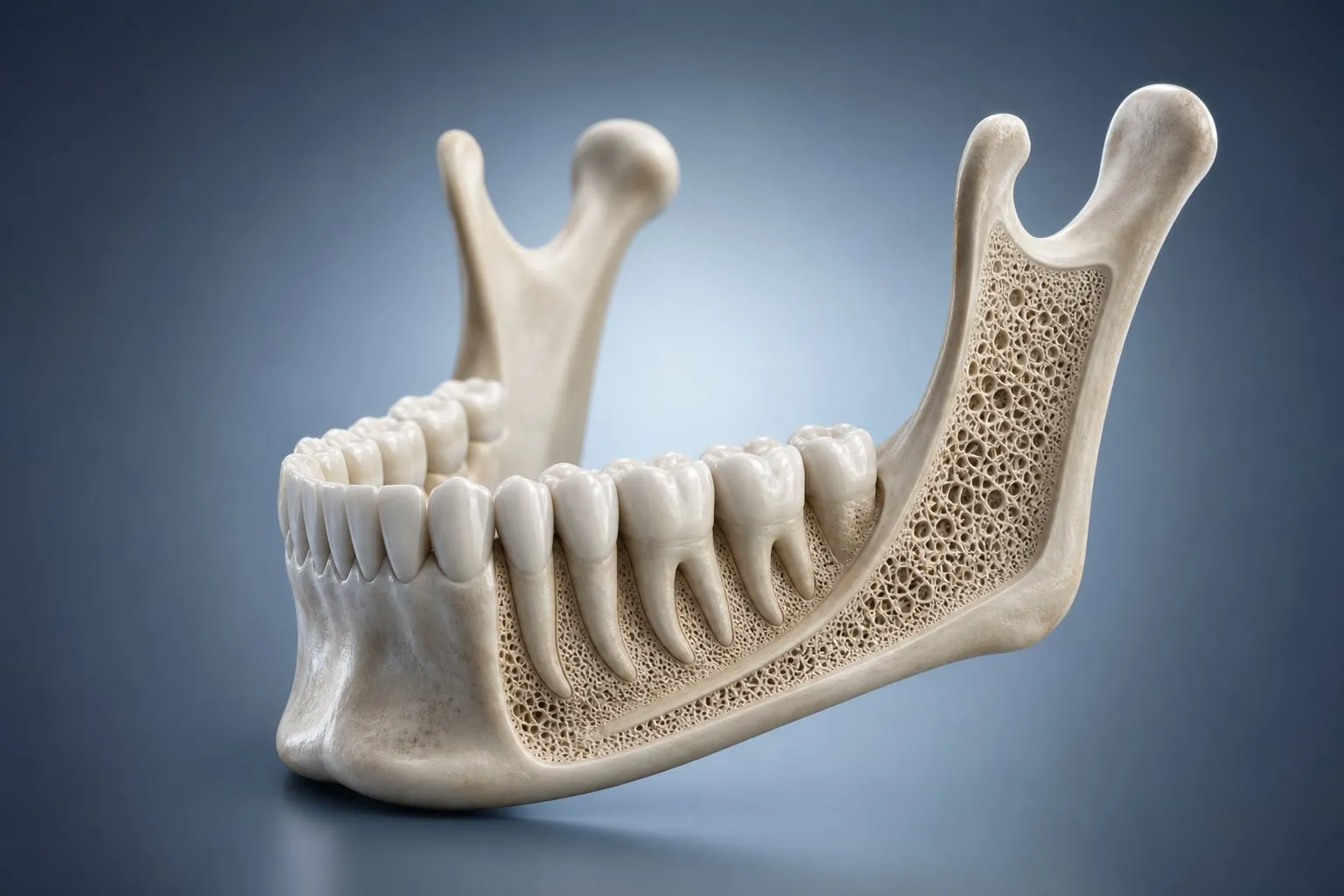
The tooth is the part you notice. The part that matters for what comes next is the thin shell of bone around it — especially the outer wall, which is often only a millimeter or two thick at the front of the jaw. Once that wall is chipped or collapsed, rebuilding it is far harder than protecting it.
So a gentle, atraumatic removal is not a marketing phrase. It is a technique: separating a multi-rooted tooth into pieces, easing each root out along its own path, and avoiding using the surrounding bone as leverage.
- Planned from a 3D CBCT scan, not guesswork
- Roots sectioned so bone isn't pried against
- Socket walls and gum contour kept intact where possible
- Infected tissue cleared before anything is grafted
What happens next
An empty socket does not stay the same shape
Bone keeps the volume it is being used for. Once the root is gone, the ridge starts remodeling — and that changes what is possible later.
If the socket is left alone
- The blood clot shrinks and the walls of the socket remodel inward
- The ridge tends to lose more width than height
- Most of the change happens in the first several months
- Neighboring teeth can drift toward the gap over time
- A narrower ridge may later need a larger, longer graft to rebuild
Published reviews commonly report that the ridge narrows measurably after extraction, with most of the change occurring early. How much any individual loses varies.
If the socket is grafted
- Graft material holds the space while your body remodels around it
- The ridge shape is more likely to stay implant-ready
- It often keeps a straightforward implant on the table later
- Gum contour around the future crown is easier to shape
- It is done at the same visit as the extraction, not as a separate surgery
Socket preservation does not stop remodeling entirely. It gives the site scaffolding so the ridge is more likely to heal in a shape an implant can use.
Socket preservation
A small graft now can prevent a bigger one later
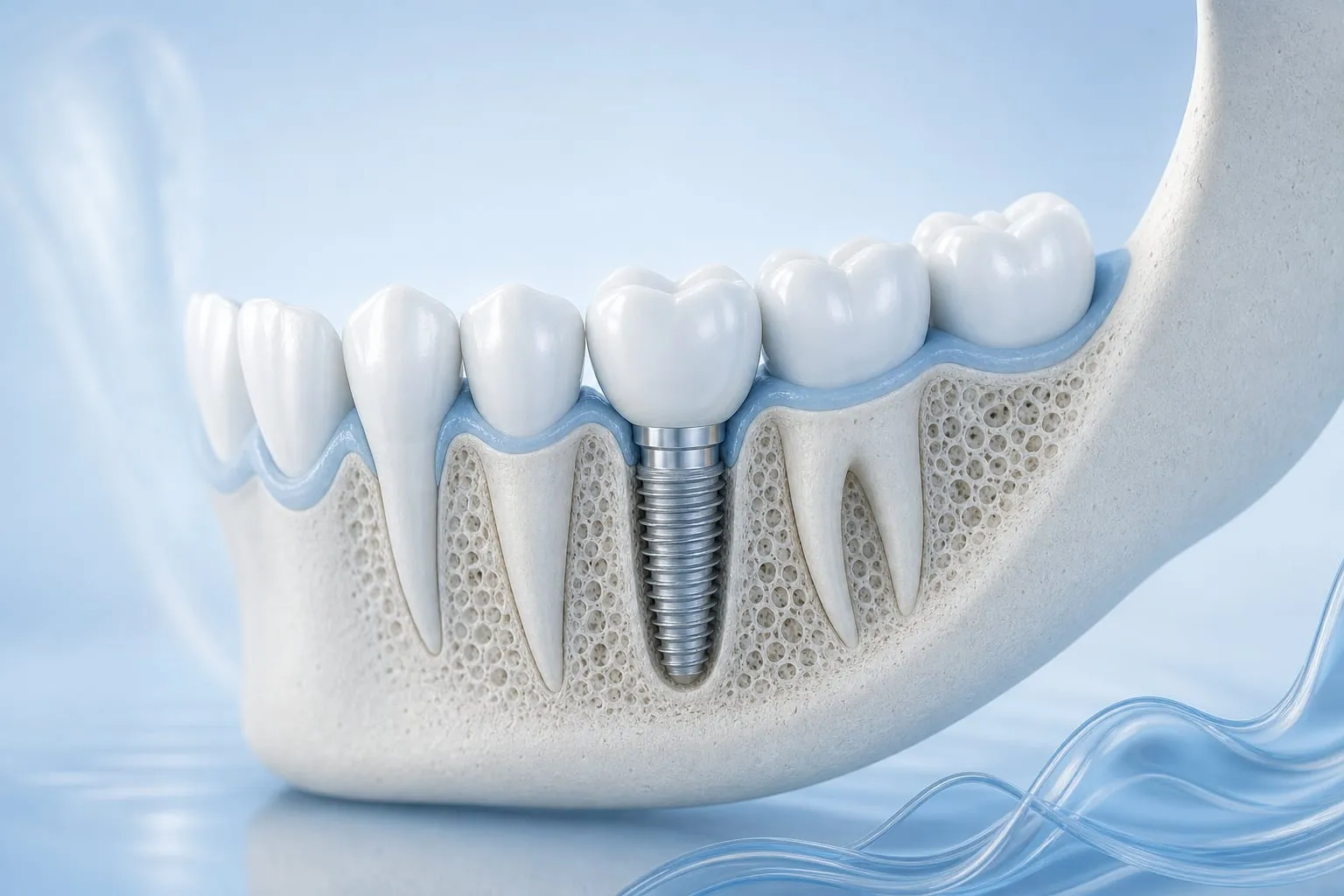
Socket preservation is straightforward: once the tooth is out and the socket is clean, graft material is packed into the space and covered so it stays put. Over the following months your body works through that scaffolding and replaces it with your own bone.
It adds a few minutes to the extraction visit, not a separate surgery. And it is usually a smaller procedure than the ridge augmentation or sinus lift that a collapsed site can need years later.
The honest trade-off: grafting costs money now to protect an option you may want later. If you are certain you will never replace that tooth, or the site is already ideal for an implant going in shortly, we will say so instead of grafting by reflex.
Timing
Implant at the extraction visit, or after healing?
Both are legitimate. The site decides — not a preference for speed.
General comparison for education only. Which approach suits your case is determined by your exam and 3D imaging, and individual results vary.
Worth being clear on one point, because the two are easy to confuse: placing an implant early is not the same as loading it early. We do not offer same-day teeth or immediate loading. An implant needs to fuse to bone before it can carry a bite, and we confirm that integration before we restore it — even when the implant went in on the day the tooth came out.
The process
What the extraction visit looks like
- 1
Exam and 3D imaging
A CBCT scan shows the roots, the socket walls, the nerve, and the sinus — so the plan is made before anything is touched.
- 2
Gentle removal
The tooth is sectioned and eased out rather than levered against the bone, with local anesthesia and sedation options where appropriate.
- 3
Socket preservation, when indicated
Graft material is placed into the socket and covered so the ridge has scaffolding to heal around.
- 4
Confirmed healing, then the implant
We re-examine and re-image before placing an implant. The implant is planned around bone we have confirmed, not bone we hope for.
Healing and cost
What to expect afterward, and what it runs
The gum surface typically closes over within the first couple of weeks. The bone underneath takes considerably longer — a grafted socket generally needs several months to mature, and upper-back sites near the sinus often need more. Soreness and swelling are normal early on and usually ease within the first several days. You will get written aftercare instructions and a follow-up appointment; our recovery guide covers the day-to-day in more detail.
- Extraction is quoted separately from the implant fee
- Socket preservation grafting is quoted separately as well
- Single implants start at $1,995 — consultation, surgery, and crown
- Most dental insurance accepted; third-party financing available
You will see every line item in writing before anything is scheduled — see dental implant cost for how the full treatment adds up.
*Pricing may vary based on individual needs. The $1,995 single-implant fee covers your consultation, surgery, and crown; additional procedures such as bone grafting are quoted separately. Contact the office for a personalized estimate.
Questions & answers
Extraction and socket preservation FAQ
Can I get an implant and a tooth on the same day as my extraction?
No. We do not offer same-day teeth, "teeth in a day," or immediate loading. Even in cases where an implant can be placed at the time of extraction, we do not attach a final tooth to it that day. Our planning is built around confirmed bone integration, which we verify before restoring the implant. We will walk you through the full timeline at your consultation so you know what each stage involves.
Do I always need socket preservation after an extraction?
No, and we will tell you when you do not. If the socket walls are intact and an implant is going in soon, or if you have decided not to replace that tooth at all, a graft may add cost without adding much benefit. Socket preservation earns its place when the ridge is at risk and you want to keep implant options open.
How long after an extraction can an implant be placed?
It depends on the site. Some sockets are ready in a matter of a few months; grafted sites and areas near the sinus commonly take longer. Rather than working from a fixed calendar, we re-examine and re-image and place the implant once the bone is confirmed ready.
Does having a tooth removed hurt?
We will not describe any surgery as painless. The extraction itself is done with local anesthesia, and sedation options are available where appropriate, so the procedure is generally comfortable. Afterward, expect soreness and swelling that most people find heaviest in the first few days and manageable with the instructions we send home with you.
Can I just leave the space empty?
Sometimes that is a reasonable choice, especially for a back molar that is not visible and not carrying much of your bite. Be aware of the trade-off: the ridge remodels, opposing and neighboring teeth can shift, and rebuilding the site later is usually more involved than preserving it now. It is worth an honest conversation rather than a default.
What do extraction and socket preservation cost?
Extraction and grafting are quoted separately from the $1,995 single-implant fee, which covers your consultation, implant surgery, and crown. The cost of an extraction varies with how complex the removal is, and grafting depends on how much material the site needs. Dental plans often cover part of an extraction; coverage for grafting varies by plan. You will get the numbers in writing at your free consultation before anything is scheduled. Pricing may vary based on individual needs — contact the office at (949) 773-4170 for a personalized estimate.
This page is general education, not a diagnosis or a treatment recommendation for your situation. Only a personalized evaluation with an exam and imaging can determine whether extraction, socket preservation, or an implant is appropriate for you, and individual results vary.
Related treatments
Explore our implant treatments
- Dental Implants Replace one or more missing teeth with natural-looking titanium implants. Learn more
- All-On-4 Dental Implants A full arch of fixed teeth supported by just four implants. Learn more
- Full Mouth Dental Implants Rebuild an entire smile — upper, lower, or both — with implant-supported teeth. Learn more
- Single Tooth Dental Implant Replace one missing tooth without affecting the healthy teeth beside it. Learn more
- Multiple Tooth Dental Implants Replace several missing teeth with an implant-supported bridge — fewer implants needed. Learn more
- Implant-Supported Dentures Secure, snap-in dentures that stay put — no adhesives, no slipping. Learn more
What usually comes next
- Do I need a bone graft before implants? When grafting is genuinely needed — and when it is not.
- Replacing a single tooth with an implant What follows a healed socket, from abutment to crown.
- Recovery and aftercare Realistic healing timelines and what to do at home.
- Compare your options for a missing tooth Implant, bridge, denture, or waiting — side by side.
Book your visit
Have a tooth you know is on its way out?
Bring it in before it breaks on its own. Your consultation is free, includes 3D imaging, and comes with an honest answer about whether the tooth can still be saved.