Short answer: All-On-4 suits people who are missing most or all of an arch and want fixed teeth rather than something removable. It’s a poor fit for people missing only a few teeth.
Here’s how to tell which group you’re in.
What All-On-4 actually is
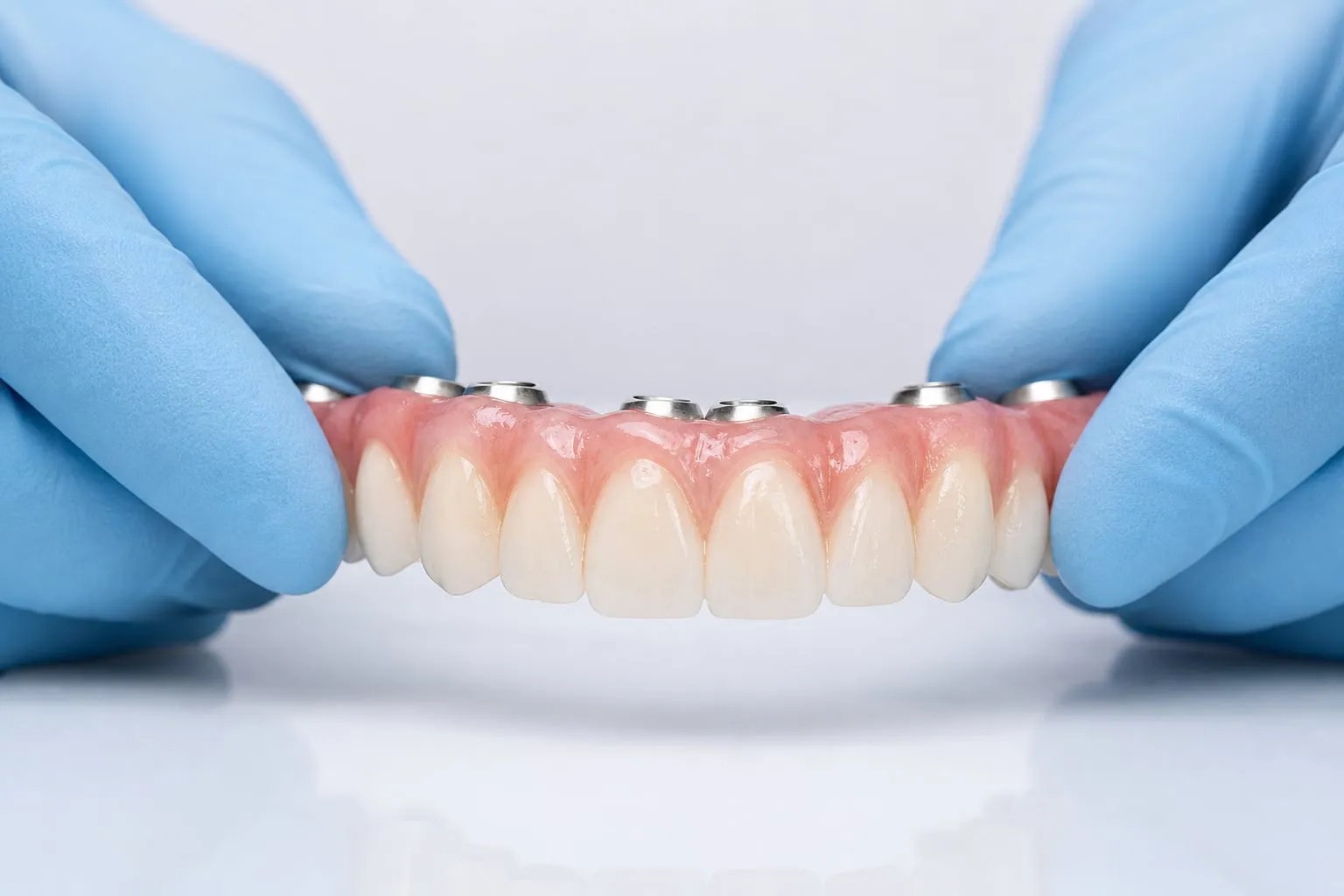
A full arch of upper or lower teeth supported by four implants. The two rear implants are placed at an angle, which lets them engage denser bone toward the front of the jaw and often reduces or avoids the need for bone grafting.
The teeth are a single connected prosthesis rather than individual crowns, and a fixed prosthesis stays in — you don’t take it out at night.
Signs it may be a good fit
- You’re missing all or most teeth in an arch, or your remaining teeth aren’t salvageable
- Your denture slips, rubs, or needs adhesive — see implant-supported dentures
- You want teeth that stay put while eating and speaking
- You’ve been told you lack bone for a full set of individual implants
- You’d rather not have a separate surgery for every missing tooth
Signs it may not be
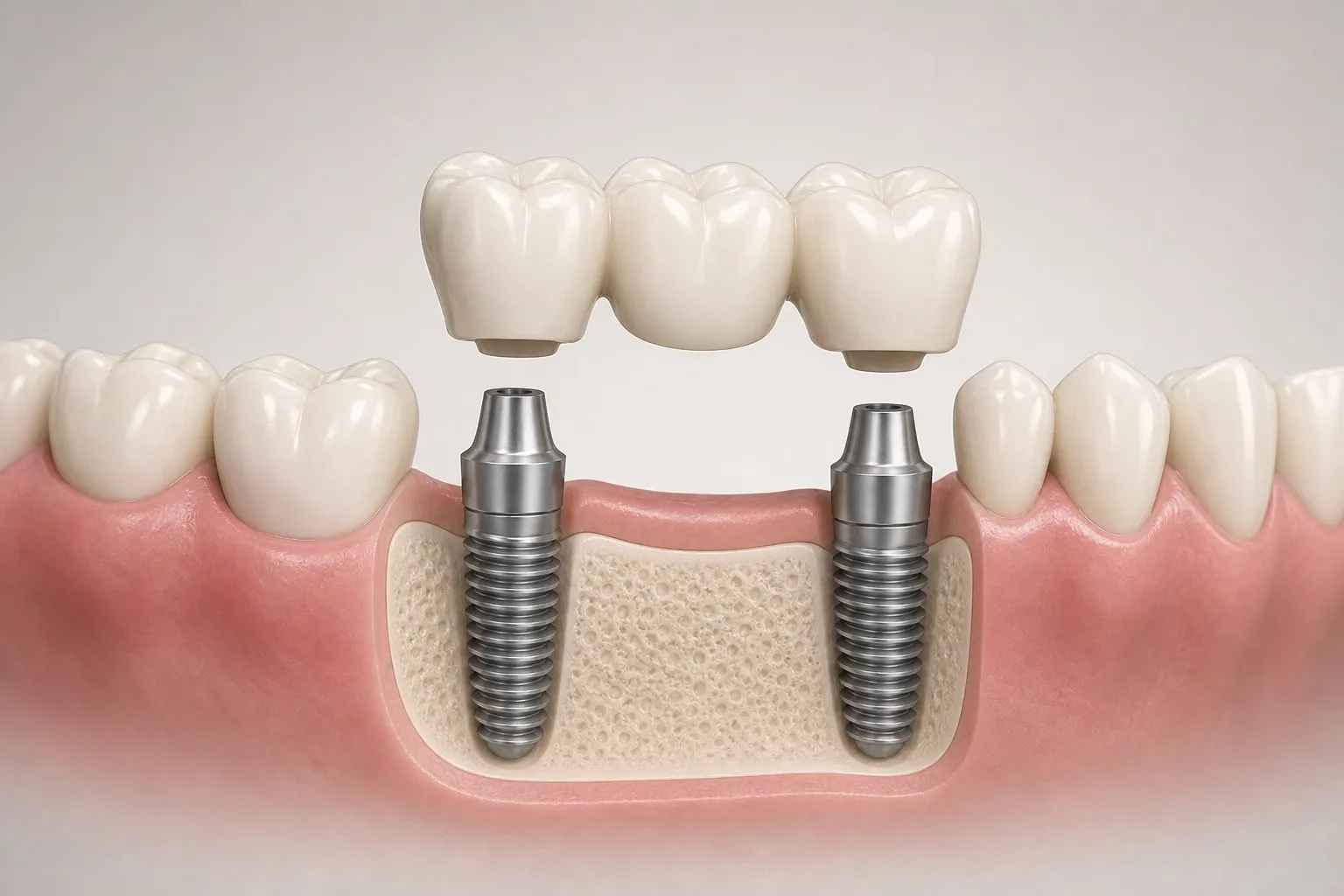
- You’re only missing a few teeth. Then a single implant or an implant bridge is the more appropriate treatment. All-On-4 would mean removing healthy teeth, which is rarely the right trade.
- You have significant untreated gum disease. That’s usually addressed first, not ignored.
- You want each tooth serviceable independently. With a connected arch, work on one section can mean addressing the whole prosthesis.
- Your bone volume in the front of the jaw is inadequate. Angled placement helps, but it doesn’t remove the need for a foundation. Imaging tells us.
How it compares to individual implants
With traditional implants, each missing tooth generally gets its own implant and crown. Replacing a full arch that way means many implants and a longer, costlier path.
All-On-4 restores the whole arch on four — typically fewer surgical sites, less grafting, and a more streamlined plan. The trade-off is that you’re committing to a connected prosthesis rather than independent teeth.
Our full comparison: All-On-4 vs. traditional implants.
How it compares to implant-supported dentures
Both use implants. The difference is what sits on top:
- Fixed All-On-4 — stays in permanently, cleaned in the mouth
- Implant-supported denture — snaps onto implants, removed for cleaning, usually lower cost
Neither is universally superior. See All-On-4 vs. implant-supported dentures.
What treatment involves
Planning. Exam, medical history, and 3D imaging to map bone volume and plan implant angles. You get a written plan and cost.
Placement. Any remaining non-restorable teeth are removed and the four implants are placed, with local anesthesia and sedation options available.
Healing. The implants integrate with bone over the following months. This stage sets the foundation and can’t be shortcut. See how long All-On-4 healing takes.
Final prosthesis. Once integration is confirmed, your definitive arch is fitted and your bite adjusted.
A note on timing: some practices advertise a full arch of teeth in a single day. We don’t offer same-day teeth, because we plan around confirmed bone integration rather than a marketing timeline. Your specific sequence is discussed during planning.
Upper vs. lower
They behave differently. Upper jaw bone is generally less dense and the sinuses sit above it; the lower jaw is denser but has the nerve to work around. This affects planning and sometimes recommendations — see upper vs. lower All-On-4.
Cost
Full-arch treatment is a significant investment, and the honest comparison isn’t against a single implant but against the long-term cost and experience of dentures that need relining and replacement over time. See implant cost and financing options.
The bottom line
All-On-4 is an excellent solution for the right patient and the wrong solution for someone missing three teeth. The deciding factors are how much of the arch is involved, your bone, your gum health, and whether fixed or removable fits your life.
Find out where you stand
We’ll image your jaw and tell you honestly whether All-On-4, individual implants, or something else makes the most sense — including when the answer is “not this.” Request your free consultation or call (949) 773-4170.
This article is general education, not a diagnosis. Individual results vary; a personalized evaluation is required to determine what may be right for you.