Short answer: two implant quotes in Orange County can differ by thousands of dollars and both be completely honest — because they’re often pricing different amounts of work. The most useful thing you can do while shopping is stop comparing headline numbers and start comparing line items.
Here’s how to do that without needing a dental degree.
What the region has to do with it
South Orange County is an expensive place to operate. Rent, staffing, lab fees, and equipment all cost more here than in much of the country, and dental fees generally track local costs. So yes, you should expect implant pricing in this area to sit above what a friend in a lower-cost state quotes you over the phone.
But that regional difference is the smaller variable. The larger one — by far — is what’s actually inside the number you were quoted.
Implant treatment is a sequence, not a single item
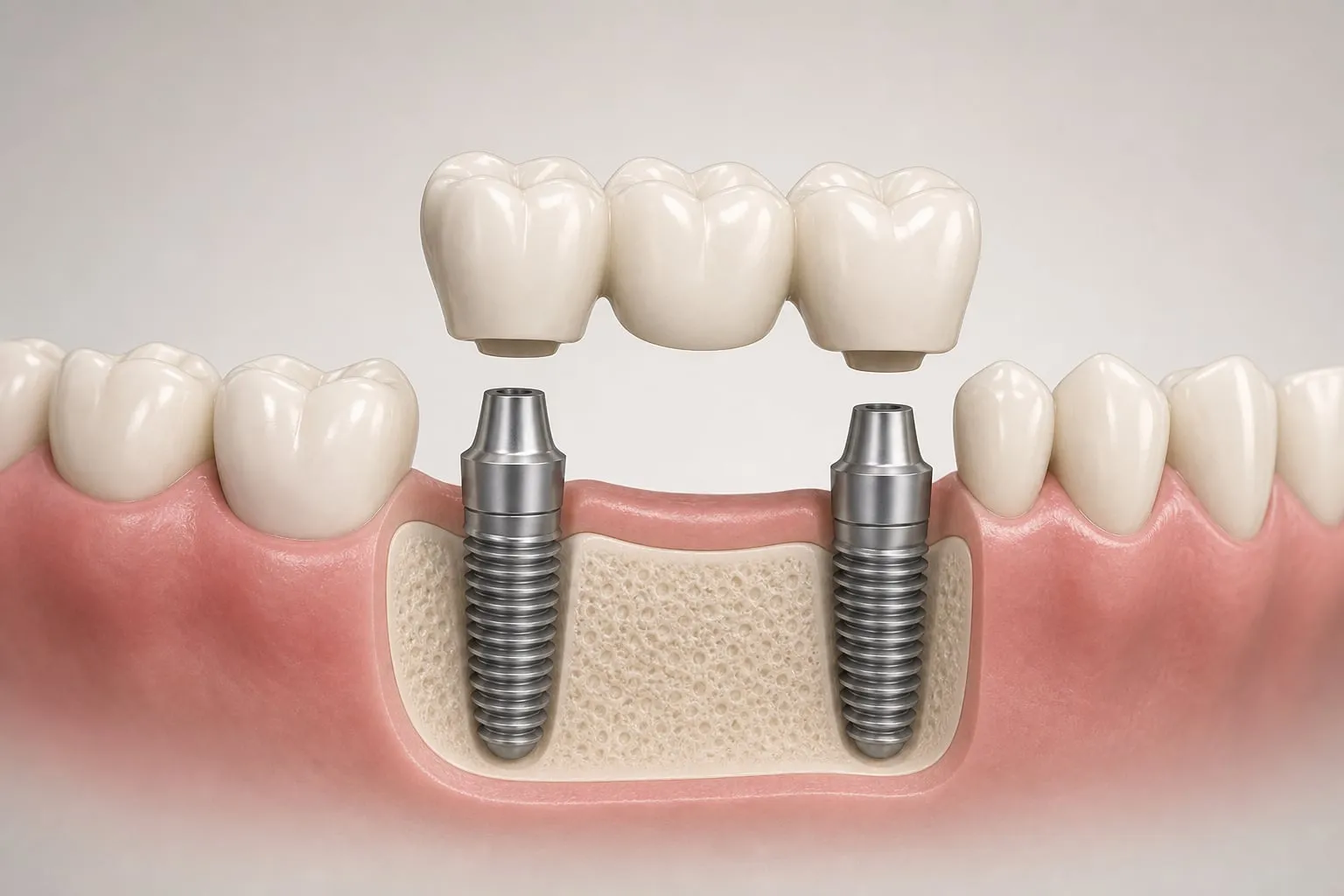
A finished implant tooth is the end of a chain of steps, and different offices bundle those steps differently:
- Consultation, exam, and 3D CBCT imaging
- Extraction of the failing tooth, if it’s still in place
- Bone grafting or a sinus lift, if the site doesn’t have enough bone to hold an implant
- The titanium implant post itself
- The abutment, the connector between post and tooth
- The final crown, shade-matched to your other teeth
- Follow-up visits through healing
An office quoting only the surgical placement and an office quoting the whole finished tooth are answering two different questions. The first number will always look better. It also isn’t what you’ll pay.
The itemization checklist
Take this to any consultation, ours included. Ask for each line in writing.
| Line item | What to ask |
|---|---|
| Consultation and imaging | Is the exam and 3D scan included, or billed separately? |
| Extraction | If a tooth is coming out, is that in the quote? |
| Bone graft or sinus lift | Is one anticipated, and what would it add? |
| Implant post | Included, and is the implant brand disclosed? |
| Abutment | Frequently the line people don’t know exists. |
| Final crown | Included, or quoted later as a separate restorative fee? |
| Follow-up visits | How many are covered before extra charges start? |
| Temporary, if any | What are you wearing while the site heals? |
A written, itemized plan is a reasonable thing to ask any office for, and it is what makes two quotes genuinely comparable.
Our pricing
A single dental implant with us starts at $1,995, and that figure covers the consultation, the implant surgery, and the crown.
Pricing may vary based on individual needs — contact the office for a personalized estimate.
Preliminary work like grafting or an extraction is quoted separately so you can see exactly what you’re paying for and why. We break the fee down further in what’s included in the $1,995 implant, and there’s more regional context on our implant cost page.
Full-arch cases such as All-On-4 are quoted individually, because the number of implants, the type of prosthesis, and the condition of your bone all move the total.
Insurance: the annual maximum is your real ceiling
Most dental plans cap what they will pay in a benefit year — commonly somewhere in the $1,000 to $2,000 range, though plans vary widely and some run higher. That cap, not the coverage percentage, is usually what limits how much help you get on an implant case.
A few things worth knowing:
- Some plans exclude the implant post outright but still contribute toward the extraction, the graft, or the crown. It’s worth asking about each code, not just “implants.”
- Your office can submit a pre-treatment estimate (sometimes called a predetermination) so the insurer states its position in writing before you commit. It isn’t a guarantee of payment, but it removes most of the guesswork.
- Plan years don’t all start January 1. Check yours.
We accept most dental insurance and will help you read your plan. More detail lives on our insurance and financing page.
Financing, HSA, and FSA
Third-party financing is available and lets you spread the cost over monthly payments rather than paying at once. Terms depend on the lender and your application, so we’ll walk you through what you actually qualify for instead of advertising a number that may not apply to you. Our post on implant financing covers the questions worth asking.
Health savings and flexible spending accounts are often the overlooked lever. Dental implants are generally an eligible expense when they treat tooth loss or a dental condition rather than being purely cosmetic, and associated grafting or extraction work tied to the case is usually eligible as well. HSA balances roll over indefinitely; FSA funds typically don’t, so timing matters more there. Confirm the details with your plan administrator, since plans interpret the rules differently.
When something cheaper is the better answer
Implants aren’t automatically right for everyone. A bridge, a partial denture, or simply waiting until finances and health line up can be the sounder choice depending on your situation — and if that’s true for you, we’d rather say so at the consultation than sell you something. Our overview of options for missing teeth lays out the honest trade-offs side by side.
Get a real number for your mouth
Nothing in this article replaces an exam. Bone volume, gum health, and which teeth are involved change the plan and the price. The consultation is free, and you’ll leave with a written estimate.
Request your free consultation or call (949) 773-4170.
This article is general education, not a diagnosis or financial advice. Individual results and costs vary; only a personalized evaluation can determine what treatment may be appropriate for you.