Short answer: implants win on stability, chewing, and bone preservation. Dentures win on up-front cost and speed. Which of those matters more is genuinely personal.
Here’s the honest comparison.
The fundamental difference
Dentures replace the visible teeth. They rest on the gums, and partials clasp onto remaining teeth.
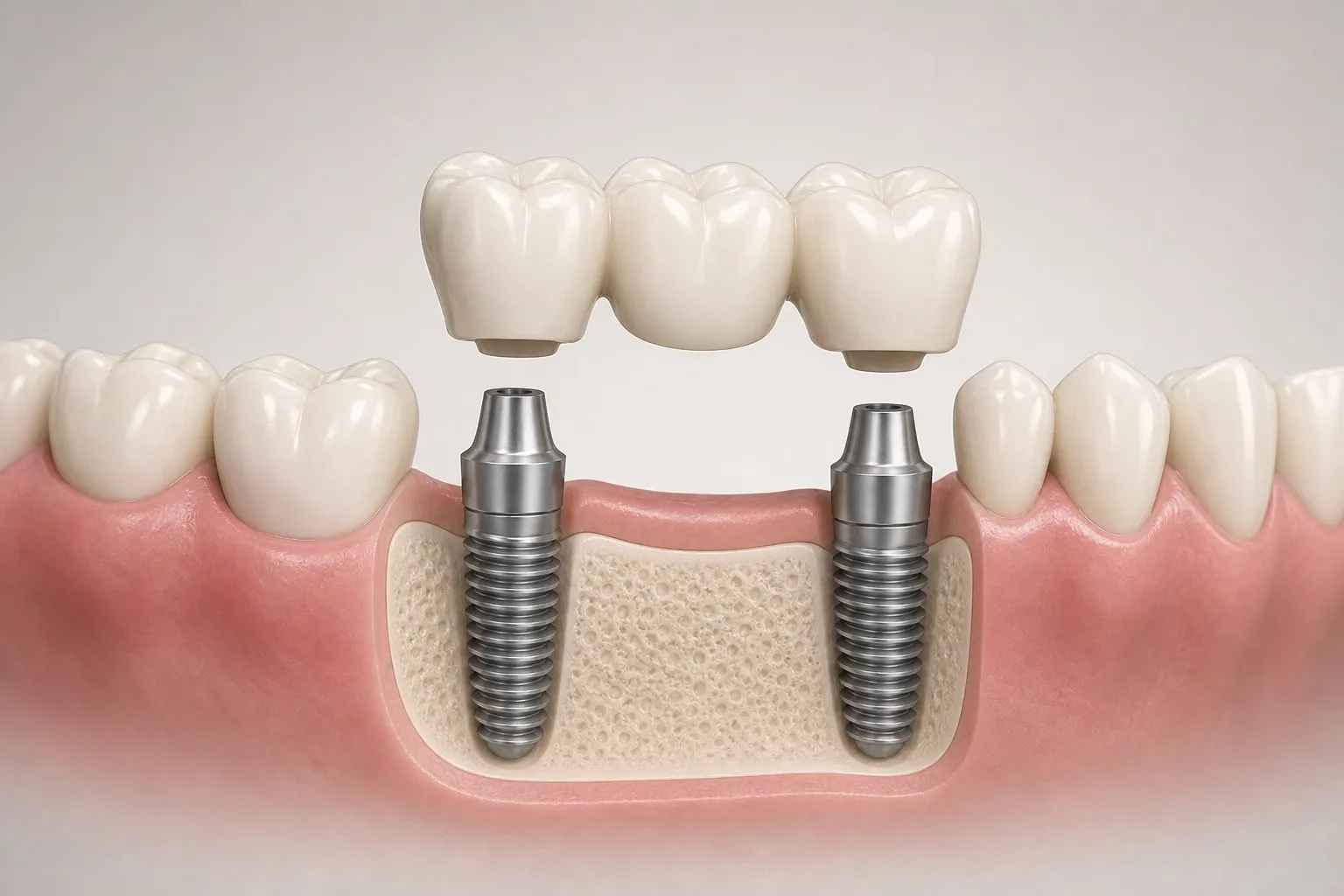
Dental implants replace the tooth root — a titanium post fused into the jawbone — and then support a crown, bridge, or full arch on top.
That single distinction drives almost every difference below.
Side by side
| Dentures | Dental implants | |
|---|---|---|
| Stability | Rest on gums; may move or need adhesive | Anchored in bone; don’t shift |
| Chewing | Reduced bite force; some foods difficult | Closer to natural function |
| Bone health | Don’t stimulate bone; ridge resorbs over time | Stimulate bone, helping preserve it |
| Maintenance | Removed for cleaning; periodic relining | Brushed and cleaned like natural teeth |
| Up-front cost | Lower | Higher |
| Timeline | Weeks | Months, due to bone integration |
| Longevity | Replaced/relined periodically | Designed for the long term |
Where implants genuinely win
Stability. Anchored in bone, implants don’t slip while you eat or speak. No adhesive, no bracing yourself before biting into something.
Bone preservation. This is the factor people most often overlook. When teeth are lost, the jawbone that held the roots gradually shrinks. Implants stimulate bone the way roots do. Dentures don’t — which is why they loosen over the years and why long-term denture wearers can see changes in facial shape. See dental implants for denture wearers.
Eating. Implants restore a bite closer to natural function, so foods that give denture wearers trouble generally stop being a negotiation.
Not thinking about them. A fixed restoration is cleaned in your mouth. Nothing comes out, nothing goes in a cup.
Where dentures genuinely win
Let’s be fair about this — dentures are the better answer in real situations:
- Up-front cost is significantly lower, which matters when budget is the binding constraint
- The timeline is much shorter — weeks rather than months of bone integration
- No surgery, which matters if health conditions make a surgical procedure inadvisable
- Severe bone loss may make implants impractical without extensive grafting some patients would rather not undertake
Anyone who tells you dentures are never the right choice is selling something.
The option in the middle
You don’t have to choose between “removable and loose” and “fixed and expensive.”
Implant-supported dentures clip onto a small number of implants. The denture still comes out for cleaning, but it stops moving while you eat — and the implants help preserve bone. Cost sits between the two extremes.
All-On-4 restores a full arch on four implants as a fixed prosthesis you never remove.
For many people weighing implants against dentures, one of these two is actually the right answer. See All-On-4 vs. implant-supported dentures.
Thinking about cost honestly
Comparing the up-front numbers alone is misleading in both directions.
Dentures are cheaper today, but they need relining as the ridge changes and replacement over the years. Implants cost more today and are designed to last, but they’re still a larger sum to find now — and “long-term value” doesn’t pay this month’s bill.
The useful comparison is total cost over the timeframe you actually care about, alongside how much daily function matters to you. See implant cost and financing options.
Already wearing dentures?
Switching is common. Years of denture wear often means some bone loss, but bone grafting and angled placement frequently make treatment possible anyway. Age itself is rarely the barrier — see am I too old for implants and dental implants for denture wearers.
How to decide
Ask yourself:
- How much does stability while eating matter to me? If a lot, that points to implants.
- What’s my real budget, including financing?
- How long do I want this solution to last?
- Am I willing to invest several months in treatment?
- Do I have the bone? Only imaging answers this one.
Get an honest recommendation
We’ll image your jaw and lay out every option that fits your situation — including the ones that cost less. The consultation is free.
Request your free consultation or call (949) 773-4170.
This article is general education, not a diagnosis. Individual results vary; a personalized evaluation is required to determine what may be right for you.