
Short answer: most dental implant surgery is done with local anesthetic that completely numbs the area, and sedation options are available where they are appropriate for the patient and the procedure. What suits you is decided during planning, not guessed at from a website.
We want to say something first that often goes unsaid: dental anxiety is a real and legitimate reason people delay care. Not a character flaw, not something to apologize for. A meaningful share of the people who eventually get implants waited years — sometimes decades — because of a bad experience at a dental office, often when they were young. If that is you, you are in extremely ordinary company, and telling us is genuinely useful information for planning.
The thing most people get wrong
The question people usually ask is “will they put me to sleep?” — and the framing hides a false choice between fully awake and aware of everything and unconscious in a hospital.
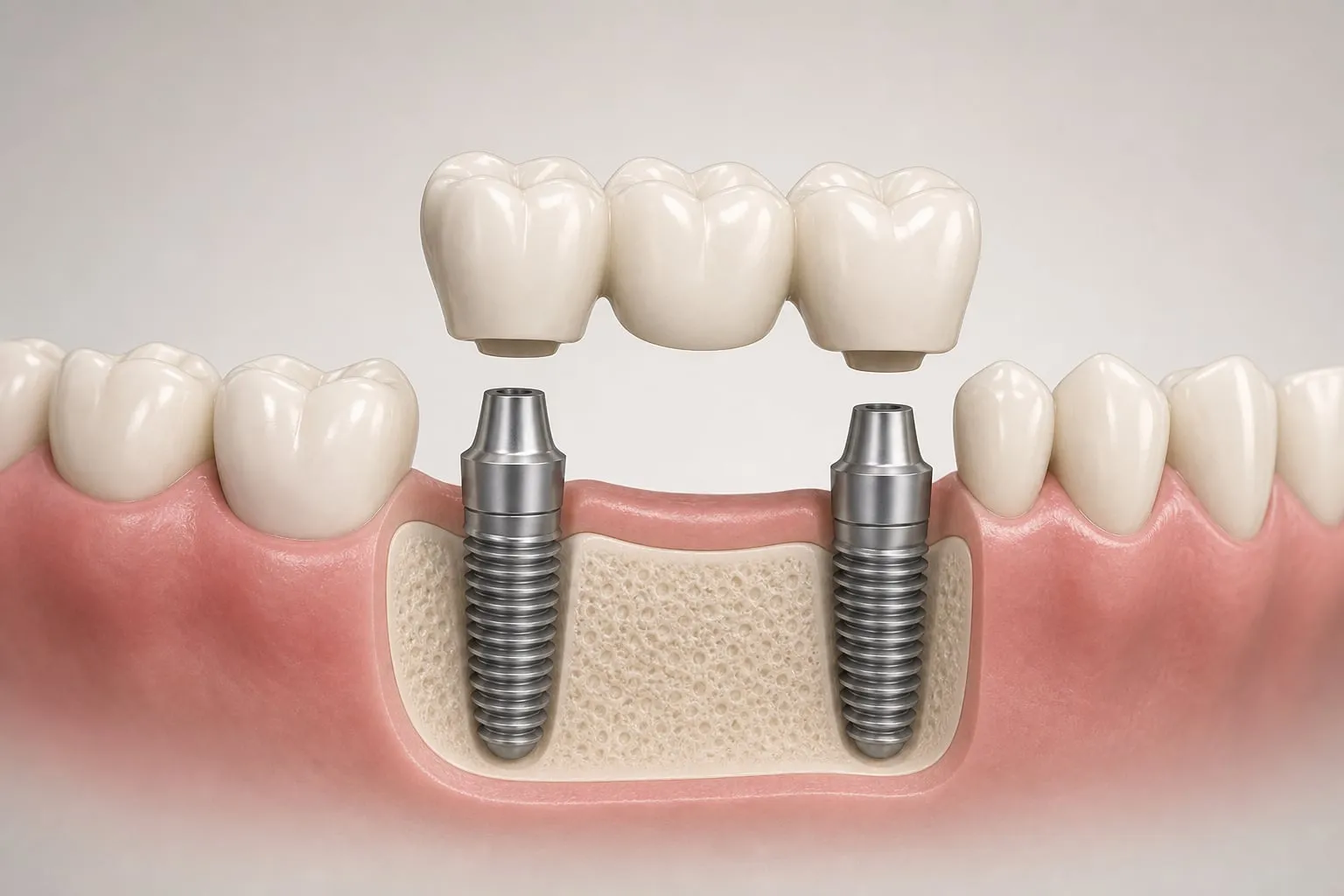
Neither describes routine implant surgery. Local anesthetic does the actual pain control; the site is numb regardless of what else is used. Sedation sits on top of that and addresses something different — awareness, anxiety, and how long the appointment feels. General anesthesia is uncommon for routine implant placement and is generally reserved for complex or hospital-based cases.
The general levels, in plain terms
These are the standard categories in dentistry. Which of them any given office can provide depends on that office’s training and state permits, so this is a map of the landscape rather than a menu.
| Approach | What it does | Typically considered for |
|---|---|---|
| Local anesthetic only | Numbs the surgical site completely; you are fully awake and alert | One or two implants, straightforward sites, patients who are comfortable in a dental chair |
| Nitrous oxide (inhaled) | Mild relaxation and a floaty, detached feeling; wears off quickly after the mask comes off | Mild to moderate nervousness, patients who want to drive themselves afterward |
| Oral sedation | A prescribed medication taken beforehand that produces drowsiness and reduced anxiety | Moderate anxiety, longer appointments, people who dread the sounds and sensations more than the pain |
| IV sedation | Medication delivered intravenously, adjusted during the procedure; often described as a twilight state with little memory of it afterward | Significant anxiety, longer or more involved surgery, patients with a strong gag reflex |
Two points worth being clear about. First, deeper sedation does not replace local anesthetic — the site is still numbed. Second, sedation is not free of trade-offs: it adds medical screening, monitoring, logistics, and usually cost.
What each level actually asks of you
The practical side rarely gets explained until the pre-operative call, which is a shame, because it is often the part that determines whether you can schedule at all.
- A driver. Any oral or intravenous sedation means you need a responsible adult to bring you home. This is not negotiable and it is worth arranging before you book.
- Fasting. Sedation beyond nitrous typically comes with instructions to stop eating and drinking for a set period beforehand. You will be given specific times.
- The rest of your day. Plan on being out of commission. No driving, no work, no important decisions, no strenuous activity.
- Your medication list. Bring all of it, including supplements and anything for blood pressure, blood thinning, or diabetes. This genuinely changes the plan.
If arranging a ride or a day off is the real obstacle, say so. Sometimes the answer is a different level of sedation, sometimes it is a different appointment time.
How the decision gets made
Sedation is matched to two things at once: the procedure and the person.
A single implant in a healthy site is a shorter, more contained appointment than full-arch treatment or an All-On-4 case, and the comfort plan tends to reflect that. On the personal side, your medical history, your medications, your airway, your past experiences with dental work, and how you actually feel about being in the chair all factor in.
That conversation happens at your consultation, alongside imaging and planning. It is not a box you tick at the front desk — it is a clinical decision made with you, and it can change once the scan shows what the site involves. You can read more about comfort during implant treatment, and about the imaging and planning used to scope a case before surgery.
What sedation does not change
Being honest about the limits matters more than reassurance.
Sedation manages the experience of the appointment. It does not change what happens afterward. Once the anesthetic wears off, some soreness, swelling, and tenderness for a few days is normal and expected, and it is managed with the aftercare instructions you are sent home with. Anyone promising a painless procedure is overselling; what is reasonable to expect is that the surgery itself is well controlled and the recovery is manageable.
Sedation also does not change candidacy. Whether implants are a good idea for you depends on bone, gums, and health history — see what determines candidacy — not on how anxious you are.
If anxiety is why you’ve been waiting
A few things that genuinely help:
- Say it out loud at the consultation. “I’m terrified of the dentist” is useful clinical information, not an embarrassing admission.
- Ask for the sequence in advance. For a lot of people the fear is uncertainty, and knowing the order of events shrinks it.
- Come in for the consultation before deciding anything. An exam and a scan involve no needles and no surgery. You can leave with information and no commitment.
- Bring someone. A second set of ears is useful and a familiar face helps.
The bottom line
Most implant surgery happens under local anesthetic with the option of adding sedation where it is appropriate. The level that fits you depends on the procedure and your history, and it is settled during planning. If fear has kept you from asking about implants at all, that is worth raising at a free consultation — you are not the first person to bring it up, and you will not be the last.
Let’s talk about it before you commit to anything
A consultation is a conversation and a scan, not a procedure. Request your free consultation or call (949) 773-4170.
This article is general education, not a diagnosis or medical advice, and does not describe which specific sedation options may be appropriate in your case. Individual results vary; only a personalized evaluation can determine what is suitable for you.
References: ADA Guidelines for the Use of Sedation and General Anesthesia by Dentists · Cleveland Clinic — Sedation Dentistry