Short answer: the gap itself is rarely the problem. What happens around it over the following years is.
Plenty of people live with a missing tooth — especially a back one no one can see — and assume it’s a cosmetic question they can defer indefinitely. Here’s what’s actually going on underneath.
The jawbone starts to shrink
This is the change most people don’t know about.
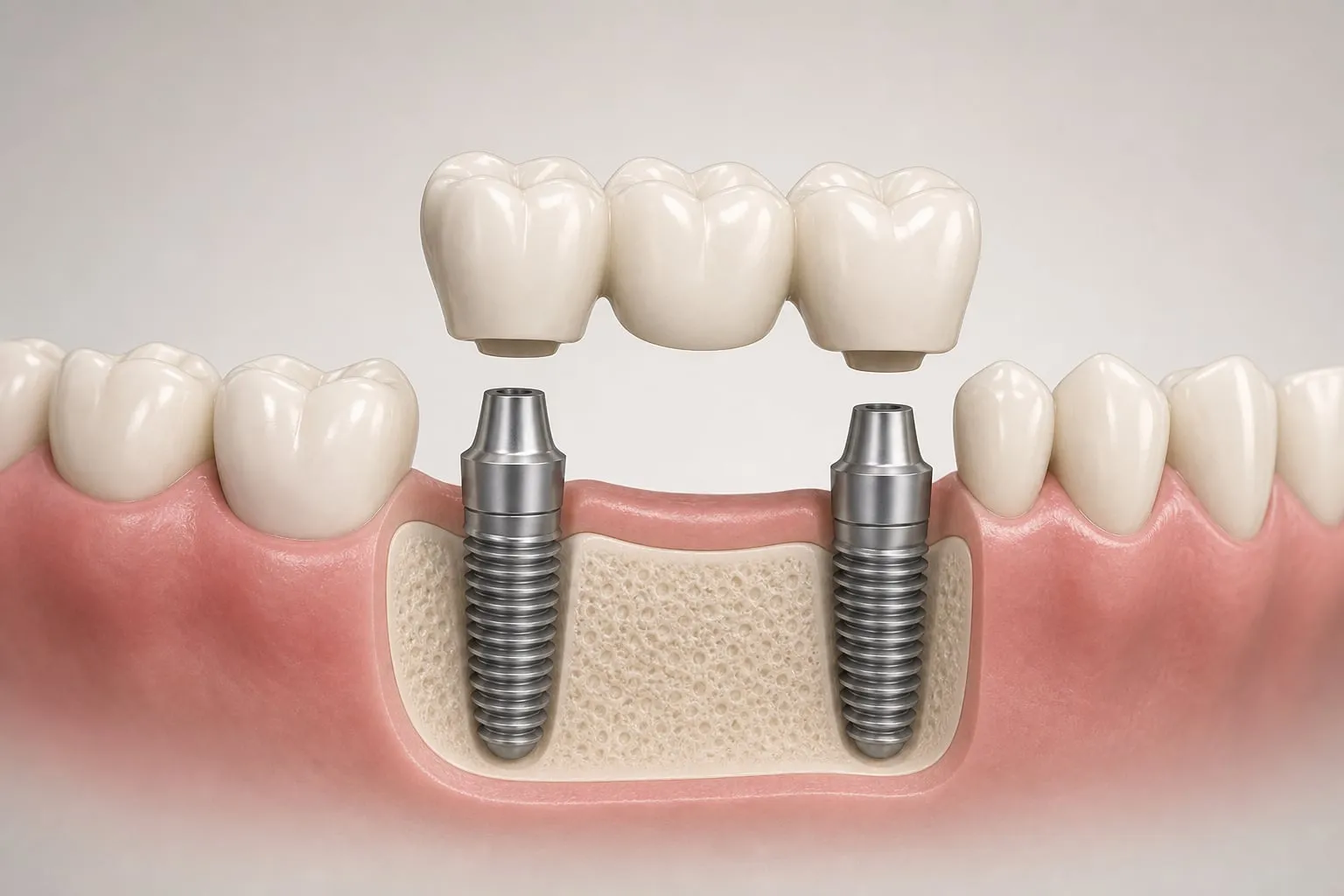
Tooth roots stimulate the jawbone every time you chew. Remove the root and that stimulation stops, and the bone in that area gradually resorbs — it loses volume and density over time. The process starts after tooth loss and continues.
That matters for two reasons:
- It’s the foundation any future implant needs. Less bone can mean bone grafting is required later that wouldn’t have been needed earlier.
- Enough bone loss changes facial structure. It’s why long-term denture wearers can develop a collapsed appearance around the mouth.
Neighboring teeth drift
Teeth aren’t set in concrete. They’re held in position partly by contact with the teeth on either side.
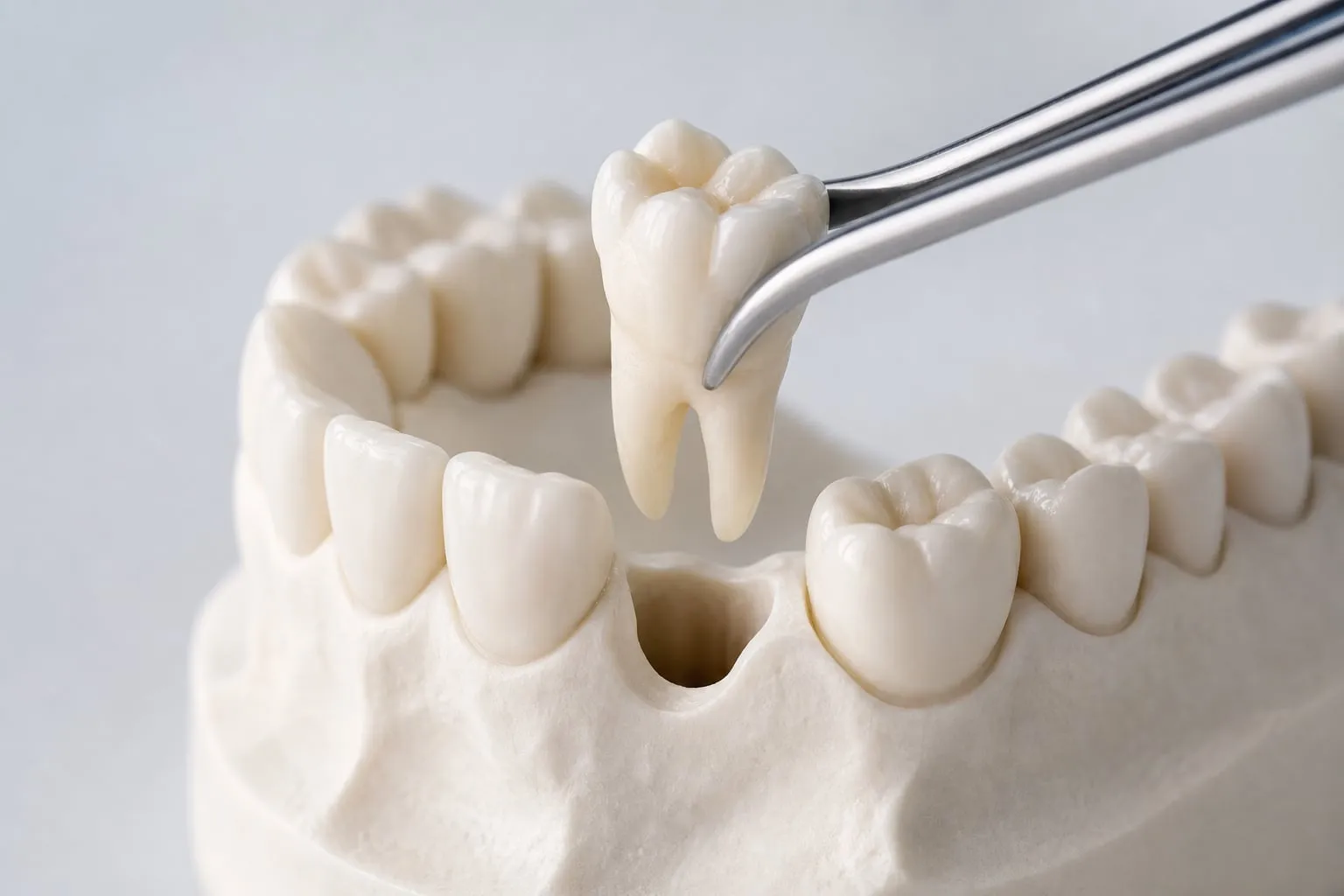
Open a gap and the adjacent teeth can gradually tilt or migrate into it. The tooth in the opposing jaw — with nothing to bite against — can over-erupt, growing further out of its socket.
The knock-on effects:
- Teeth that tilt become harder to clean, raising decay and gum disease risk
- Your bite changes, which can load some teeth more than they were designed for
- A future restoration may need more preparatory work to make room
- Drifted teeth sometimes need orthodontic correction before replacement
A gap that could have been a straightforward single implant can, years later, become a more complex case.
Chewing changes — usually without you noticing
Most people unconsciously shift chewing to the other side. That’s a sensible adaptation in the short term, but it means one side takes more load than it was built for over the long run, and some people develop jaw joint discomfort.
Diet often narrows quietly too. Foods that need real chewing get avoided.
Gum health around the gap
The area where a tooth was removed can be harder to keep clean, particularly once neighboring teeth have tilted. That combination — harder to clean plus more plaque retention — is exactly what drives gum problems in adjacent teeth.
What about the front?
Visible gaps carry the obvious social and confidence cost, which is real and worth naming. But front teeth also do work: they guide your bite and shape speech. Missing front teeth can affect how certain sounds form.
Front replacements are also the most aesthetically demanding — matching shade, shape, and gum line takes planning. See our guide on replacing a front tooth.
”So how long do I actually have?”
There’s no cliff edge, and anyone giving you a hard deadline is guessing. What’s true:
- Bone loss begins after tooth loss and continues gradually
- The rate varies significantly between individuals
- Waiting doesn’t make treatment impossible — it can make it more involved
- The earlier you know your options, the more of them you have
That’s an argument for getting evaluated, not for panicking.
What your options are
- Single tooth implant — replaces the root and the crown, preserving bone, without altering neighboring teeth
- Dental bridge — faster and often cheaper, but requires reshaping the adjacent teeth and doesn’t address bone loss
- Partial denture — removable, lowest up-front cost
- Multiple implants or a bridge on implants if several teeth are involved
Full comparison: missing teeth — your options.
If it’s already been years
You haven’t missed your chance. Bone loss is common in long-standing gaps and is frequently managed with grafting, and many patients who were told implants weren’t possible turn out to have options — see dental implants with bone loss.
The only way to know your situation is imaging.
Find out where you stand
A consultation and 3D scan will show exactly how much bone you have and what’s realistic. It’s free, and there’s no pressure to proceed.
Request your free consultation or call (949) 773-4170.
This article is general education, not a diagnosis. Individual results vary; a personalized evaluation is required to determine what may be right for you.