Short answer: if your dentures have started slipping, rubbing, or clicking, it’s almost certainly not because they were made badly — it’s because your jaw is changing shape underneath them.
Understanding why that happens makes the options make a lot more sense.
Why dentures stop fitting
When teeth are lost, the jawbone that held those roots no longer gets stimulated. Over time it gradually resorbs — it shrinks. A denture is fitted to the shape of your ridge on the day it’s made, but that ridge keeps changing.
The result is a familiar pattern:
- The denture felt fine at first
- Over months and years it became looser
- You started relying on more adhesive
- Sore spots appeared where it rubs
- Certain foods became difficult
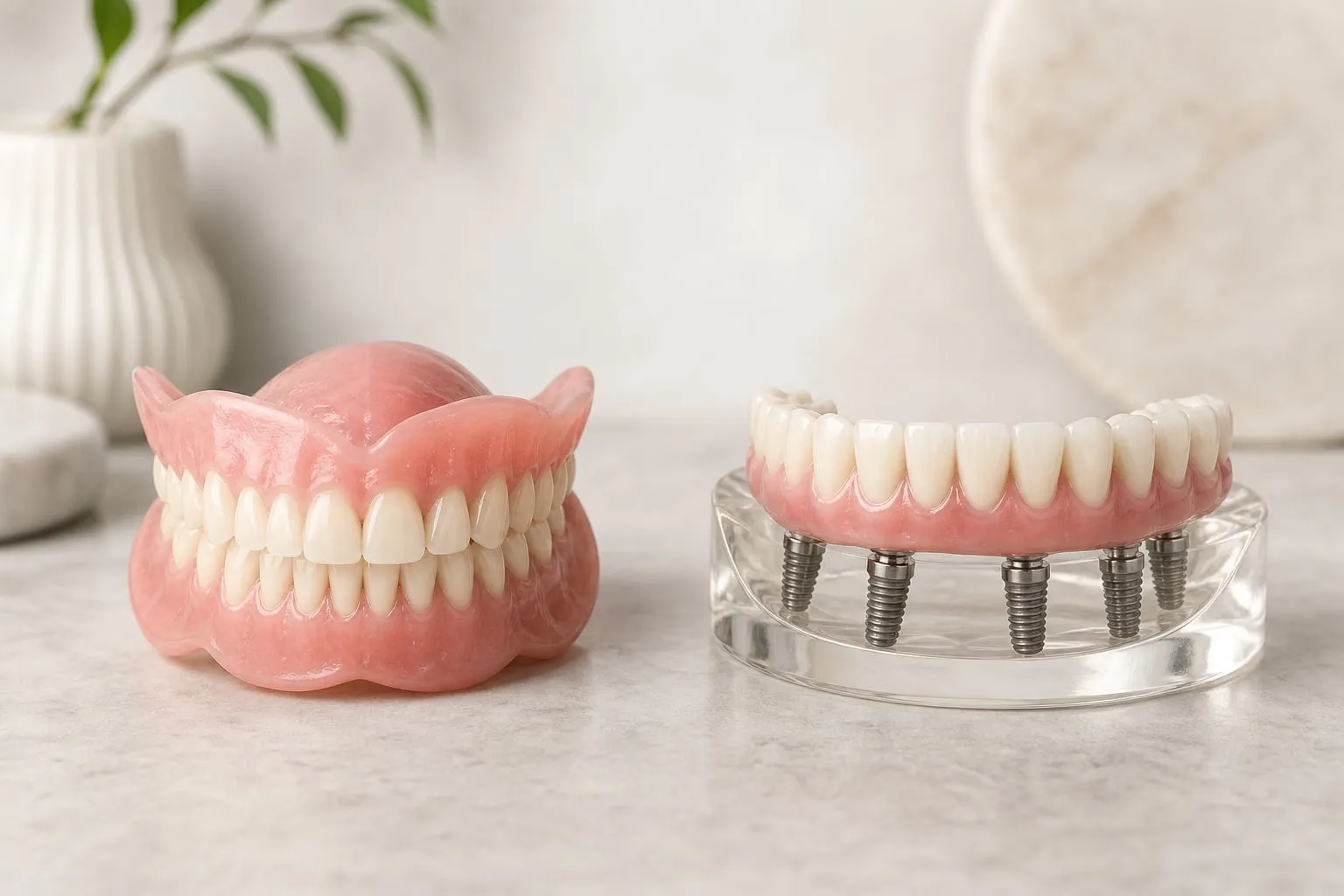
Traditional dentures rest on the gums rather than being anchored in the bone, so they don’t slow this process down.
Signs your dentures need attention
- Slipping when you eat or speak
- Increasing reliance on adhesive
- Sore spots or irritation
- Clicking sounds
- Difficulty chewing foods you used to enjoy
- A change in facial appearance as bone volume decreases
Your options
1. Relining or remaking. A reline reshapes the fitting surface to match your current ridge. It can genuinely improve comfort, and it’s the least invasive option. The limitation: it doesn’t address the bone loss, so the fit tends to loosen again over time.
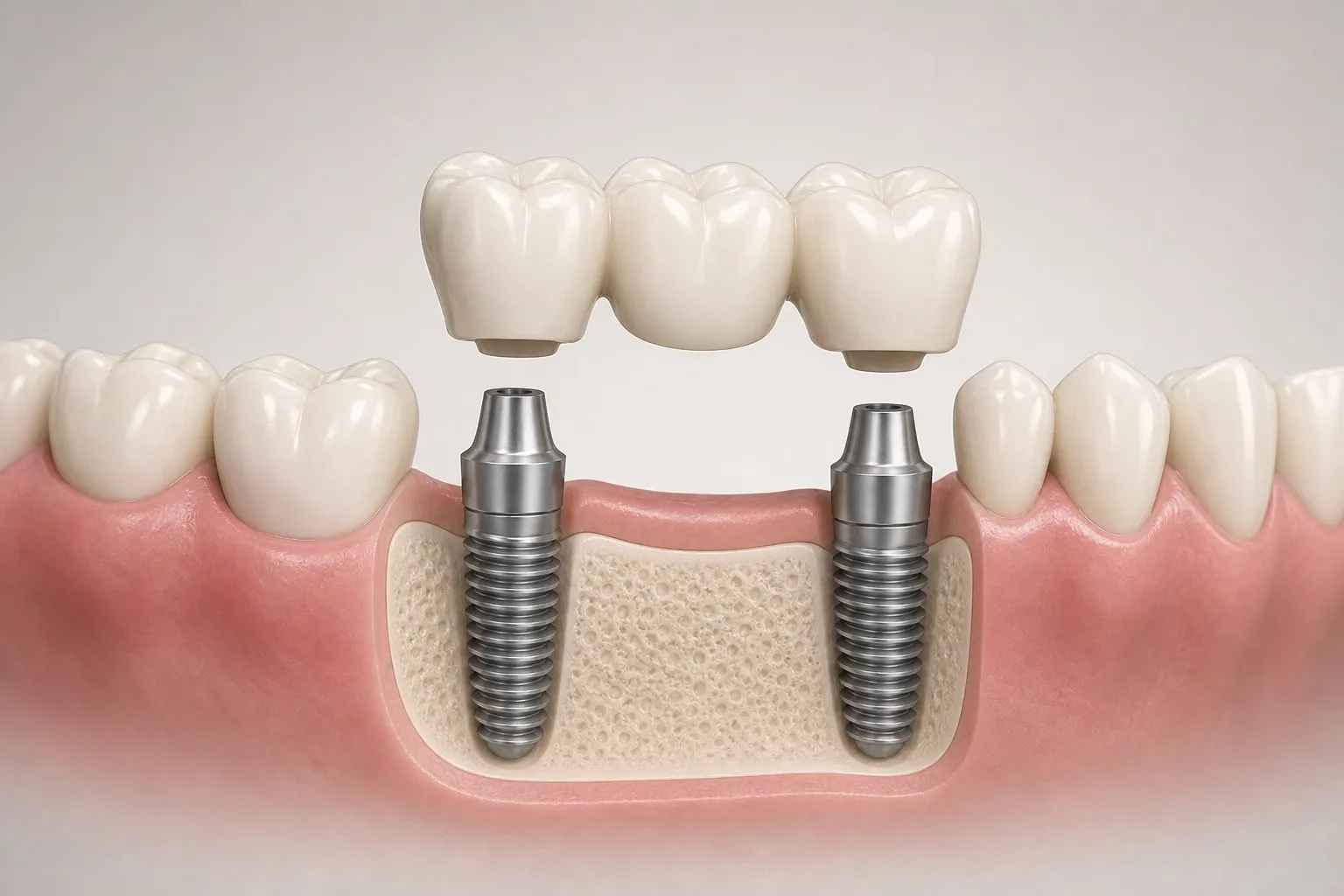
2. Implant-supported (snap-on) dentures. A small number of implants act as anchor points that the denture clips onto. It stays removable for cleaning, but stops moving while you eat and speak — and the implants help preserve bone. Learn more about implant-supported dentures.
3. Fixed full-arch implants. A set of teeth that stays in permanently and is never removed, supported by implants. All-On-4 restores a full arch on four implants; see also full mouth dental implants.
Our comparison of All-On-4 vs. implant-supported dentures walks through the trade-offs.
”I’ve worn dentures for years — is it too late?”
Usually not. Long-term denture wearers are among the most common implant patients. Years of wear often mean some bone loss, but bone grafting and angled implant placement frequently make treatment possible anyway. Age itself is rarely the barrier — read what actually determines candidacy.
What to do next
If your dentures no longer fit:
- Don’t just add more adhesive — persistent rubbing can irritate tissue
- Have the fit evaluated so you know whether it’s a reline situation or something more
- Ask about imaging to see how much bone you have
- Get the full range of options, including cost, before deciding
The bottom line
Loose dentures are a signal, not a nuisance to live with. Whether the right answer is a reline or implant-secured teeth depends on your bone, your goals, and your budget — and you deserve to see all of it laid out clearly.
Let’s look at your options
We’ll evaluate your fit and bone and give you an honest recommendation. Request your free consultation or call (949) 773-4170.
This article is general education, not a diagnosis. Individual results vary; a personalized evaluation is required to determine what may be an option for you.