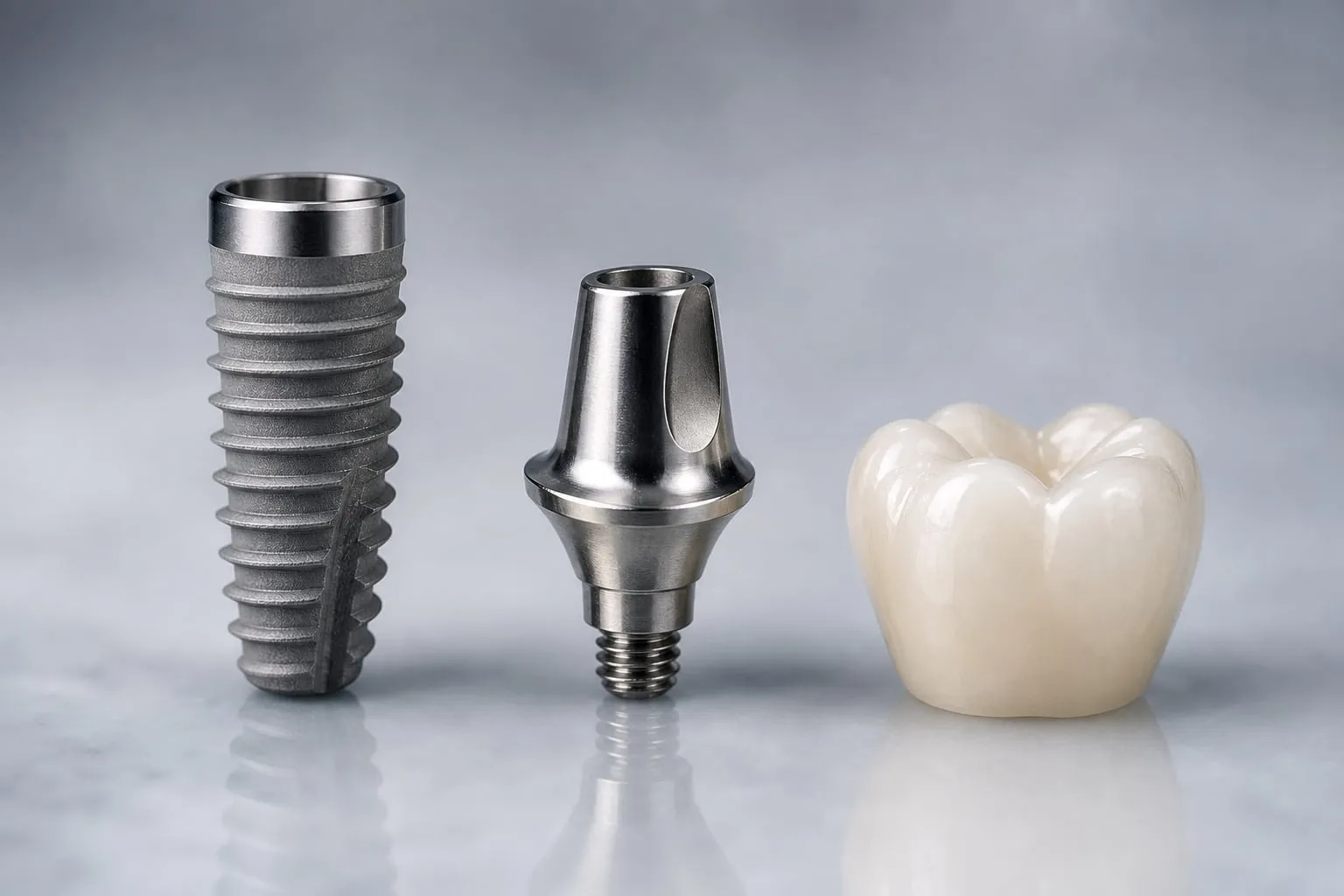

A missing back tooth can often be replaced with a dental implant. What sets molar implants apart is the planning: molars carry the heaviest chewing forces in the mouth, and they sit near the sinus in the upper jaw and a nerve canal in the lower jaw, so bone height, width, and nearby anatomy all need to be measured first.
Because no one sees them, back teeth are easy to put off. But they do much of the hard work of eating, and losing one tends to affect more than the gap itself.
Why do molars matter if no one sees them?
Molars are the broad, flat-topped teeth at the back of your mouth. Their wide chewing surfaces are built for grinding food, and together they:
- Handle the heaviest chewing. Front teeth bite and tear; molars crush and grind, and they take far more load.
- Keep the bite stable. Back teeth act like the posts that hold your jaws at the right distance when you close. Lose several, and more force can shift onto the front teeth.
- Hold their neighbors in place. Teeth stay upright partly through contact with each other. A molar gap gives the teeth beside it room to tip, and the tooth above or below can over-erupt, meaning it grows further out of its socket with nothing to bite against.
- Maintain the bone. As with any tooth, the bone that held the molar’s roots gradually shrinks once the tooth is gone.
What’s different about implants for back teeth?
A dental implant is a small post, usually titanium, placed in the jawbone to act as a tooth root. Over a healing period, bone bonds to its surface, a process called osseointegration, and a crown is attached on top. That’s the same for every tooth. Here’s what changes at the back of the mouth.
Heavier forces
Because molars carry so much load, the plan has to account for it. Depending on the bone available, a dentist may sometimes choose a wider implant for a molar site. The crown is shaped and the bite is checked and adjusted so the implant isn’t overloaded. If you grind or clench your teeth, a night guard is often recommended to protect the implant and crown.
Upper molars: the sinus
The roots of upper molars sit just below the maxillary sinus, an air space behind the cheekbones. After an upper molar is lost, the bone often shrinks while the sinus expands downward, leaving less height for an implant. Bone in the upper back jaw also tends to be softer than in the lower jaw.
When there isn’t enough height, a sinus lift may be recommended. The sinus membrane is gently raised and bone graft material is placed beneath it to create room. Our page on bone grafting and sinus lift explains how it works and how it affects your timeline.
Lower molars: the nerve
In the lower jaw, the inferior alveolar nerve runs through a canal in the bone beneath the back teeth and supplies feeling to the lower lip and chin. The implant’s length is chosen so it stays a safe distance from that canal.
This is one of the clearest reasons 3D planning matters for back teeth. A flat X-ray shows the nerve canal and sinus floor only approximately. A CBCT scan, a 3D X-ray, lets the dentist trace them and measure the bone in three dimensions before surgery. See 3D imaging and implant planning for what the scan shows.
| Upper molars | Lower molars | |
|---|---|---|
| Nearby structure | Maxillary sinus, above the roots | Nerve canal, below the roots |
| Bone is often | Softer | Denser |
| Common limitation | Too little height under the sinus | Limited depth above the nerve, or a narrow ridge |
| Extra step that may be needed | Sinus lift | Bone graft, or a shorter or repositioned implant |
| What the 3D scan checks | Bone height below the sinus floor | Distance to the nerve canal and ridge width |
What if two or more back teeth are missing?
You don’t necessarily need one implant for every missing tooth. Common approaches include:
- Separate single implants when the gaps are spread out. Each gets its own implant and crown, as with a single tooth implant.
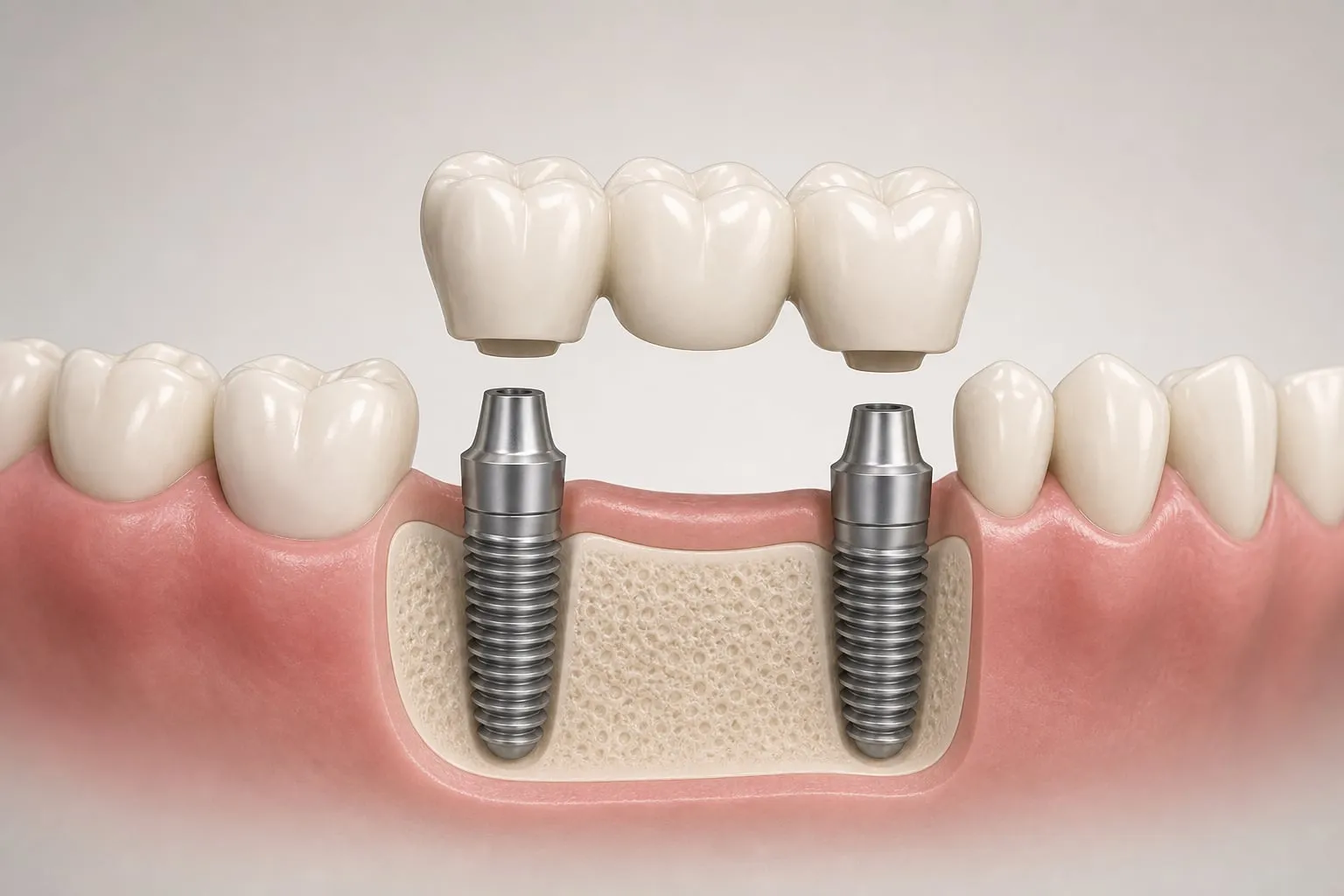
- An implant-supported bridge when teeth are missing in a row. Two implants can often support three or more replacement teeth, with the middle tooth, called a pontic, held between them. Our multiple tooth implants page explains how these bridges are planned.
There’s one situation where implants are especially relevant for back teeth: a gap with no tooth behind it. A traditional bridge needs a natural tooth on each side to anchor to, so when the last teeth in a row are missing, a conventional bridge usually isn’t possible and the main non-implant option is a removable partial denture. Implants can offer a fixed alternative.
What happens if you just leave the gap?
Some people decide to leave a back gap, and in some cases that’s reasonable, for example a missing last molar with little bite against it. It’s worth making that choice knowingly, though, because over time:
- The bone where the roots were tends to shrink, which can mean a graft is needed later that wouldn’t have been needed earlier
- Neighboring teeth can tip into the space and become harder to clean
- The opposing tooth can over-erupt
- Chewing often shifts to the other side, putting more load on those teeth
We cover this in more detail in what happens if you don’t replace a missing tooth. Waiting doesn’t make replacement impossible, but it can make it more involved.
How much does a molar implant cost?
At our Mission Viejo office, a single implant starts at $1,995, which covers your consultation, implant surgery, and crown. Molar sites can call for preliminary steps, and those are quoted separately:
- Extraction, if a failing molar is still in place
- Bone grafting, if the ridge has narrowed
- A sinus lift, for some upper molar sites
Pricing may vary based on individual needs, and additional procedures such as bone grafting or extractions may be quoted separately. Contact the office for a personalized estimate.
For a breakdown of what the fee covers, see what is included in a $1,995 dental implant. Multi-tooth plans, such as an implant-supported bridge, are quoted individually, and you receive a written treatment plan with pricing before any work begins.
We accept most dental insurance and can help you understand your benefits, and third-party financing options are available, with terms set by the lender. This is general information, not insurance advice; your plan administrator decides what is covered.
The bottom line
Missing molars matter even when no one sees them, because they carry much of your chewing and help keep your bite stable. Implants for back teeth are planned around heavier forces and around the sinus or nerve canal nearby, which is why a 3D scan comes before any recommendation. To find out what a molar implant would involve for you, request a free consultation or call (949) 773-4170.
This article is general education, not a diagnosis or a substitute for professional dental advice. Individual results vary, and only a personalized evaluation can determine whether a dental implant may be an option for you.