Most dental implant myths don’t hold up: implants generally don’t look fake, set off airport metal detectors, or rule out MRI scans, and there’s no upper age limit for treatment. The myths that cause the most trouble point the other way, suggesting implants need no care and last forever no matter what. Below are ten common misconceptions, each with a one-line fact and a short explanation.
Dental implant myths and facts at a glance
| Myth | Fact |
|---|---|
| Implants look fake | A custom crown is shaped and shaded to blend with your own teeth |
| You can be too old for implants | There’s no upper age limit; overall health matters more than age |
| Getting an implant is very painful | The area is numbed, and patients typically feel pressure, not pain |
| Implants set off airport metal detectors | Generally not, since they’re small titanium parts inside the bone |
| You can’t have an MRI with implants | Titanium isn’t magnetic like steel; implants generally don’t prevent MRIs |
| Implants need no care | They can’t decay, but the gums and bone around them can get inflamed |
| Everyone needs a bone graft | Many patients don’t, and imaging shows whether you do |
| Implants last forever no matter what | They’re designed for the long term, but care and health matter |
| Implants only replace one tooth | They can replace one tooth, several, or a full arch |
| Every office offers same-day teeth | Not all do, and this practice plans around confirmed healing |
Do dental implants look fake?
Fact: A well-planned implant crown is custom-made to blend in with your natural teeth.
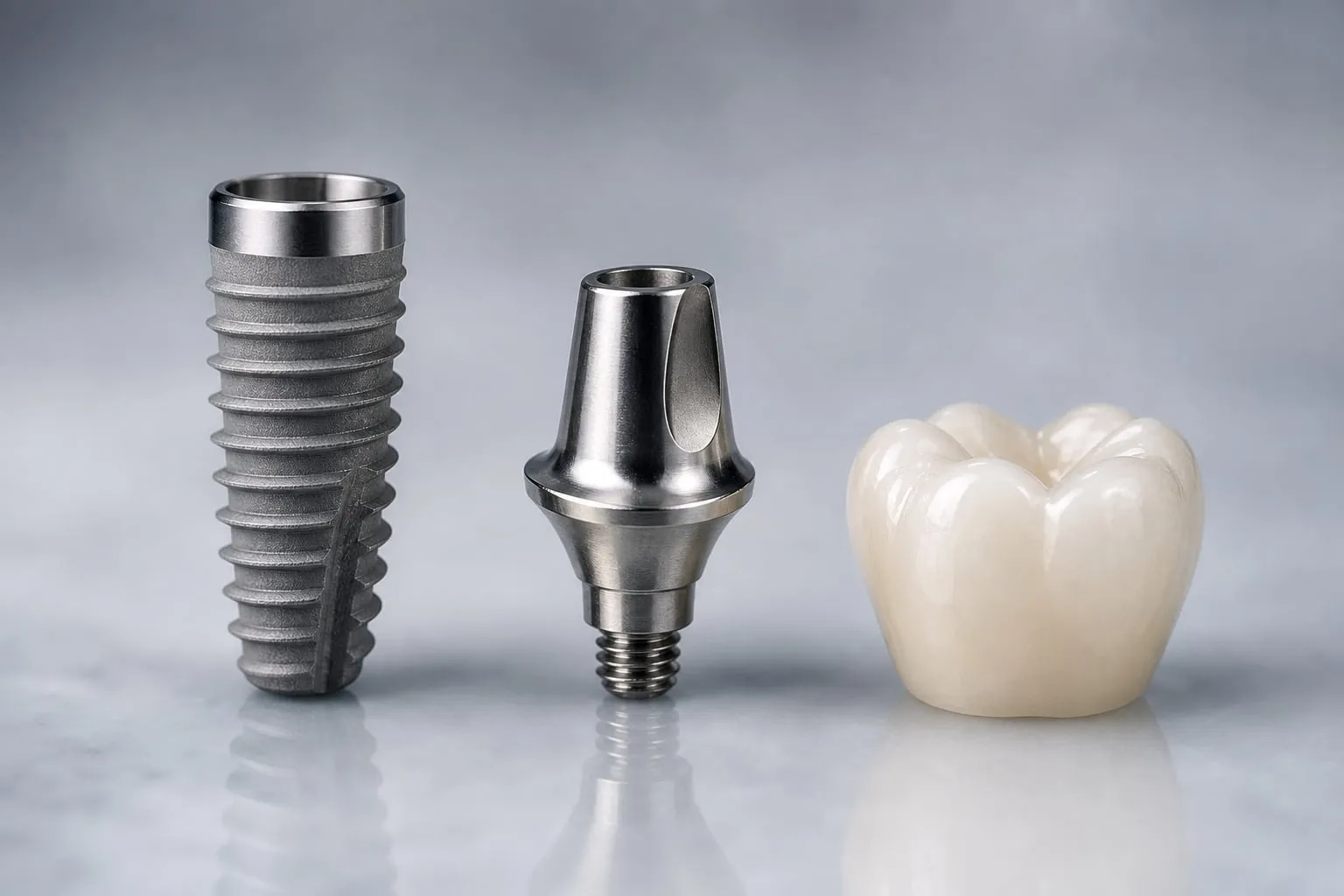
The crown, the visible part of the implant, is shaped and shade-matched to your neighboring teeth. What makes it look natural is largely planning: the implant’s position, healthy gum tissue around it, and enough bone to support the gumline. Front teeth are the most demanding, because the gum contour shows when you smile.
Am I too old for dental implants?
Fact: There’s no upper age limit, and overall health matters far more than age.
Older adults are among the most common implant patients, simply because tooth loss becomes more likely over time. What a dentist evaluates is your bone, gum health, general health, medications, and habits. Read more in am I too old for dental implants?
Is getting a dental implant very painful?
Fact: The area is fully numbed, and patients typically describe pressure rather than pain.
Placement is performed with local anesthesia, and sedation options are available where appropriate. Soreness and swelling afterward are normal and generally ease after the first couple of days. It’s still surgery, so it isn’t free of sensation, but most people say it was easier than they expected. See do dental implants hurt?
Do dental implants set off airport metal detectors?
Fact: Generally not.
Implants are small titanium components inside the jawbone, and they generally aren’t something that causes trouble at security screening. Equipment and settings vary, so no one can promise it never happens, but it usually isn’t a reason to worry about travel.
Can you get an MRI with dental implants?
Fact: In general, yes. Titanium isn’t magnetic the way iron or steel is.
Dental implants generally don’t prevent an MRI scan, although they can sometimes affect image quality near the jaw. Some dental restorations, such as certain magnet-retained denture attachments, do contain magnetic parts. Always tell the imaging team that you have implants or other dental work, and let them decide how to proceed. Our guide to MRI scans with dental implants goes into more detail.
Do dental implants need special care?
Fact: Implants can’t get cavities, but the gums and bone around them still need daily care.
Plaque around an implant can inflame the surrounding gum and, if left alone, the bone, a condition called peri-implantitis. It often develops without pain. Brushing twice a day, cleaning around the implant daily, and routine checkups are what protect it. See how to clean implant-supported teeth.
Does everyone need a bone graft for implants?
Fact: Many patients don’t need one, and imaging shows whether you do.
A bone graft adds volume where the jawbone has shrunk, often after a tooth has been missing for a long time or after gum disease. A 3D scan measures the height, width, and quality of your bone before anything is decided, as our 3D imaging and implant planning page explains. For more, read do I need a bone graft before dental implants?
Do dental implants last forever?
Fact: An implant is designed as a long-term solution, but no implant lasts forever regardless of care.
An implant is really two things: the post in the bone, designed for the long haul, and the crown on top, which can wear and may eventually need replacing like other dental restorations. Smoking, unmanaged grinding, poorly controlled health conditions, and skipped maintenance can all shorten an implant’s life. See how long do dental implants last?
Are dental implants only for replacing one tooth?
Fact: Implants can replace a single tooth, several teeth, or a full arch.
Several missing teeth can often be replaced with an implant-supported bridge, without an implant for every tooth. For a full arch, All-On-4 dental implants support a complete fixed set of teeth on four implants, with angled placement that can often reduce the need for grafting.

Can you get implant teeth the same day?
Fact: Same-day teeth isn’t offered everywhere or suitable for every case, and our practice doesn’t offer it.
Some offices offer teeth on the day of surgery, and whether that approach is appropriate depends on the case. At Premier Dental Implant Centers, we do not offer same-day teeth or immediate loading. We plan around healing: the implant is placed and allowed to integrate with the bone, which generally takes several weeks to a few months, and the final restoration is fitted after that integration has been confirmed.
The bottom line
Most implant myths make treatment sound scarier, more limited, or more fragile than it is, and a few make it sound more carefree than it is. The real answers depend on your bone, your health, and your habits, which is why a personal evaluation matters more than anything you read online. If you’d like straight answers about your own situation, request a free consultation or call (949) 773-4170.
This article is general education, not medical advice. Individual situations vary, so discuss your own health, imaging, and treatment options with your dentist and physician.