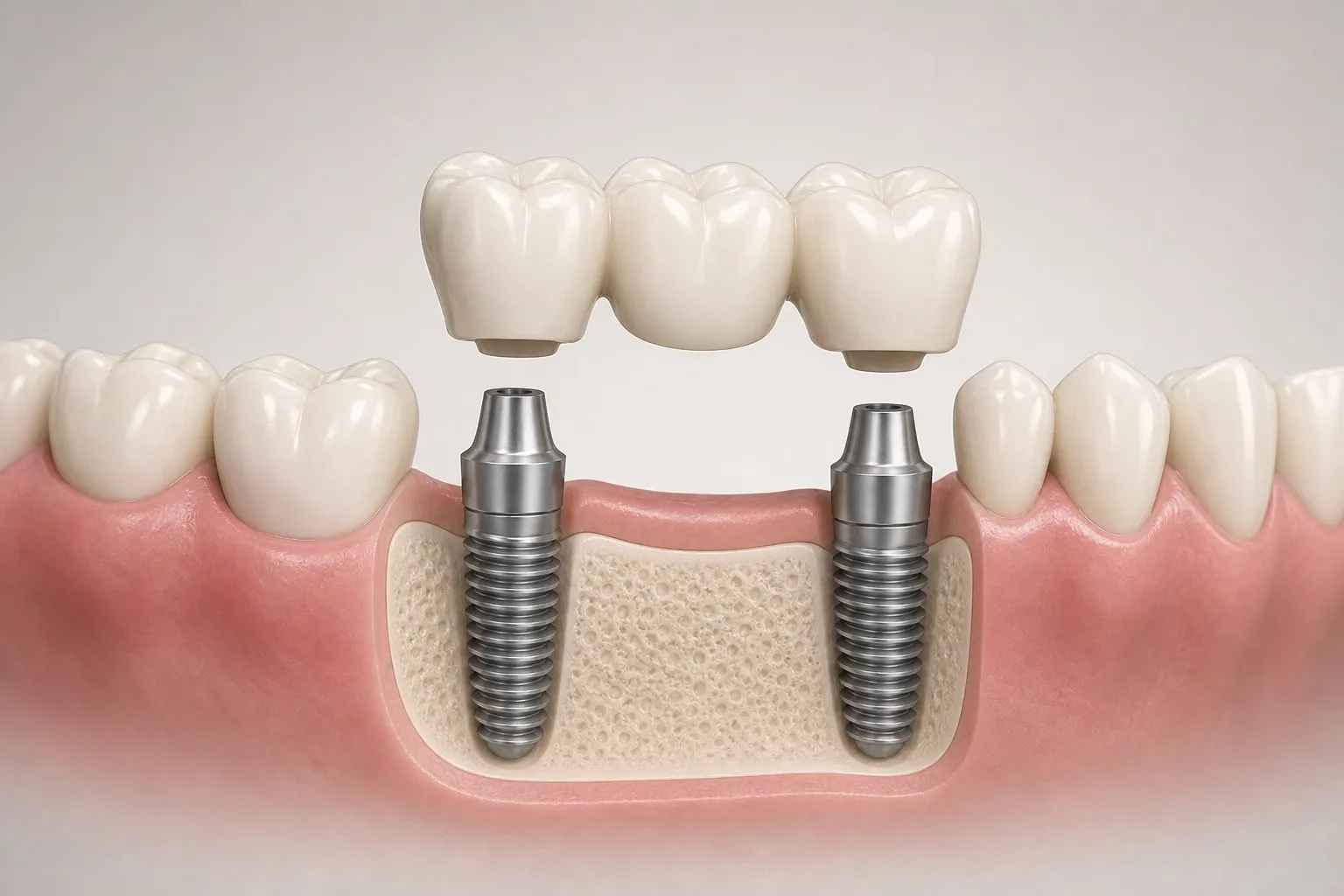

The honest answer: not “painless” — but the surgery itself is fully numbed, and what follows is soreness rather than pain for most people.
We won’t tell you implant treatment is pain-free, because that’s a marketing claim rather than a medical one. Here’s what actually happens.
During placement
The treatment area is fully numbed with local anesthesia before anything begins. Once an area is properly anesthetized, the nerves there don’t transmit pain signals.
What patients consistently describe feeling is pressure and movement — a sense that something is happening, without it hurting. Many people are surprised that the appointment feels less eventful than they’d braced for.
If at any point during treatment you feel something sharp, you tell us and we address it. That’s not a failure; that’s how it’s supposed to work.
Your comfort options
Local anesthesia is standard. Beyond that, sedation options are available for patients who feel anxious about dental treatment.
What’s appropriate depends on your medical history, the complexity of your case, and frankly your preference — some people want to be aware of what’s happening, others would rather not be. We’ll talk through the options during planning rather than on the day.
If dental anxiety is the thing standing between you and treatment, say so at the consultation. It’s an extremely common conversation and there’s nothing embarrassing about it.
The first 48 hours
This is the part that’s genuinely uncomfortable, and it’s usually the peak.
Expect some soreness, swelling, and possibly minor bruising. This typically peaks in the first day or two and then steadily improves. Most patients manage with the medication and instructions we provide, plus cold compresses and rest.
Practical things that help:
- Take medication as directed rather than waiting for discomfort to build
- Cold compress on and off during the first day
- Soft foods — see what you can eat after implant surgery
- Rest the first day; don’t schedule anything demanding
- Keep your head slightly elevated when sleeping
- Don’t smoke — it affects healing, see smoking and dental implants
After the first few days
Most people describe the discomfort as fading noticeably by day three or four and being largely a non-issue within a week, though this varies with the complexity of the case. A single implant in good bone is a different experience from a full-arch case with extractions.
The healing and integration that follows over the next months is typically not something you feel at all. Bone fusing to the implant isn’t a painful process — it’s a silent one.
What is not normal
Contact us if you experience:
- Pain that worsens after day three rather than improving
- Swelling that increases after the first few days
- Fever
- Persistent bleeding
- A bad taste or discharge
- Numbness that doesn’t resolve as expected
These are uncommon, but they’re worth a phone call rather than a wait-and-see. Early attention is almost always simpler.
Comparing it to what you already know
Most patients have had a tooth extraction, a filling, or a root canal. The common feedback is that implant placement feels comparable to an extraction — and often easier than people expected based on the word “surgery.”
The anticipation is genuinely worse than the event for most people. That’s not reassurance-speak; it’s the most consistent thing patients tell us afterward.
If anxiety is the real barrier
You’re not unusual. For many people, fear of dental pain is what postpones treatment — sometimes for years, while a problem gets more complex and more expensive to fix.
A consultation costs you nothing and commits you to nothing. You can come in, get imaged, hear the plan, ask exactly what your comfort options would be, and go home and think about it.
Let’s talk about it
Tell us what you’re worried about and we’ll tell you honestly what to expect. Request your free consultation or call (949) 773-4170.
This article is general education, not medical advice, and describes typical experiences rather than promising a specific outcome. Individual experiences vary. Follow the specific instructions provided by your dental team.