Short answer: there is no universal waiting period. Depending on the tooth and the bone around it, an implant may go in at the same appointment as the extraction, a few weeks later, or a few months later — and the reason the answer varies is that the socket itself changes shape after a tooth comes out.
If you have just had a tooth pulled, or you know one is coming out soon, this is usually the first real question: when does the implant happen? Here is the honest version.
What actually happens to the socket after an extraction
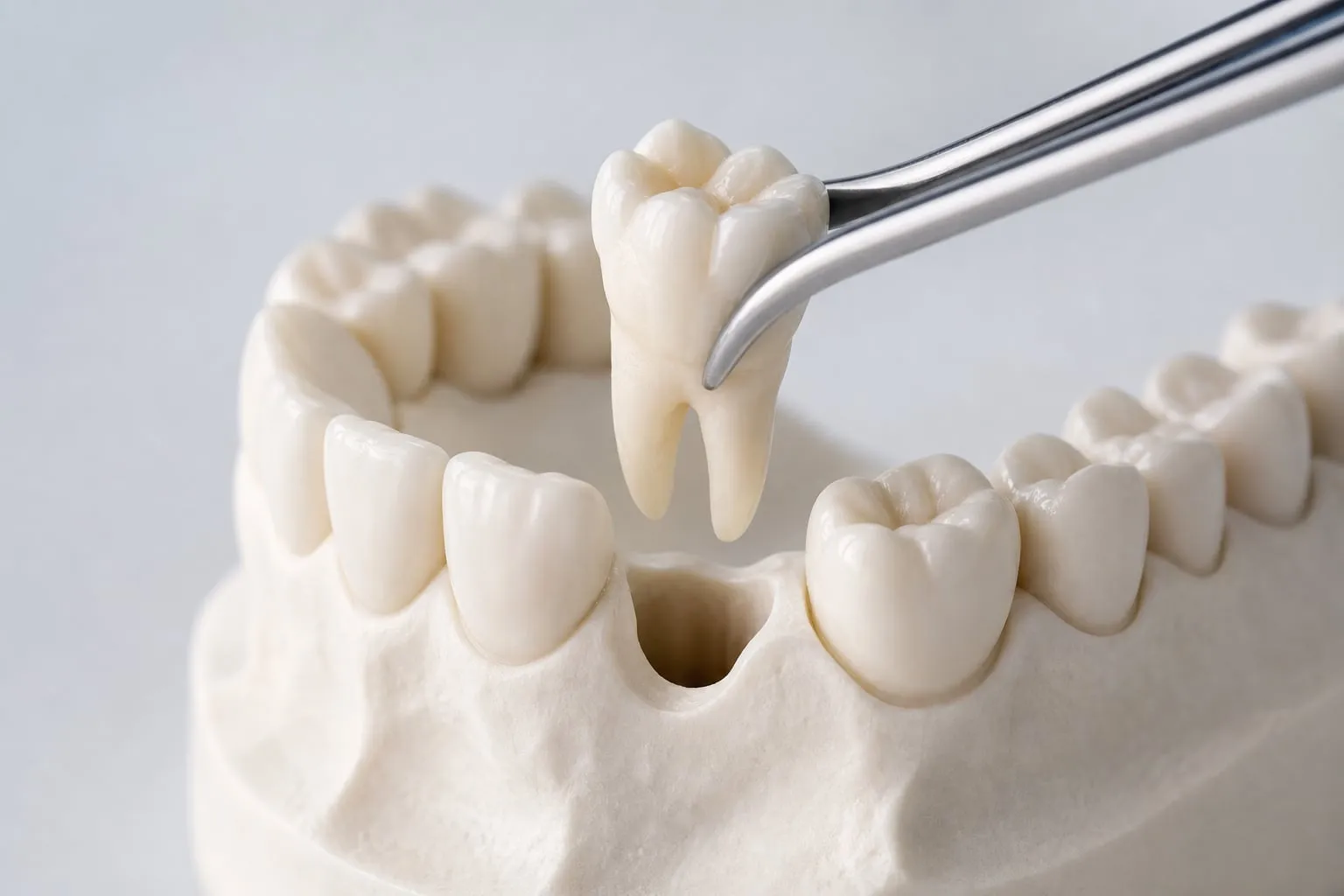
A tooth root does more than hold a tooth. It signals the surrounding bone to stay dense and keep its shape. Remove the root and that signal stops, and the body begins remodeling the empty socket.
That remodeling is front-loaded. Published research on post-extraction healing consistently reports that a large share of the total bone width lost after an extraction happens within the first three months, with slower changes continuing afterward. Studies vary in the exact figures, but they agree on the pattern: the early period is when the ridge changes fastest.
This is the whole reason timing matters. Waiting is not just waiting — the site is actively changing while you wait.
The three general routes
Clinicians usually think about extraction-to-implant timing in a few broad categories:
| Route | Roughly when | Typically considered when |
|---|---|---|
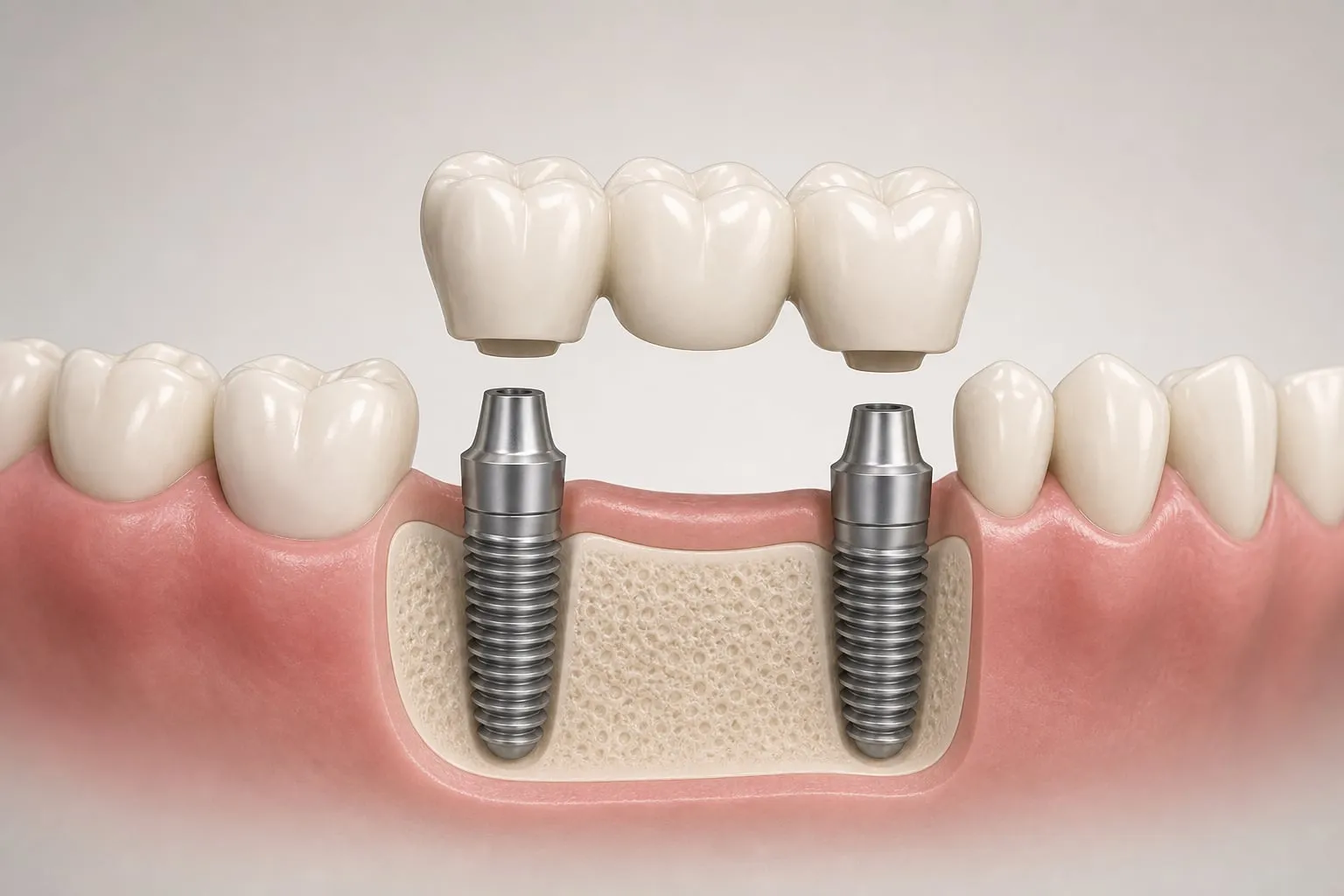
| Immediate placement | Same appointment as the extraction | Bone walls are intact, no active infection, and the implant can be seated with good initial stability |
| Early placement | Several weeks to a few months after extraction | Soft tissue has closed over the site and early bone fill has begun; often used when the gum needed time to settle |
| Delayed placement | Around four to six months or more | Infection was present, the socket walls were damaged, or grafting was done and needs time to mature |
None of these is inherently superior. They are answers to different situations. Immediate placement shortens the calendar but demands favorable conditions. Delayed placement adds months but gives a compromised site the time it needs.
One nuance worth knowing, because practice websites often blur it: placing an implant immediately does not, by itself, prevent the ridge from resorbing. Immediate placement and socket grafting are not substitutes for one another — they solve different problems.
Socket preservation grafting — and whether you actually need it
If someone recommends adding a graft to your extraction, it is fair to ask why. Here is the reasoning behind it.
Socket preservation (also called ridge preservation) means placing bone grafting material into the socket right after the tooth comes out, usually with a membrane over the top. The goal is not to build new height — it is to hold the existing shape while the body heals.
It is genuinely not needed for everyone. Where the socket walls are thick and healthy — more often the case at some back teeth — a site can heal with enough bone to place an implant later without help. Where the outer wall is thin, cracked, or already gone, the ridge tends to collapse inward, and that collapse is far harder to correct than to prevent.
The cost argument runs both ways: skipping the graft can save money now and require a larger, longer bone graft or sinus lift later — or you can pay for a graft you did not need. Either way, the recommendation should come with an actual reason attached, not just a line on an estimate.
What determines which route fits your case
The decision comes down to what the site looks like, not to preference:
- Infection. An abscessed or infected tooth generally means the site needs to be cleaned out and allowed to settle before an implant goes in.
- The bone walls. Intact walls support immediate placement. A missing facial wall usually does not.
- Initial stability. An implant needs to be firm the moment it is placed. If the socket geometry will not allow that, waiting is the safer call.
- Location. Front teeth carry an esthetic burden that back teeth do not, which changes how the gum contour is managed.
- Your health and healing. Conditions that slow healing shift the plan toward more conservative timing — see what determines candidacy.
This is also why imaging comes first. A 3D CBCT scan shows bone height, width, and the position of nearby structures before anyone commits to a schedule. You can read more about how extraction and socket preservation work and the imaging and planning behind the plan.
Where we stand on same-day teeth
We want to be direct about this, because the marketing around it is loud: we do not offer same-day teeth, “teeth in a day,” or immediate loading. Our treatment planning is built around confirmed bone integration — we verify that the implant has bonded with the bone before the final restoration is designed and fitted.
That means a longer calendar than some advertisements suggest. It also means the restoration is built on something we have actually confirmed rather than something we are hoping for. If a same-day finished tooth is your priority, we would rather tell you plainly that we are not the practice for it.
Placing an implant at the time of extraction, where the site allows it, is a separate question from finishing the tooth that day. The implant and the final crown are two different milestones.
What the calendar tends to look like
Whichever route applies, the arc is similar: extraction, a healing period, implant placement, an integration period, then the final restoration. Integration alone commonly runs a few months. Our recovery guide covers what each stage feels like, and what to expect from the implant process walks the visit-by-visit sequence.
If the tooth is not out yet, this is the ideal moment to plan. Decisions made at the extraction appointment — graft or no graft, how the socket is handled — shape everything after it. What to do about a failing or broken tooth is worth reading if you are still deciding, and do I need a bone graft before implants goes deeper on grafting.
The bottom line
The waiting period between extraction and implant is a clinical judgment about a specific socket, not a fixed rule. Ask what your bone walls look like, whether grafting is being recommended and why, and what the expected sequence is. Those three answers tell you most of what you need to know.
Let’s look at your site before the tooth comes out
If an extraction is on the horizon, a consultation now can prevent a harder case later. Request your free consultation or call (949) 773-4170.
This article is general education, not a diagnosis or medical advice. Individual results vary, and only a personalized evaluation can determine what timing may be appropriate for you.
References: A systematic review of post-extractional alveolar dimensional changes in humans (PubMed) · Timing of Dental Implant Placement: The Past, the Present, the Future (PMC) · Immediate implant placement versus delayed placement with ridge preservation (ScienceDirect)