Short answer: a loose implant needs to be looked at promptly — but “loose” doesn’t always mean the implant itself is failing. Very often it’s the crown or the small screw connecting it, which is a much simpler fix.
Here’s how to think about what you’re feeling.
Three different kinds of “loose”
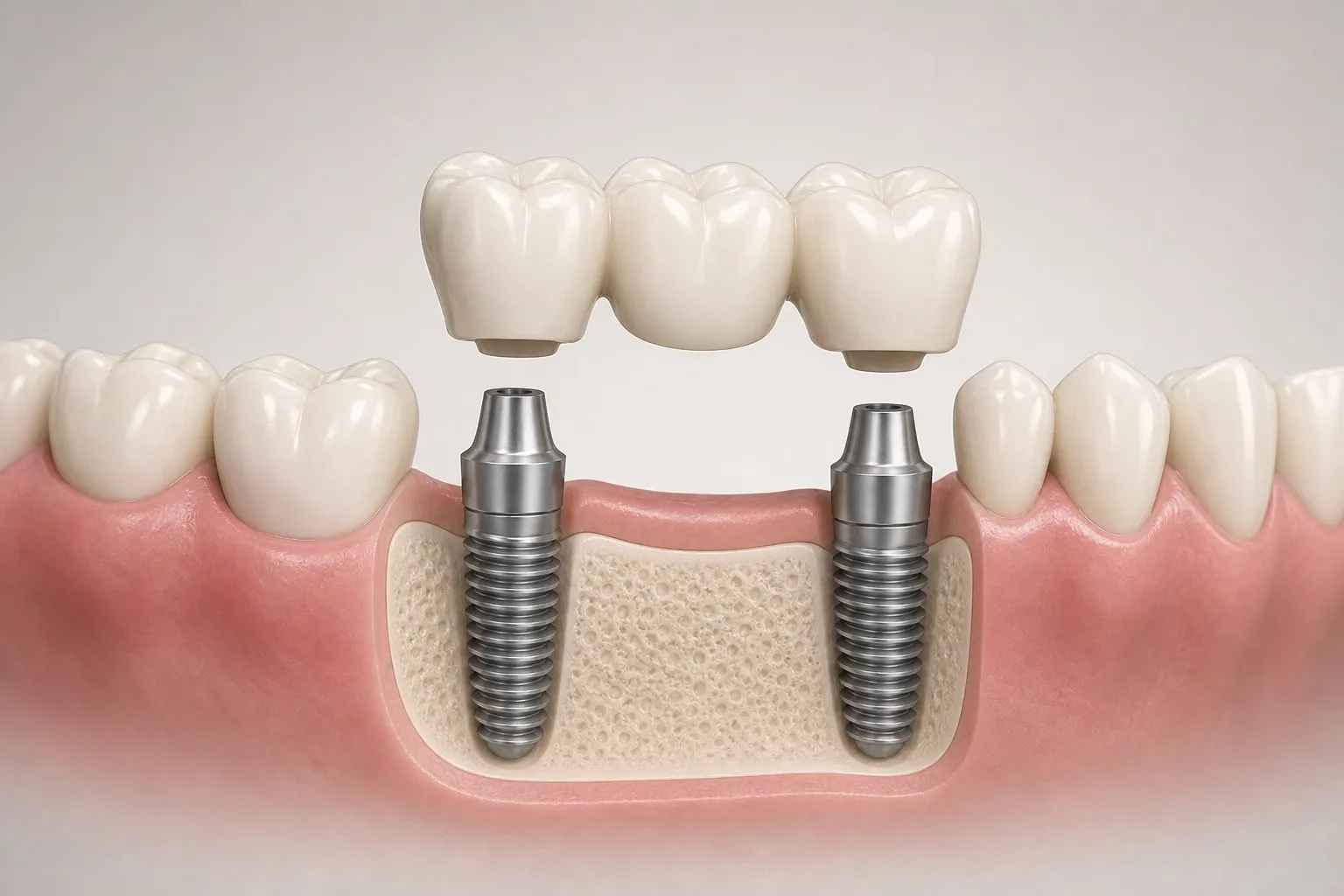
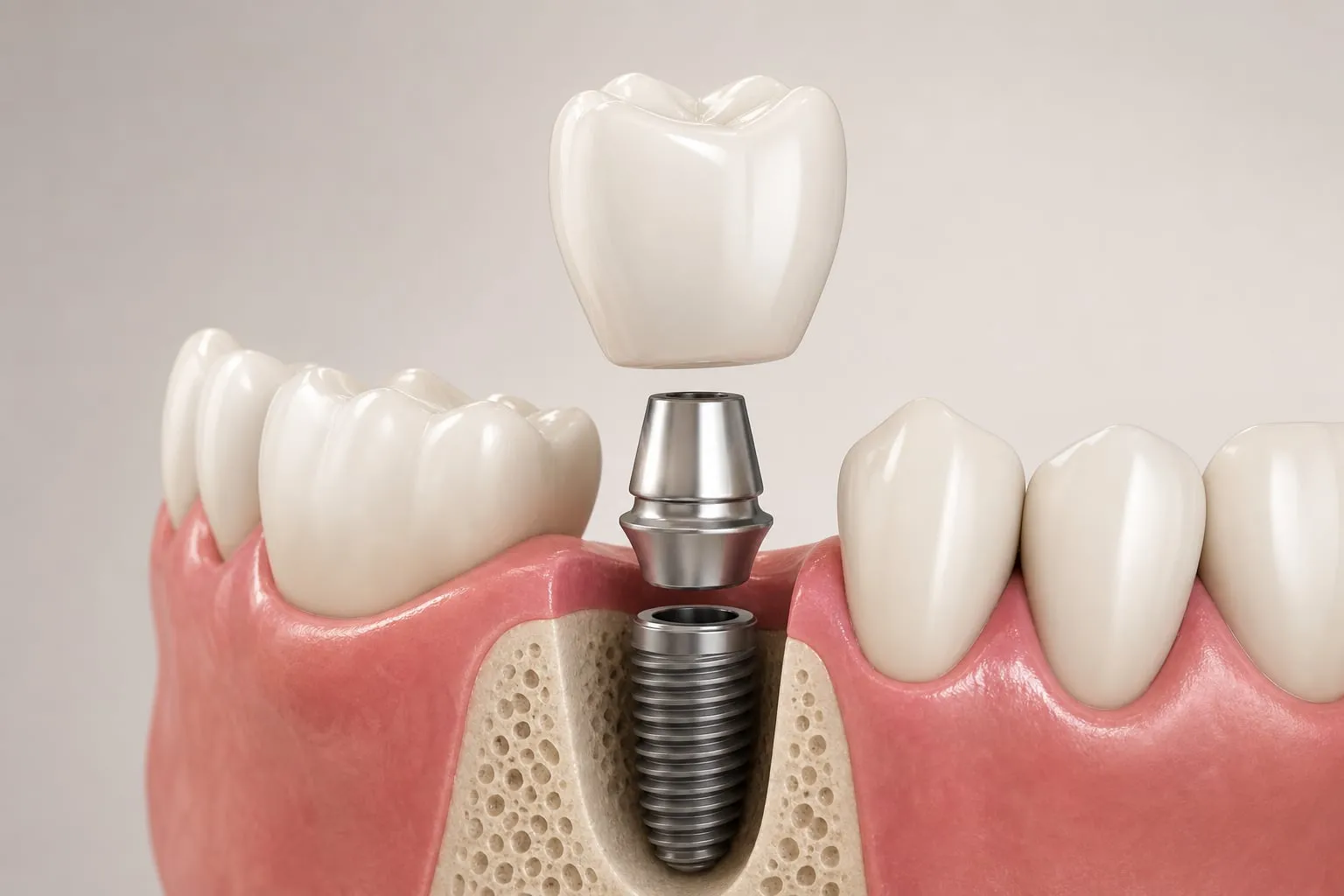
1. A loose crown. The visible tooth is cemented or screwed onto the implant. If that connection loosens, the crown may wiggle while the implant underneath stays rock-solid. This is the most common and most easily corrected scenario.
2. A loose abutment screw. The abutment is the connector between the implant and the crown. Its small screw can loosen over time, especially under heavy bite forces or grinding. It can usually be retightened or replaced.
3. A mobile implant. If the titanium post itself moves, that’s more serious. It suggests the implant hasn’t integrated with the bone, or that bone support has been lost around it.
You often can’t tell these apart yourself — which is exactly why it’s worth an evaluation rather than a guess.
What causes implants to loosen
- Bite forces and grinding — unmanaged clenching puts repeated stress on the connection
- Peri-implantitis — inflammation and infection around the implant that erodes supporting bone; published research identifies it as the leading driver of late implant failure
- Integration problems — occasionally an implant never fully fuses with bone, usually showing up in the first months
- Normal wear — screws and restorations can loosen over years of function
Signs that deserve prompt attention
- Any movement of the implant or crown
- Pain that worsens rather than improves
- Bleeding, swelling, or redness in the gum around the implant
- Gum recession exposing metal
- A bite that suddenly feels different
What to do right now
- Stop chewing on that side to avoid stressing the connection further
- Don’t try to tighten or wiggle it yourself — you can damage the components
- Call a dental office promptly for an evaluation
- Keep the area clean and gentle
What happens at the evaluation
We examine the implant and surrounding tissue and take 3D imaging to see what’s happening in the bone. That tells us whether the issue is the restoration, the surrounding gum and bone, or the implant itself — and what can be done. Learn more about failing implants and second opinions.
The bottom line
Loose doesn’t automatically mean lost. Most loosening involves the restoration, and even when an implant must be removed, replacement is frequently possible after healing — see can a failing implant be replaced.
Concerned about an implant?
We’re glad to take a look and give you a straight answer. Request a free evaluation or call (949) 773-4170.
This article is general education, not a diagnosis. If you have significant pain, swelling, or signs of infection, seek prompt care.