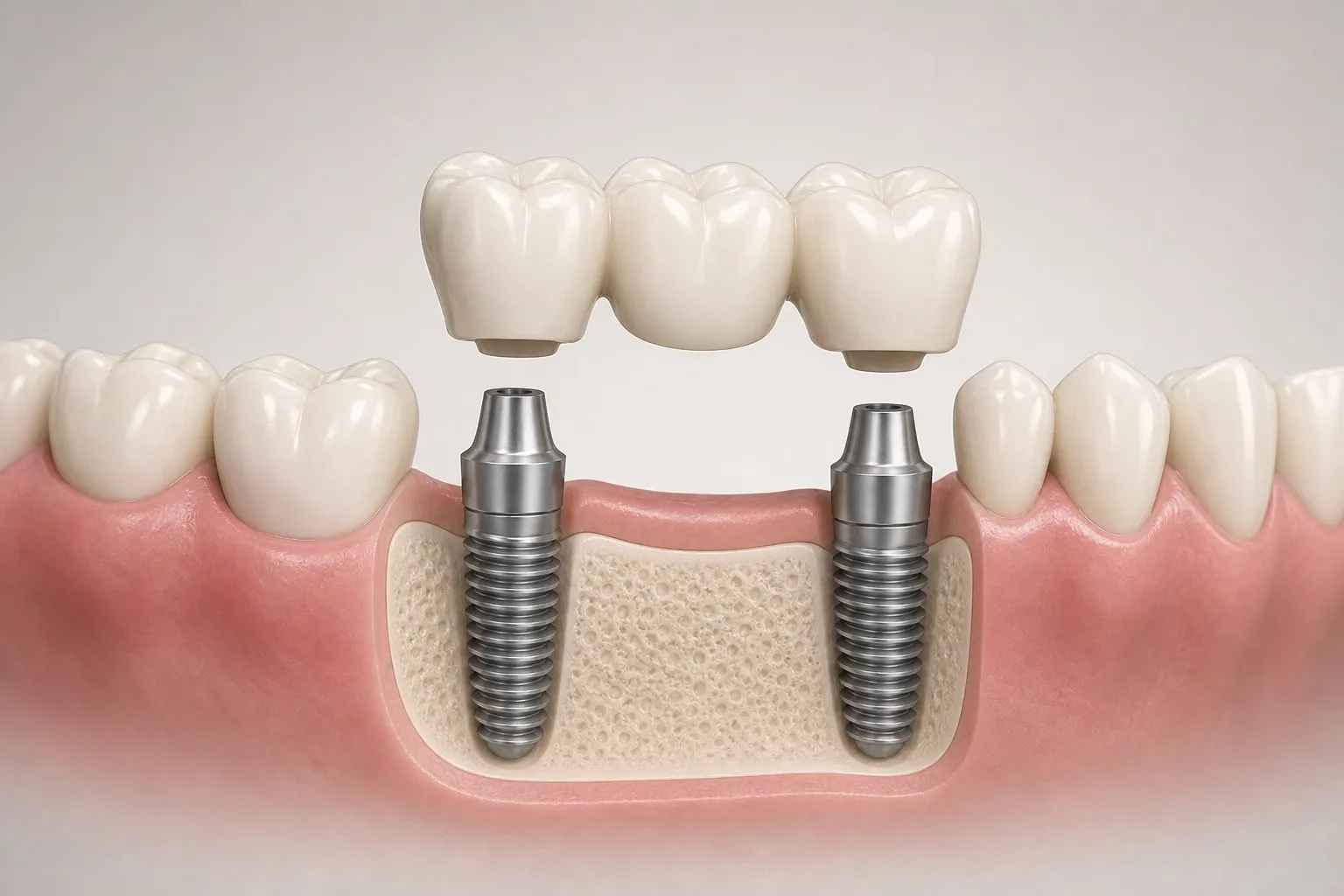
Short answer: in many cases, yes. A failed implant can usually be removed, and once the site has healed — sometimes with bone grafting — a new implant may be placed. What matters most is understanding why the first one failed so the same thing doesn’t happen again.
First: confirm what’s actually happening
Not every problem means the implant has failed. Sometimes the crown or abutment screw has loosened, which is a much simpler fix — see why a dental implant feels loose. An exam and 3D imaging distinguish a restoration problem from a true implant failure.
Why implants fail
Understanding the cause shapes whether and how a replacement is planned:
- Peri-implantitis — infection and inflammation that erodes bone around the implant. Research identifies it as the leading cause of late implant failure.
- Failed integration — the implant never fully fused with bone, usually apparent in the first months.
- Excessive bite forces — unmanaged grinding or a bite that overloads the implant.
- Health and habit factors — smoking and poorly controlled conditions can impair healing.
If the underlying cause isn’t addressed, a replacement faces the same headwinds. That’s why a careful evaluation matters more than rushing to re-place an implant.
What the replacement process typically involves
1. Removal. A failed implant is usually removed conservatively, preserving as much surrounding bone as possible.
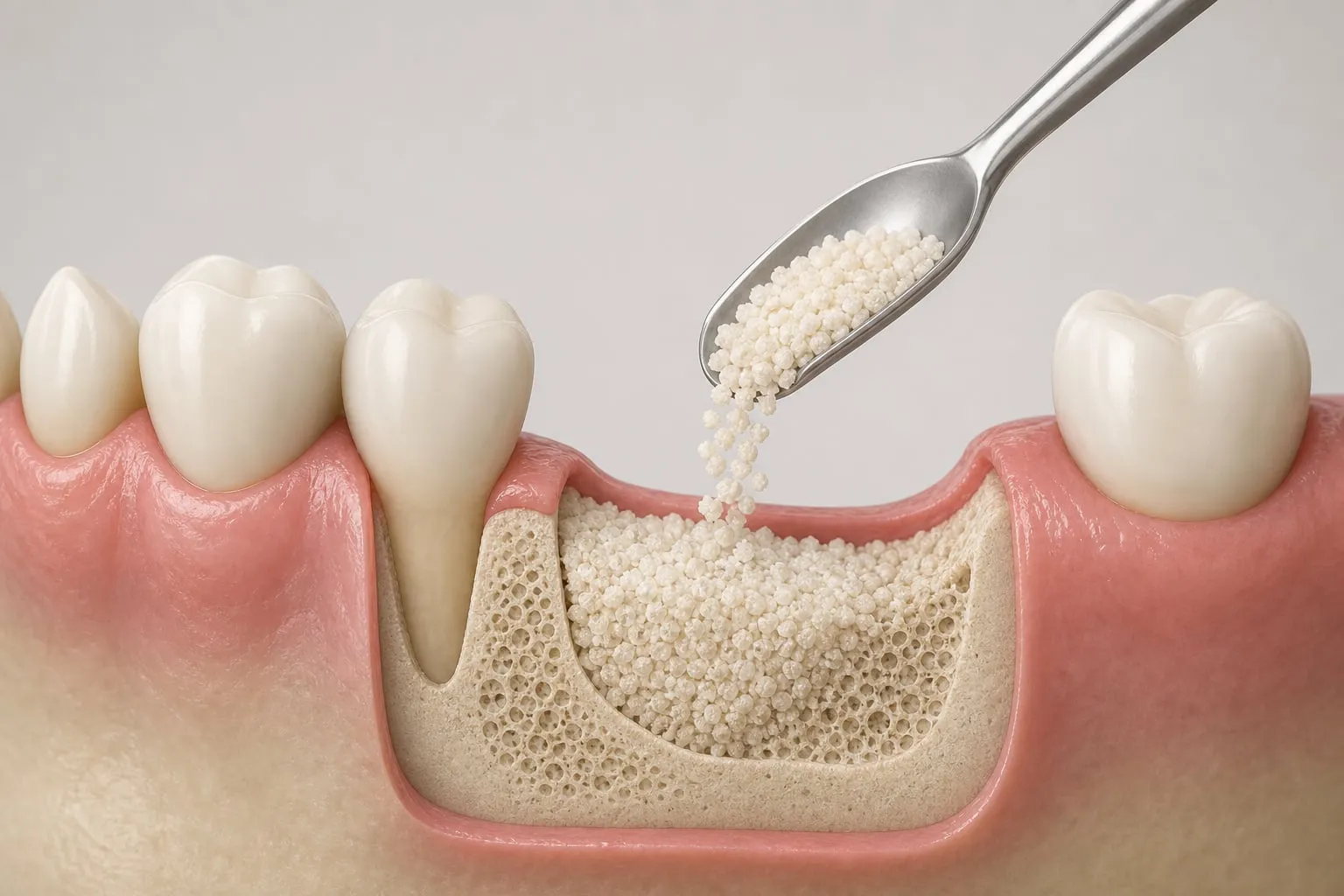
2. Healing — and often grafting. Failure frequently leaves a bone defect. Bone grafting rebuilds volume so a future implant has a solid foundation. Healing commonly takes several months.
3. Reassessment. We re-image the site to confirm there’s adequate bone and healthy tissue.
4. Placing a new implant. When the foundation is ready, a new implant may be placed — sometimes in a slightly different position or size to improve support.
5. Restoration. After integration, a new crown or prosthesis completes treatment.
How long does the whole thing take?
Longer than a first-time implant, because healing happens twice. If grafting is required, expect several months between removal and placement, then additional months for the new implant to integrate. Your provider will map out a specific timeline.
Improving the odds the second time
- Treat any infection or gum disease thoroughly first
- Address grinding with a nightguard if that contributed
- Manage health factors — see diabetes and smoking
- Commit to consistent hygiene and regular professional cleanings
- Keep follow-up appointments so issues are caught early
Considering a second opinion?
If an implant placed elsewhere is struggling — or you’ve been told nothing can be done — a fresh evaluation is often worthwhile. Learn more about failing implants and second opinions.
Let’s take a look
We’ll evaluate the implant and give you an honest assessment of your options. Request a free consultation or call (949) 773-4170.
This article is general education, not a diagnosis. Individual results vary; only a personalized evaluation can determine what may be an option for you.