

No, a dental implant can’t get a cavity. The implant post and the crown on top are made of materials that don’t decay the way natural tooth enamel does. But the gums and bone around an implant can still become inflamed or infected, and the natural teeth beside it can still get cavities, so an implant needs the same daily care and checkups as your natural teeth.
That distinction matters, because “can’t get a cavity” is easy to hear as “doesn’t need looking after.” Here’s what can and can’t go wrong.
Why can’t a dental implant get a cavity?
A cavity, or tooth decay, happens when bacteria in plaque feed on sugars and produce acids that gradually dissolve the minerals in tooth enamel and the softer dentin underneath. Decay needs natural tooth structure to attack.
An implant has none. It’s made of three parts:
- The implant, a post usually made of titanium that sits in the jawbone and acts as the root
- The abutment, a connector that joins the implant to the crown
- The crown, the visible tooth, typically made of a ceramic material
None of these is tooth structure, so none of them can decay. That’s also different from a crown on a natural tooth, where decay can start at the edge where the crown meets the tooth underneath. With an implant crown, there’s no tooth underneath to decay.
Crowns can still chip or wear over many years, and plaque still sticks to them. The materials don’t rot, but plaque left in place can irritate the tissue around them.
So what can go wrong around an implant?
The weak point isn’t the implant. It’s the gum and bone that hold it.
Plaque that builds up along the gumline around an implant can trigger inflammation in stages:
- Peri-implant mucositis is inflammation of the gum tissue around an implant without loss of the supporting bone. It’s similar to gingivitis around a natural tooth, and it’s often reversible with professional cleaning and better home care.
- Peri-implantitis is inflammation that has spread to the supporting bone, causing bone loss around the implant. It’s harder to treat, and published research identifies it as a leading cause of late implant failure.
The tricky part is that these conditions often don’t hurt in their early stages. They can develop quietly, which is why checkups matter even when everything feels fine.
| Natural tooth | Dental implant | |
|---|---|---|
| Can get a cavity | Yes | No |
| Gum inflammation | Gingivitis | Peri-implant mucositis |
| Gum and bone infection | Periodontitis | Peri-implantitis |
| Needs daily cleaning | Yes | Yes |
| Needs professional checkups | Yes | Yes |
Can the teeth next to an implant still get cavities?
Yes. Your natural teeth are just as vulnerable as they were before. The spot where an implant crown meets a neighboring tooth can collect food and plaque if it isn’t cleaned well. And if gums recede over time, the exposed root surfaces of natural teeth can be more prone to decay.
An implant fills the space it replaces. It doesn’t protect the rest of your mouth, and keeping the neighboring teeth healthy is part of keeping the implant healthy.
What are the warning signs of a problem around an implant?
Contact your dental office if you notice:
- Bleeding when you brush or clean around the implant
- Redness, swelling, or tenderness at the gumline
- Gums pulling back so that metal becomes visible
- A bad taste, persistent bad breath, or discharge around the implant
- Discomfort when biting on the implant
- Any looseness of the crown or the implant
Caught early, inflammation around an implant is generally far more manageable. Our page on failing dental implants explains what an evaluation involves and the options when there’s a problem.
How do I keep the tissue around my implant healthy?
At home, every day:
- Brush twice a day with a soft-bristled brush, angling the bristles toward the gumline around the implant
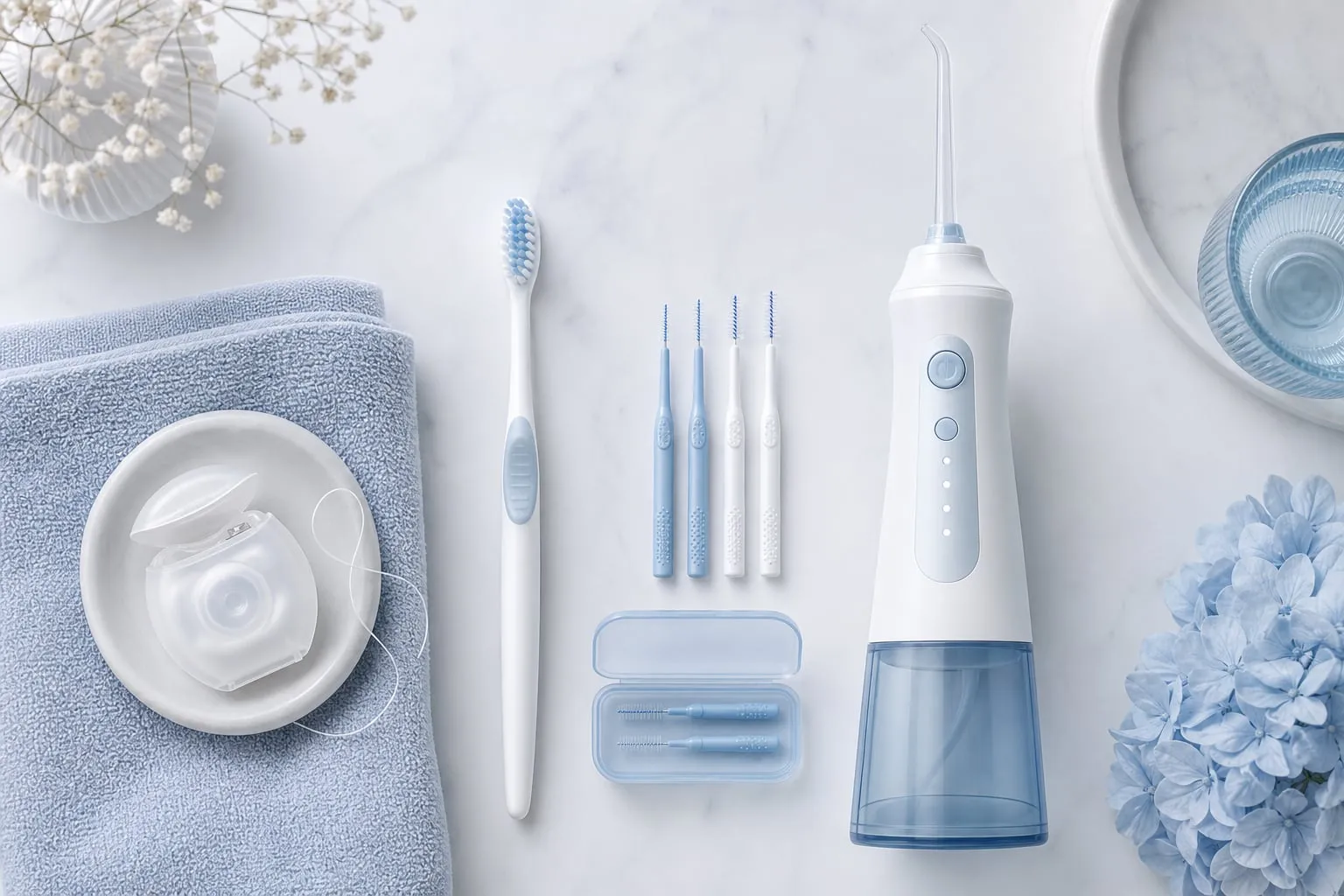
- Clean between and around the implant daily with floss, interdental brushes, or a water flosser, depending on your restoration
- Use a non-abrasive toothpaste, and avoid harsh whitening products that can scratch restorations
- Clean the neighboring teeth just as carefully
Our guide to cleaning implant-supported teeth covers technique for single implants, implant bridges, and full-arch restorations.
At the dental office:
- Keep routine cleanings and checkups. Your team can clean areas you can’t reach, check the gum tissue around the implant, and catch changes while they’re still easier to address.
- Expect occasional X-rays. Your dentist may take them from time to time to check the bone level around the implant.
- Ask about your cleaning interval. Some patients are advised to come in more often, based on their gum health and risk factors.
Who is at higher risk of problems around an implant?
Some factors make inflammation around implants more likely. None of them automatically rules out an implant, but each is worth discussing with your dentist:
- Smoking reduces blood flow to the gums and bone and is associated with a greater risk of peri-implantitis. See smoking and dental implants.
- Diabetes that is poorly controlled can affect healing and gum health. Well-managed diabetes is generally not a barrier, but it’s part of the conversation.
- A history of gum disease can make inflammation around implants more likely, which makes maintenance especially important. See dental implants and gum disease.
- Grinding or clenching puts repeated stress on implants and their components, and a nightguard is commonly recommended.
- Inconsistent cleaning or skipped checkups let plaque build up around the implant, which is the main driver of inflammation.
The bottom line
An implant can’t get a cavity, but it isn’t maintenance-free. The gums and bone that support it can become inflamed, often without pain at first, and the natural teeth around it can still decay. Daily cleaning at the gumline, routine checkups, and attention to risk factors like smoking go a long way, and if something around an implant doesn’t feel right, request an appointment or call (949) 773-4170.
This article is general education, not medical advice or a diagnosis. Discuss your own situation and care routine with your dentist.