Short answer: clean them much like natural teeth — but pay special attention to the gumline, because that’s where implant problems start.
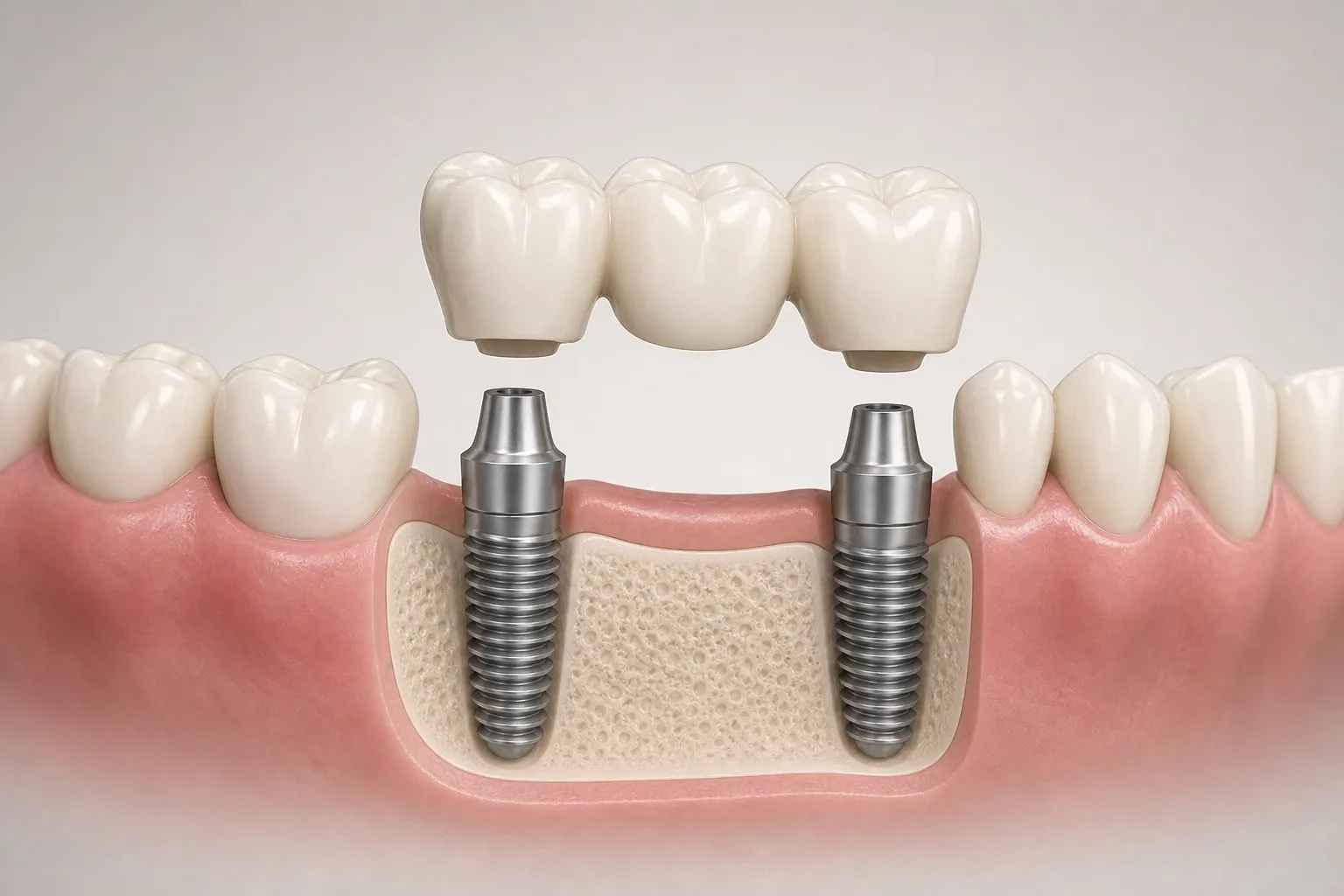
Here’s the key thing to understand: an implant cannot get a cavity. The titanium post and the crown on top can’t decay. But the gum and bone supporting the implant absolutely can become inflamed and infected — a condition called peri-implantitis that published research identifies as the leading cause of late implant failure.
That’s why cleaning matters just as much with implants as with natural teeth.
Your daily routine
Brush twice a day. Use a soft-bristled brush and non-abrasive toothpaste. Angle the bristles toward the gumline around the implant and brush gently but thoroughly.
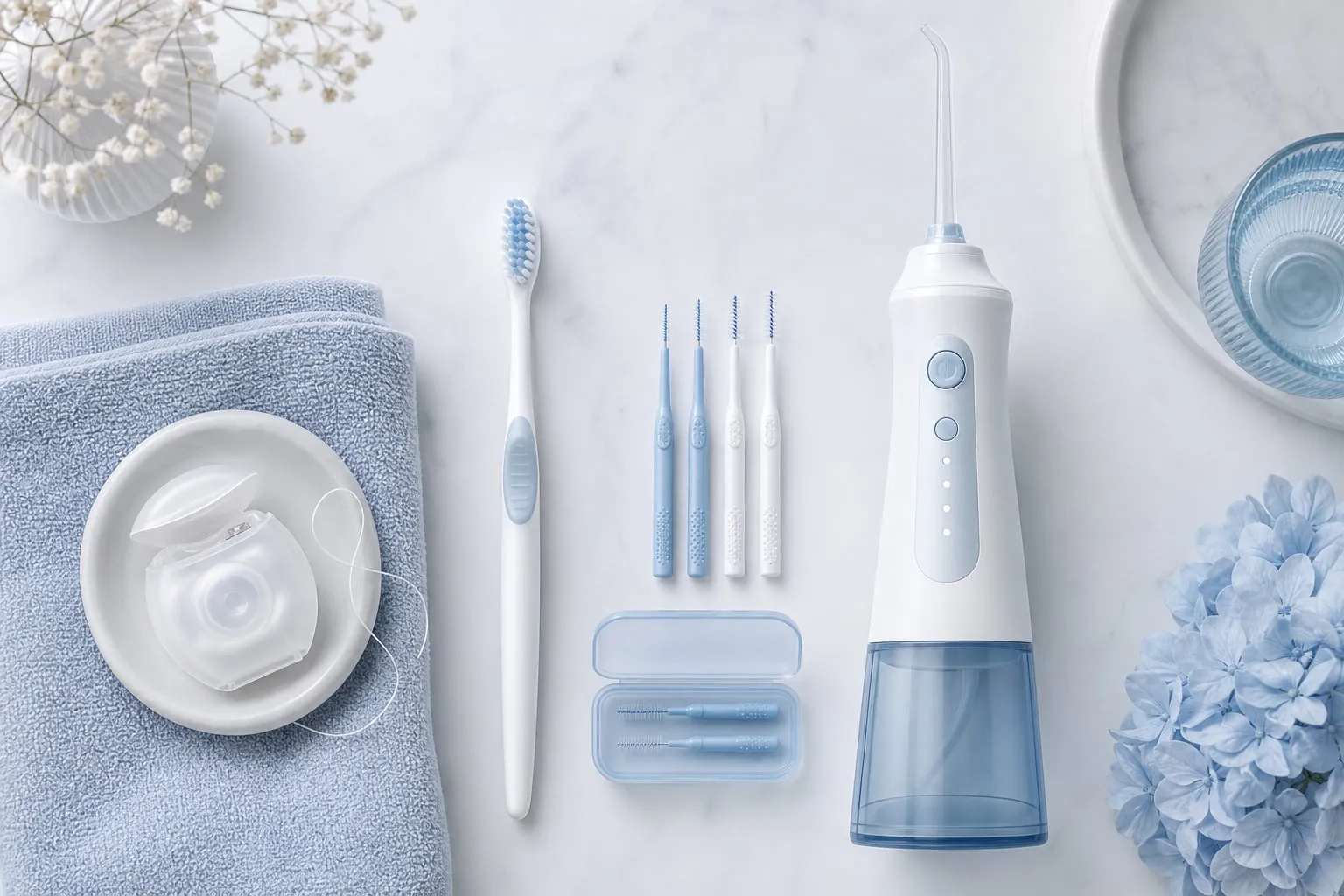
Clean between and around daily. This is the step people skip, and it’s the one that protects the tissue. Depending on your restoration:
- Single implants — floss or an interdental brush usually works well
- Implant bridges — a floss threader or superfloss lets you clean under the bridge
- Full-arch restorations — a water flosser and/or interdental brushes are often easiest for cleaning beneath the prosthesis
Consider a water flosser. Many implant patients find one makes cleaning around and beneath restorations far easier and more consistent — which matters more than perfect technique.
Cleaning full-arch restorations (All-On-4 and similar)
A fixed full arch doesn’t come out, so debris can collect underneath it. Focus on:
- Cleaning beneath the bridge daily, not just the outer surfaces
- Using the tools your provider recommends for your specific design
- Never skipping professional maintenance visits, where the restoration can be cleaned thoroughly
If you have removable implant-supported dentures, take them out to clean both the denture and the attachments on the implants.
What to avoid
- Abrasive pastes or harsh whitening products that can scratch restorations
- Metal picks used aggressively around implant surfaces
- Skipping cleanings — plaque around implants is the main risk factor
- Smoking, which affects gum and bone health — see smoking and dental implants
Warning signs to watch for
Contact your dental office if you notice:
- Bleeding when you brush around the implant
- Redness, swelling, or tenderness at the gumline
- Gum recession exposing metal
- Any looseness — see why an implant feels loose
Caught early, inflammation around an implant is far more manageable.
Professional maintenance
Routine checkups let your team measure the tissue around your implants, clean areas you can’t reach, and catch small problems early. Think of it as protecting an investment you’ve already made.
For the bigger picture on healing and long-term care, see our recovery and aftercare guide.
Questions about caring for your implants?
We’re happy to walk you through the right routine for your restoration. Request a free consultation or call (949) 773-4170.
This article is general education, not medical advice. Follow the specific instructions provided by your dental team.