A crown is a tooth-shaped cap that fits over a damaged natural tooth that still has a healthy root. A dental implant replaces the root itself with a small post in the jawbone, and then carries its own crown on top. In short, a crown repairs a tooth you’re keeping, while an implant replaces a tooth that’s missing or can’t be saved.
The mix-up is understandable, because an implant tooth includes a crown too. What really separates the two is what’s happening below the gum line. Here’s how to tell them apart, and how dentists decide which one you need.
What is a dental crown?
A crown, sometimes called a cap, covers the visible part of a tooth. To place one, the dentist reshapes the existing tooth so the crown can fit over it, takes an impression, and then bonds the finished crown in place. The tooth’s root stays where it is, anchored in the jaw as it always was.
Crowns are commonly used to:
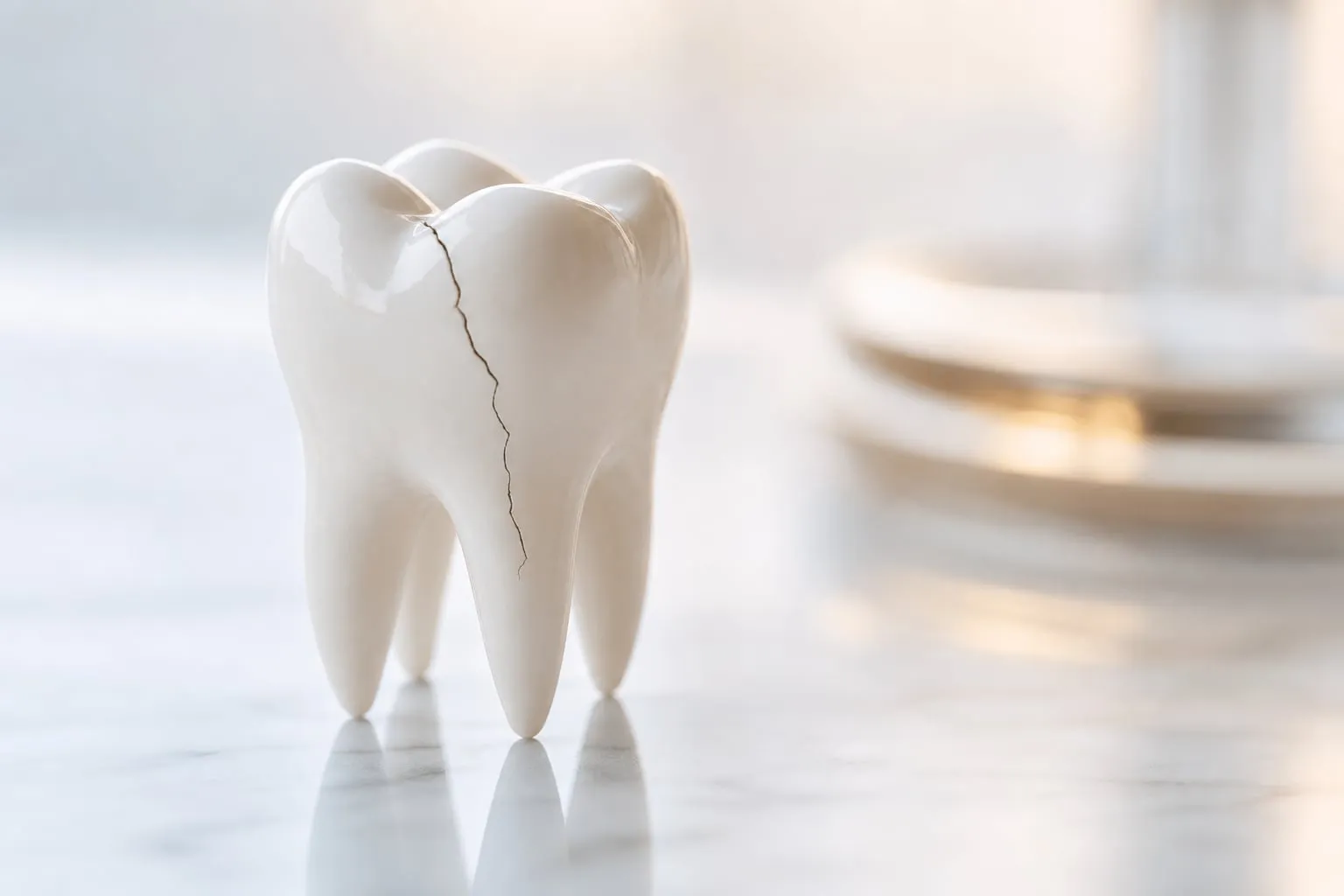
- Protect a tooth that is cracked but still has a sound root
- Rebuild a tooth with a large, failing filling
- Strengthen a back tooth after a root canal
- Restore a tooth that’s badly worn or chipped
The key requirement is a healthy tooth to work with. A crown needs a stable root and enough sound tooth structure above the gum to hold onto.
What is a dental implant?
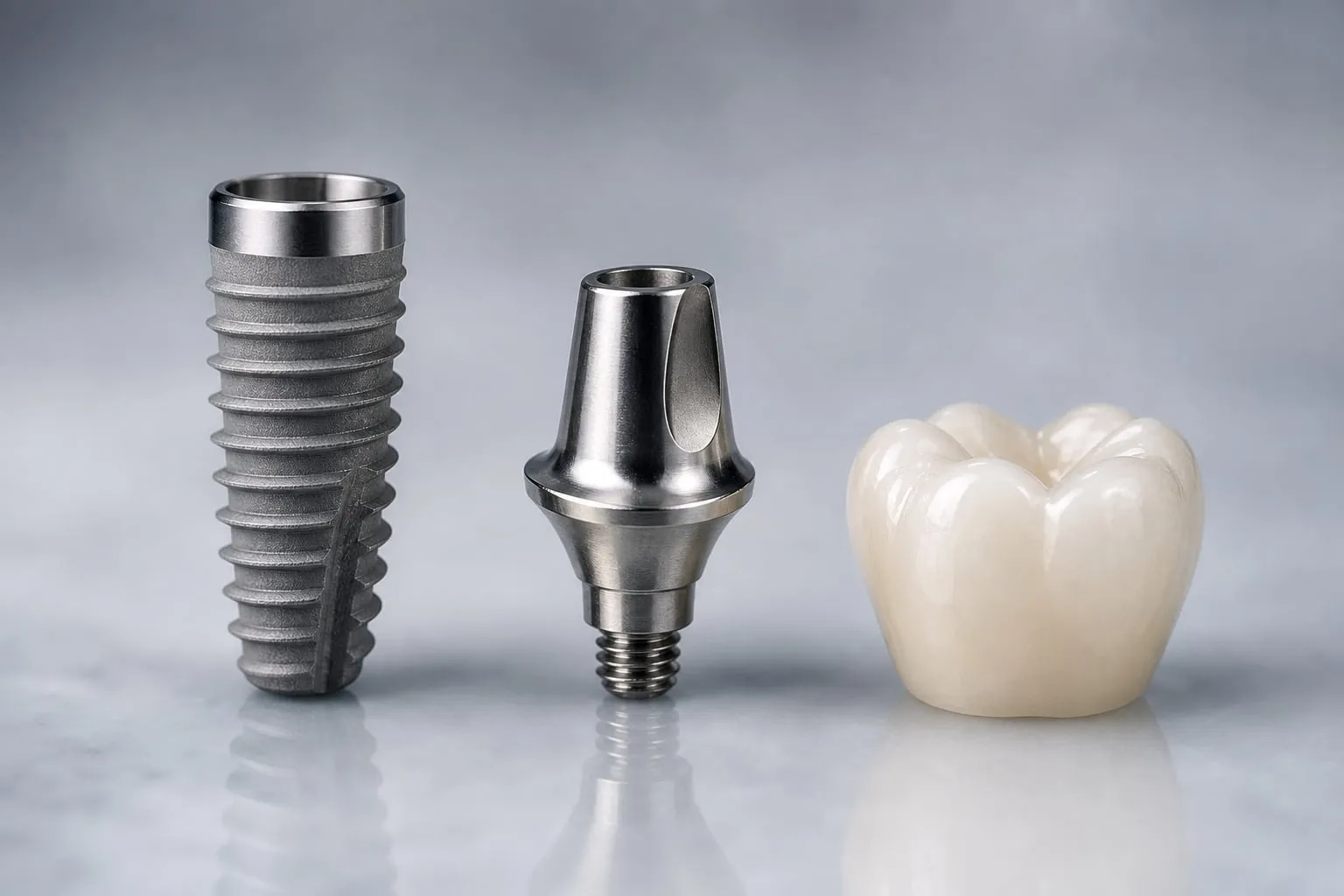
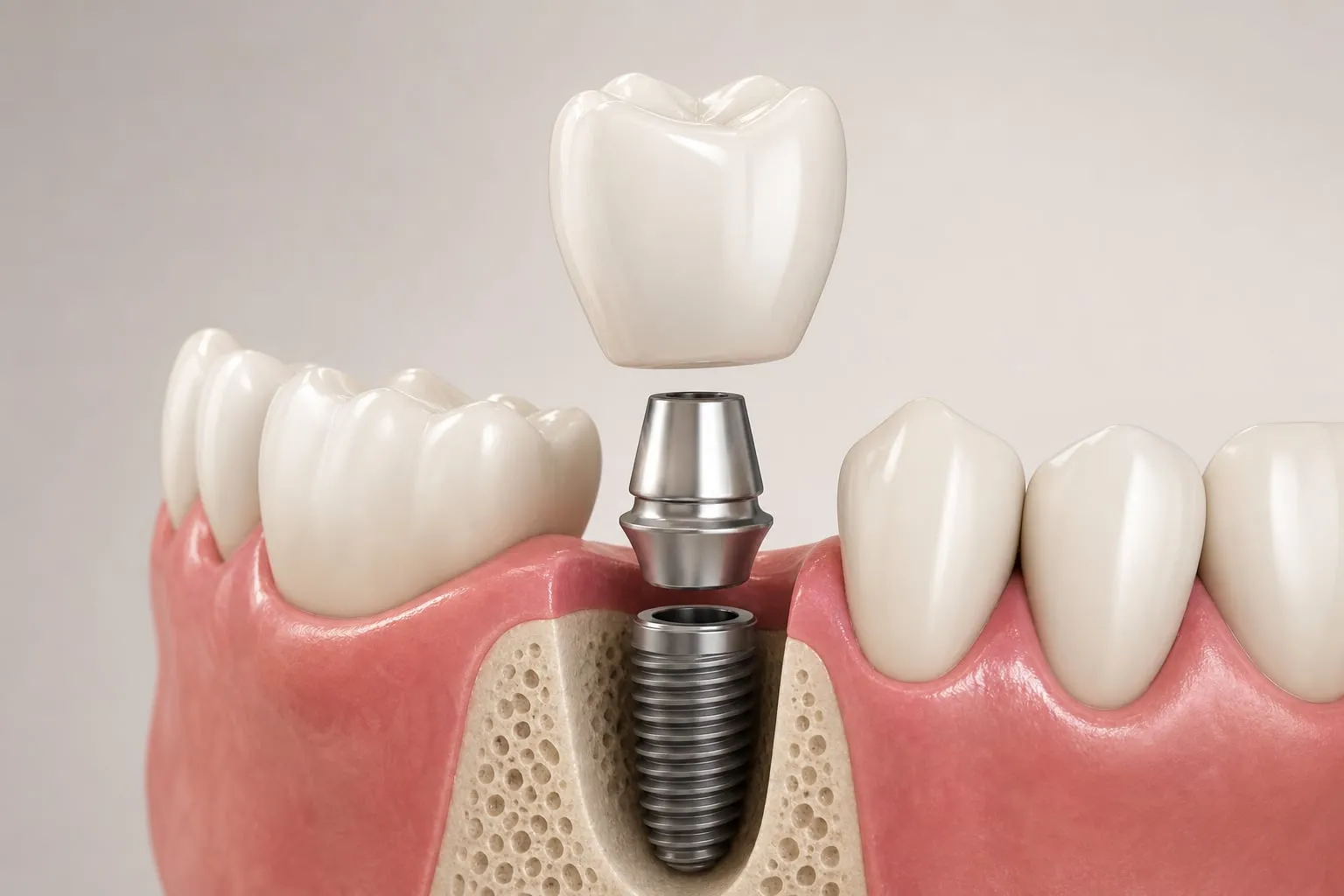
A dental implant replaces a tooth from the root up. A small post, usually titanium, is placed in the jawbone where the tooth used to be. Over a healing period, the bone grows onto its surface and bonds with it, a process called osseointegration.
Once that has happened, an abutment, a small connector, is attached to the top of the implant, and a custom crown goes on the abutment. So an implant tooth has three parts: the implant in the bone, the abutment through the gum, and the crown you see.
An implant is used when the natural tooth is already missing or has to be removed. Our single tooth implant page explains how one is planned and placed.
Is an implant crown the same as a regular crown?
They can look identical, and they’re often made from the same materials, such as zirconia or porcelain. The difference is what’s underneath:
- A regular crown fits over your own reshaped tooth, and the tooth’s root carries the load.
- An implant crown attaches to the abutment, either cemented on or fastened with a small screw, and the implant carries the load.
That difference changes how each one ages. The tooth under a regular crown can still decay at the edges or crack. An implant crown can’t get a cavity, but the gum and bone around the implant can become inflamed if the area isn’t kept clean. Our guide to implant crown materials compares the materials and the screw-versus-cement question in detail.
How do a crown and an implant compare?
| Crown on a natural tooth | Dental implant with a crown | |
|---|---|---|
| What it replaces | Only the visible part of the tooth | The whole tooth, root included |
| What’s needed | A healthy root and enough sound tooth structure | Enough jawbone and healthy gums at the site |
| The natural root | Stays in place | Already gone or removed; the implant takes its place |
| Procedure | The tooth is reshaped; no surgery | A surgical procedure to place the implant, under local anesthesia |
| Healing time | No bone healing needed; usually a short series of visits | Usually several weeks to a few months of bone healing before the final crown |
| How it feels | Natural pressure feedback through the ligament around the root | Feels natural, but without that ligament feedback |
| Common long-term issues | Decay at the crown’s edge, fracture, root problems | Gum and bone inflammation around the implant, crown wear |
General comparison for education only. Timelines and suitability vary from person to person.
When is a crown enough?
If a tooth can be reliably restored, keeping it is usually the better choice. A natural root keeps the surrounding bone stimulated and holds the small ligament that gives you a sense of pressure when you bite. No replacement reproduces that completely.
A crown generally makes sense when:
- The root is intact, with no fracture running down it
- Enough sound tooth remains above the gum for the crown to grip
- Any infection inside the tooth can be treated, often with a root canal first
- The gum and bone supporting that tooth are healthy
If you’re weighing those options, our comparison of dental implants vs. root canal walks through how dentists judge whether a tooth is worth saving.
When can’t a tooth be saved with a crown?
A crown can only protect what’s already there. It can’t repair a root that has split, or hold onto a tooth with too little left. A tooth often can’t be reliably restored when:
- The root has a vertical fracture
- Decay extends well below the gum line
- Too little healthy tooth remains for a crown to stay on securely
- A previous root canal has failed and can’t be successfully retreated
- Gum disease has destroyed much of the bone around that tooth
In those situations, a crown usually just postpones the problem. The more dependable route is often to remove the tooth and replace it. That typically means an extraction, sometimes a bone graft to support the site, then the implant, a healing period, and finally the implant crown. If you have a tooth in trouble right now, see what to do about a failing or broken tooth.
Can a crowned tooth need an implant later?
Yes, sometimes. A crown protects a tooth but doesn’t make it immune to problems. Decay can start where the crown meets the tooth, the tooth beneath can crack, and the root can develop an infection years later.
If that happens and the tooth can’t be repaired, the old crown can’t simply be moved onto an implant. The tooth is removed, the implant is placed and allowed to heal, and a new crown is made for the abutment.
The reverse is also true. If an implant crown wears or chips over the years, it can usually be replaced on its own, without disturbing the implant in the bone.
How do you know which one you need?
You usually can’t tell from the mirror. A tooth that looks badly broken may restore well, and one that looks fine may have a cracked root. An exam and imaging answer the question. At our office, that includes 3D CBCT imaging, a type of 3D X-ray that shows the root, the surrounding bone, and nearby structures.
Useful questions to ask:
- How much healthy tooth is left above the gum?
- Is there any sign the root is cracked?
- If we save it, what’s the realistic outlook?
- If it needs replacing, do I have enough bone for an implant?
If an implant turns out to be the answer, a single implant at our office starts at $1,995, covering the consultation, implant surgery, and crown. Extractions, bone grafting, and sinus lifts are quoted separately. Pricing may vary based on individual needs. You’ll receive a written treatment plan before any work begins.
The bottom line
A crown and an implant solve different problems. A crown caps and protects a natural tooth that still has a healthy root, while an implant replaces a root that’s gone and then carries its own crown. If your tooth can be saved, a crown is often the simpler path; if it can’t, an implant is designed as a long-term replacement. To find out which applies to you, request a free, no-obligation consultation or call (949) 773-4170.
This article is general education, not a diagnosis or a substitute for professional dental advice. Individual results vary, and only a personalized evaluation can determine which treatment may be appropriate for you.