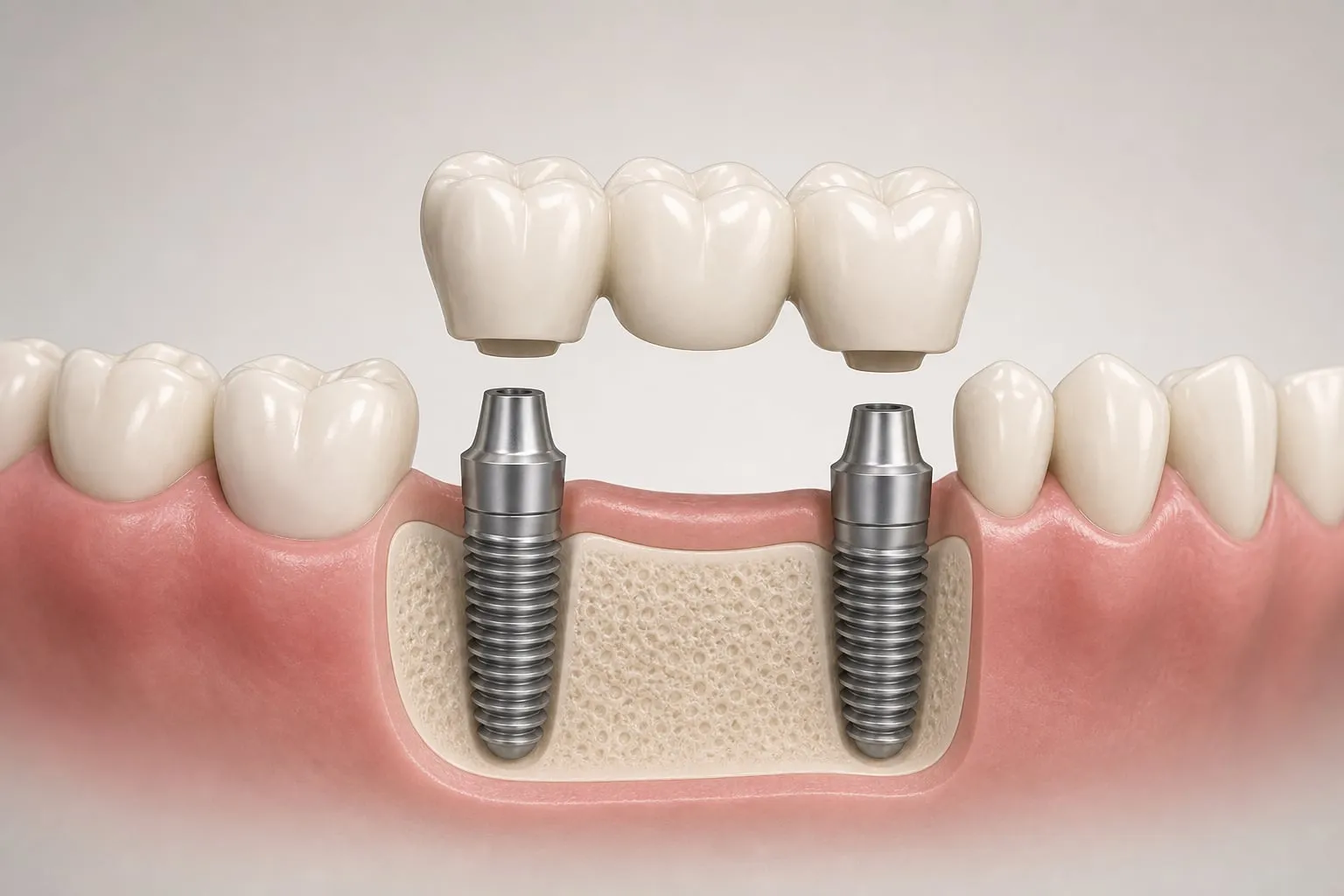
Short answer: an osteoporosis diagnosis rarely rules out implants. The medications used to treat it are what need discussing — and that discussion needs your complete medication list.
This topic generates a lot of anxiety and a fair amount of misinformation. Here’s a measured version.
Osteoporosis itself
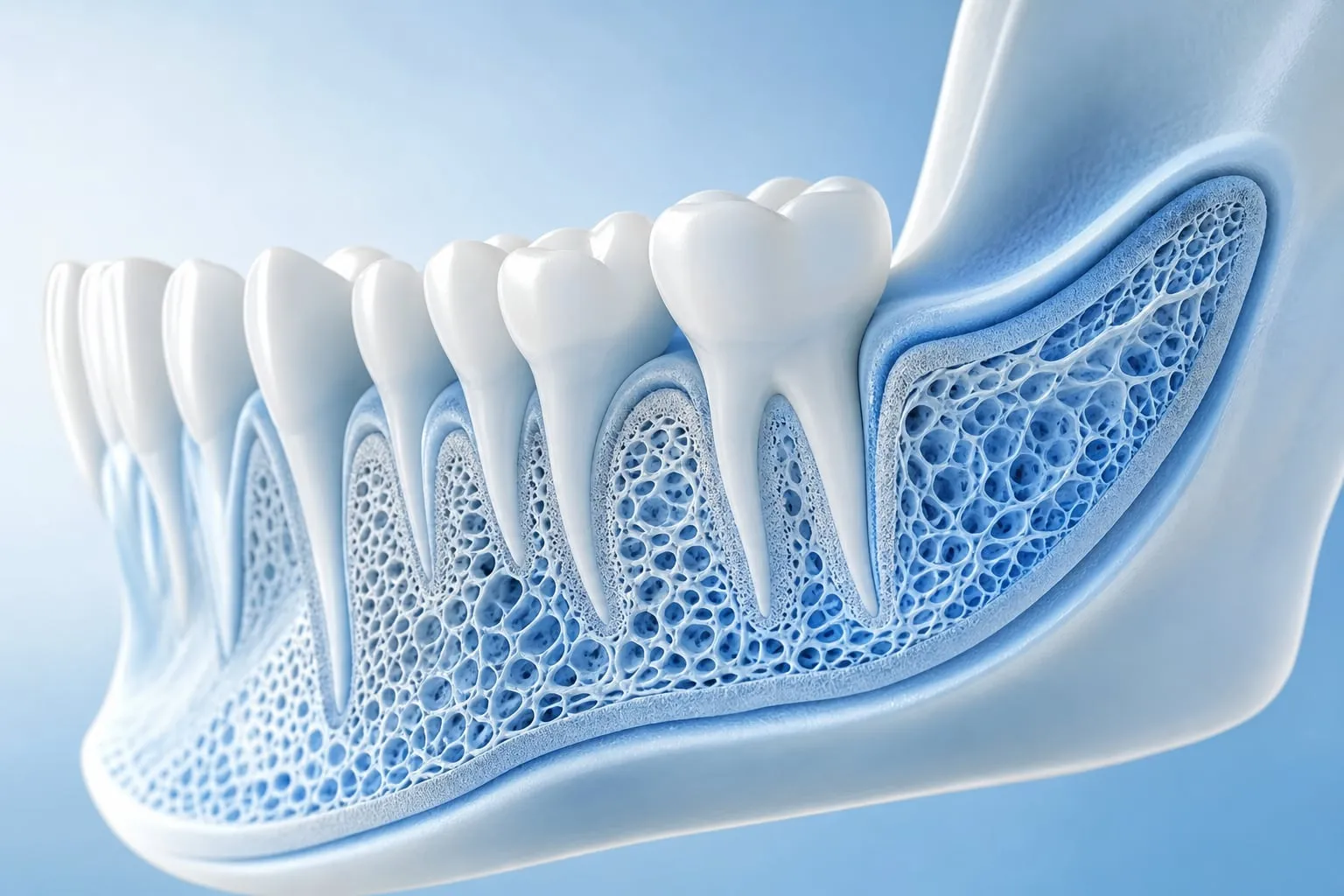
Osteoporosis reduces bone density and is most commonly assessed in the hip and spine. The jawbone is not always affected to the same degree, and many people with osteoporosis go on to have implants successfully.
What actually governs implant planning is the bone at the specific site — its volume and density where the implant would go. That’s determined by 3D imaging, not by a general diagnosis. See dental implants with bone loss.
The medications are the real conversation
Several classes of medication used for osteoporosis and other bone conditions work by altering bone turnover. Because implant placement and healing depend on bone remodeling, these are relevant to planning.
The medications most often discussed include bisphosphonates (oral and intravenous) and other antiresorptive or antiangiogenic agents. These are prescribed for good reasons — reducing fracture risk is significant — so this is never about whether you should be taking them.
MRONJ, in proportion
There is a recognized condition called medication-related osteonecrosis of the jaw (MRONJ), in which an area of jawbone fails to heal properly after a dental procedure.
Two things are true at once, and both matter:
- It is a real risk that warrants careful planning, and
- It is uncommon, particularly with oral bisphosphonates prescribed for osteoporosis. Risk is generally considered higher with intravenous or high-dose antiresorptive therapy, typically in oncology settings, and with longer duration of use.
The practical response isn’t avoidance. It’s disclosure, coordination with your physician, and appropriate planning.
Never adjust your own medication
This is the most important line in this article.
Do not stop, pause, or change a prescribed medication because of a dental procedure. Whether any adjustment is appropriate — and often it isn’t — is a decision for your physician, weighing your fracture risk against the dental consideration. Your dental provider can communicate with them, but this is not a call you or we make unilaterally.
What we need from you
Bring to your consultation:
- A complete list of medications, including doses
- Supplements, including calcium and vitamin D
- Any injectable or infused medications, which people frequently forget to mention because they aren’t daily pills
- Duration — how long you’ve been on each
- Your physician’s contact information, in case coordination is helpful
- Any past or planned cancer treatment, which changes the picture significantly
That injectable point is worth repeating. Some of the most relevant medications are given every six or twelve months, and patients routinely omit them when asked “what do you take?”
How planning may be adapted
Depending on your medication, history, and site, a provider may:
- Consult your physician before proceeding
- Take a more conservative surgical approach
- Plan additional monitoring during healing
- Recommend addressing existing dental problems before starting a new medication, where timing allows
- Occasionally recommend an alternative to implants
That last one is real, and we’d tell you if we thought it. See missing teeth: your options.
A practical timing point
If you are about to start a bone medication and also have dental work you know you’ll need, mention it to both your physician and your dentist. Where clinically appropriate, sequencing dental treatment beforehand is sometimes preferred. This isn’t always possible and shouldn’t delay necessary medical treatment — but it’s worth raising.
Other health factors that interact
Bone health rarely travels alone. Also relevant:
- Diabetes and healing
- Smoking, which affects both bone and gum health
- Gum disease, treated before placement
- Steroid use, which affects bone density
A full picture leads to better planning. General candidacy overview: am I a candidate?
The bottom line
Most people with osteoporosis can be evaluated for implants. What determines your path is your specific medications, your history, and the bone at the site — assessed properly, with your physician involved where appropriate.
What you should not do is assume you’re disqualified and never ask. That assumption costs people options they actually had.
Let’s review your situation
Bring your medication list and we’ll give you an honest assessment, coordinating with your physician where it’s useful. Request your free consultation or call (949) 773-4170.
This article is general education, not medical advice, and does not describe every relevant medication or circumstance. Never change a prescribed medication without consulting the physician who prescribed it. A personalized evaluation is required to determine what may be right for you.