
Bring these to every consultation — including ours. How a provider answers tells you more than any website will.
Most people research implants for weeks before they call anyone. That’s sensible: this is a significant investment and a treatment you’ll live with for a long time. The problem is that provider websites all sound broadly the same. These questions cut through that.
About training and experience
1. What implant-specific training do you have? Implant dentistry involves training beyond general dental school. Ask what theirs was.
2. How long have you been placing implants, and roughly how many do you place? You’re not looking for a specific number. You’re looking for a direct answer rather than a deflection.
3. Do you place and restore implants, or is that split between providers? Both models work. What matters is that you know who does what, and who you call if something needs attention.
4. Do you hold credentials from any implant organizations? One signal among several, not a guarantee on its own.
About planning
5. Will you take 3D imaging before recommending treatment? A CBCT scan shows bone volume, density, and the position of nerves and sinuses. Planning an implant without it is planning on incomplete information. If a provider quotes a full treatment plan before imaging you, ask why.
6. What happens if the scan shows I need grafting? You want this addressed before you commit, not discovered mid-treatment. See do I need a bone graft.
7. What alternatives should I consider, and why are you recommending this one? A provider who presents implants as the only option for every situation isn’t assessing your case. Sometimes a bridge, a denture, or saving the existing tooth is the better answer.
About components
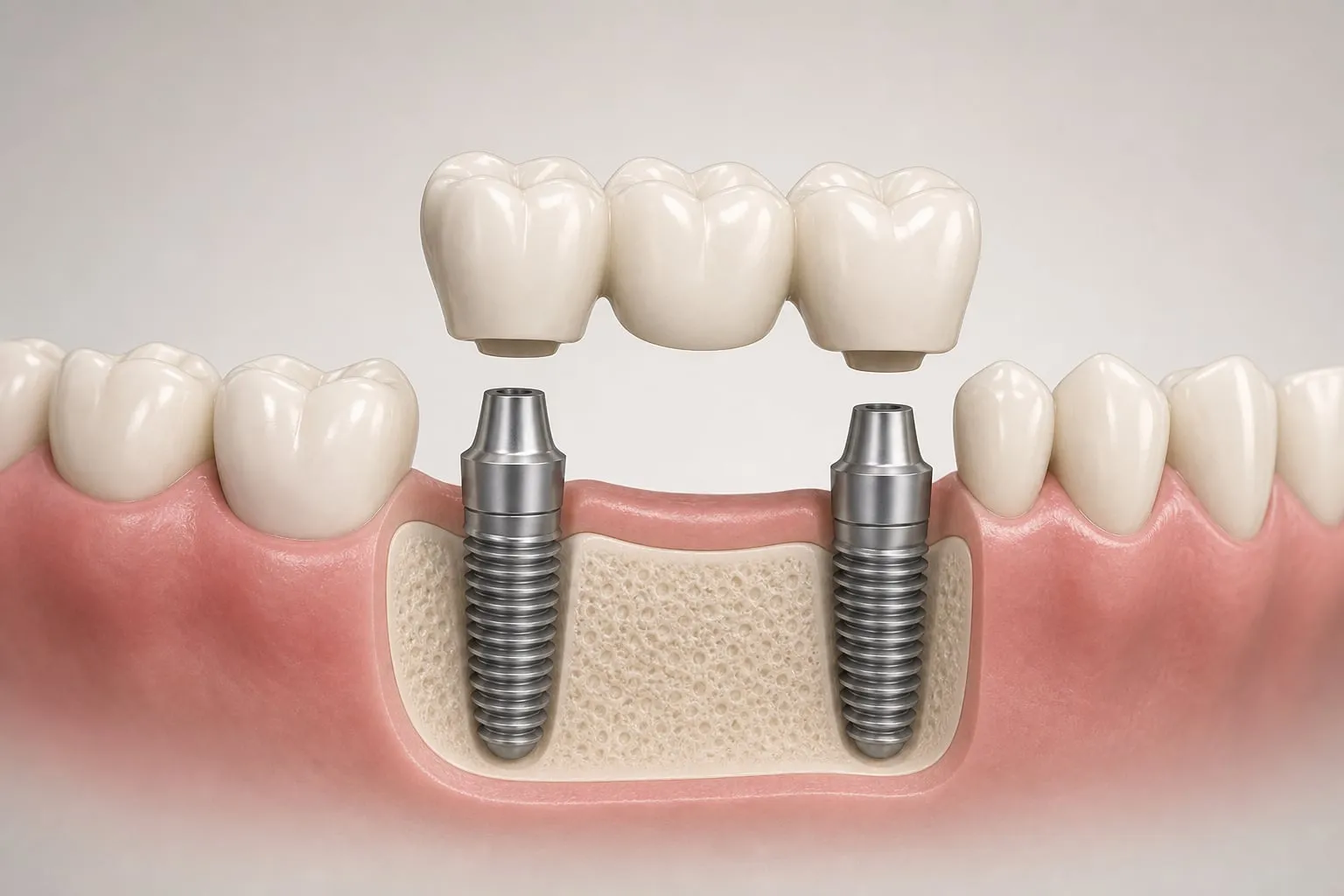
8. Which implant system do you use? This matters more than most patients realize. Established systems have widely available components, so if a part needs servicing in ten years — possibly by a different dentist in a different city — the parts exist. Obscure or discontinued systems can leave a restoration difficult to service.
9. Titanium or zirconia, and why for my case? See titanium vs. zirconia. The reasoning matters more than the answer.
About cost
10. Exactly what does the quoted price include? The single most useful question you can ask. A quote might cover the implant post alone, or the post and abutment, or all of that plus the crown, imaging, extraction, and grafting. Two quotes thousands apart sometimes describe different scopes of work.
Get it itemized and in writing. See what’s included at $1,995 and our financing and insurance page.
11. What could change the total, and what would that cost? Ask for the realistic range, not just the headline number.
About what happens afterward
12. What happens if there’s a complication, and what does that cost? Implants have high success rates, but no provider has a perfect record and anyone claiming otherwise is not being straight with you. What you want to hear is a clear answer about follow-up care, who to call, and what is and isn’t covered.
Also ask what ongoing maintenance looks like — peri-implantitis is the leading cause of late implant failure, and it’s managed through regular professional maintenance.
Warning signs worth noticing
- Pressure to decide today, or a discount that expires when you leave
- A quote before imaging
- Guaranteed results or success rates presented as promises
- Vagueness about what’s included in the price
- Dismissiveness about second opinions
- No clear answer about complications
Green flags
- A written plan you can take away and compare
- Willingness to explain the reasoning behind a recommendation
- Straight answers about cost, including what might change it
- Comfort with you seeking another opinion
- Honesty about the limits of what’s achievable in your case
On getting a second opinion
For treatment of this size, comparing two or three written plans is reasonable and common. Any provider confident in their recommendation should be entirely comfortable with it — we are, and we also see plenty of patients who come to us for exactly that reason. See failing implants and second opinions.
Bring your list
Come to your consultation with these written down. We’d rather answer twelve questions than have you proceed with any uncertainty.
Request your free consultation or call (949) 773-4170.
This article is general education, not a diagnosis. Individual results vary; a personalized evaluation is required to determine what may be right for you.