The main signs of a dental implant infection are pain or swelling that gets worse instead of better after the first few days, pus or discharge, a bad taste or odor, fever, red or bleeding gums around the implant, a loose feeling, and gums pulling back to expose metal. If you notice any of these, call your dental office promptly rather than waiting to see whether it clears up. Swelling that spreads, a fever with swelling, or trouble swallowing or breathing needs urgent medical care.
Some soreness after implant surgery is expected, and most people heal without complications. The hard part is telling normal healing from a problem, especially in the first week, and noticing the quieter signs that can show up years later. Here’s how to tell the difference.
What’s normal after implant surgery, and what isn’t?
Normal healing has a direction: it gets better. Soreness and swelling typically peak in the first day or two and then ease. An infection tends to go the other way, or to bring new symptoms that weren’t there before.
| Usually normal while healing | Worth a call to your dental office |
|---|---|
| Mild to moderate swelling for a few days | Swelling that increases after day three |
| Some bruising around the area | Pain that worsens after several days instead of improving |
| Minor bleeding or oozing in the first day | Bleeding that does not settle |
| Tenderness that steadily improves | Fever, or a bad taste or discharge |
| An implant or temporary that feels loose |
The key word is trend. One sore day isn’t the concern; a site that’s getting worse is. Our recovery and aftercare guide walks through what each stage of healing typically looks like.
What are the signs of an infected dental implant?
Watch for any of the following, whether your implant is a week old or many years old:
- Pain or swelling that builds after the first few days, rather than fading
- Pus or discharge from the gum around the implant, sometimes with a small pimple-like bump on the gum
- A bad taste or odor that keeps coming back even after you clean
- Fever, or simply feeling unwell along with symptoms in your mouth
- Red, puffy, or bleeding gums around the implant, especially bleeding when you brush
- A loose feeling in the implant, the crown, or a temporary
- Gum recession that exposes the metal of the implant or its connector
- Pain when you bite on the implant
Not every one of these means infection. A crown that wiggles, for example, is often a loose screw rather than a failing implant, as our post on why an implant can feel loose explains. But each one is a reason to be seen rather than to wait.
Early infection vs. later peri-implant disease: what’s the difference?
Implant infections tend to show up at two different stages, and they behave differently.
Early post-surgical infection happens in the days or weeks after placement, while the site is still healing. The signs are usually noticeable: pain and swelling that build, discharge, a bad taste, and sometimes fever. The concern at this stage is that infection can interfere with osseointegration, the bone bonding to the implant surface.
Later peri-implant disease develops months or years after the implant has healed and is in use. It’s usually driven by plaque at the gumline, much like gum disease around natural teeth, and it comes in two stages:
- Peri-implant mucositis is inflammation of the gum around the implant without bone loss. It’s often reversible with professional cleaning and better home care.
- Peri-implantitis is inflammation that has reached the supporting bone, causing bone loss around the implant. It’s harder to treat, and published research identifies it as a leading cause of late implant failure.
| Early post-surgical infection | Later peri-implant disease | |
|---|---|---|
| When | During initial healing | Months or years later |
| Usual driver | Bacteria at a fresh surgical site | Plaque buildup at the gumline over time |
| How it feels | Often obvious: building pain, swelling, discharge | Often little or no pain at first: bleeding, redness, recession |
| Main concern | Healing and bone integration | Gradual loss of supporting bone |
The catch with later disease is that it often causes little or no pain early on. Bleeding when you brush may be the only clue, which is why checkups matter even when an implant feels fine. Our article on whether an implant can get a cavity covers daily care that helps prevent it.
What raises the risk of an implant infection?
None of these rules out an implant, but each is worth discussing with your dentist:
- Smoking, which reduces blood flow to the gums and bone. See smoking and dental implants.
- A history of gum disease
- Health conditions that affect healing, such as poorly controlled diabetes. Your dentist and physician should talk these through together.
- Inconsistent cleaning around the implant, or skipped checkups
What should I do if I think my implant is infected?
- Call your dental office. Describe what you’re noticing and when it started, and mention if you had surgery recently.
- Note the details. Is it getting better or worse? Have you had a fever? Is there discharge or a bad taste?
- Keep the area clean, gently, following the cleaning and rinsing instructions you were given.
- Avoid chewing on that side, and don’t press on, poke at, or wiggle the implant.
- Don’t try to treat it yourself. Leftover prescriptions or home remedies can mask symptoms without fixing the cause. Whether any medication is needed is for your dentist or physician to decide. If you’re already taking something, mention it when you call.
What happens at an implant infection evaluation?
An evaluation is about finding out what’s actually going on before deciding what to do. It typically includes:
- Looking at the gum tissue for redness, swelling, bleeding, or discharge
- Gently measuring the gum around the implant, to see how deep the space between gum and implant has become
- Checking for movement to tell whether the crown, the connector, or the implant itself is loose
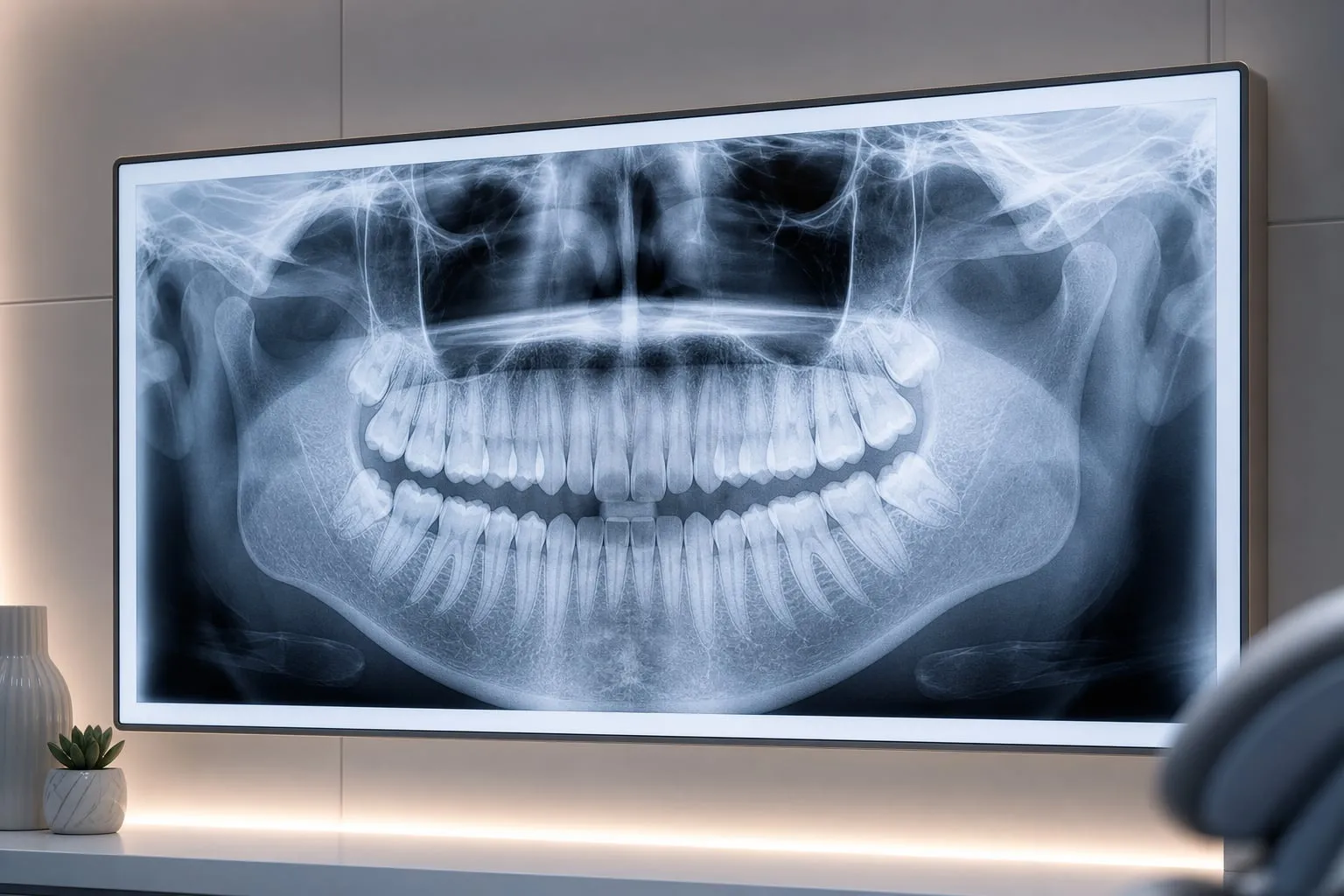
- Imaging, such as X-rays or a 3D CBCT scan, to see the bone level around the implant
- Reviewing your health history and medications, including anything that has changed recently

That tells your dentist whether the problem is the restoration, the surrounding gum and bone, or the implant itself. Treatment can range from professional cleaning and treating the inflammation, to replacing the restoration, to removing the implant and letting the site heal, sometimes with grafting, before a new implant is considered. Our page on failing dental implants explains these options in more detail.
Why shouldn’t I wait and see?
- Bone loss is hard to reverse. Inflammation that reaches the bone generally doesn’t settle on its own, and bone lost around an implant is difficult to rebuild.
- Earlier usually means simpler. Caught early, inflammation around an implant is generally far more manageable.
- Timing matters during healing. An infection in the first weeks can interfere with the implant bonding to the bone.
- Infections can spread. It’s uncommon, but a dental infection can spread beyond the mouth, which is why the signs below need immediate attention.
When is it a medical emergency?
Seek urgent medical care right away, at an emergency room or by calling 911, if you have:
- Swelling that is spreading, into your cheek, around your eye, under your jaw, or down your neck
- A fever along with facial swelling
- Trouble swallowing or breathing, or difficulty opening your mouth
- Feeling seriously unwell
Don’t wait for a dental appointment for any of these. Once you’ve been seen, let your dental office know what happened.
The bottom line
Normal healing gets better day by day, while an infection usually gets worse or brings new signs like discharge, a bad taste, or fever. Problems around a long-healed implant can be quiet, so bleeding gums or recession deserve a look even without pain. Call your dental office promptly when something seems off, and get urgent medical care for spreading swelling, fever with swelling, or trouble swallowing or breathing. If you’re concerned about an implant, request an appointment or call (949) 773-4170.
This article is general education, not a diagnosis or medical advice. If you have significant pain, swelling, or signs of infection, seek prompt care, and discuss your own health and medications with your dentist and physician.