
Food usually gets stuck around a dental implant because a space has opened up, or because the area is shaped in a way that catches food. Common causes are a small gap between the implant crown and the natural tooth beside it, the shape of the crown, gum recession or bone loss that leaves a triangular space, and the underside of an implant bridge or full-arch teeth. An occasional bit of trapped food is easy to clean out, but food packing into the same spot after most meals is worth having checked, because it can irritate the gum around the implant.
Here are the usual causes, what helps at home, and when it’s time to see your dentist.
Why does food get stuck around a dental implant?
A gap has opened next to the crown
Neighboring teeth normally touch at a contact point, a small spot where they press snugly together. A tight contact steers food away from the gum as you chew. When it loosens, food, especially stringy meat and fibrous vegetables, can wedge into the gap.
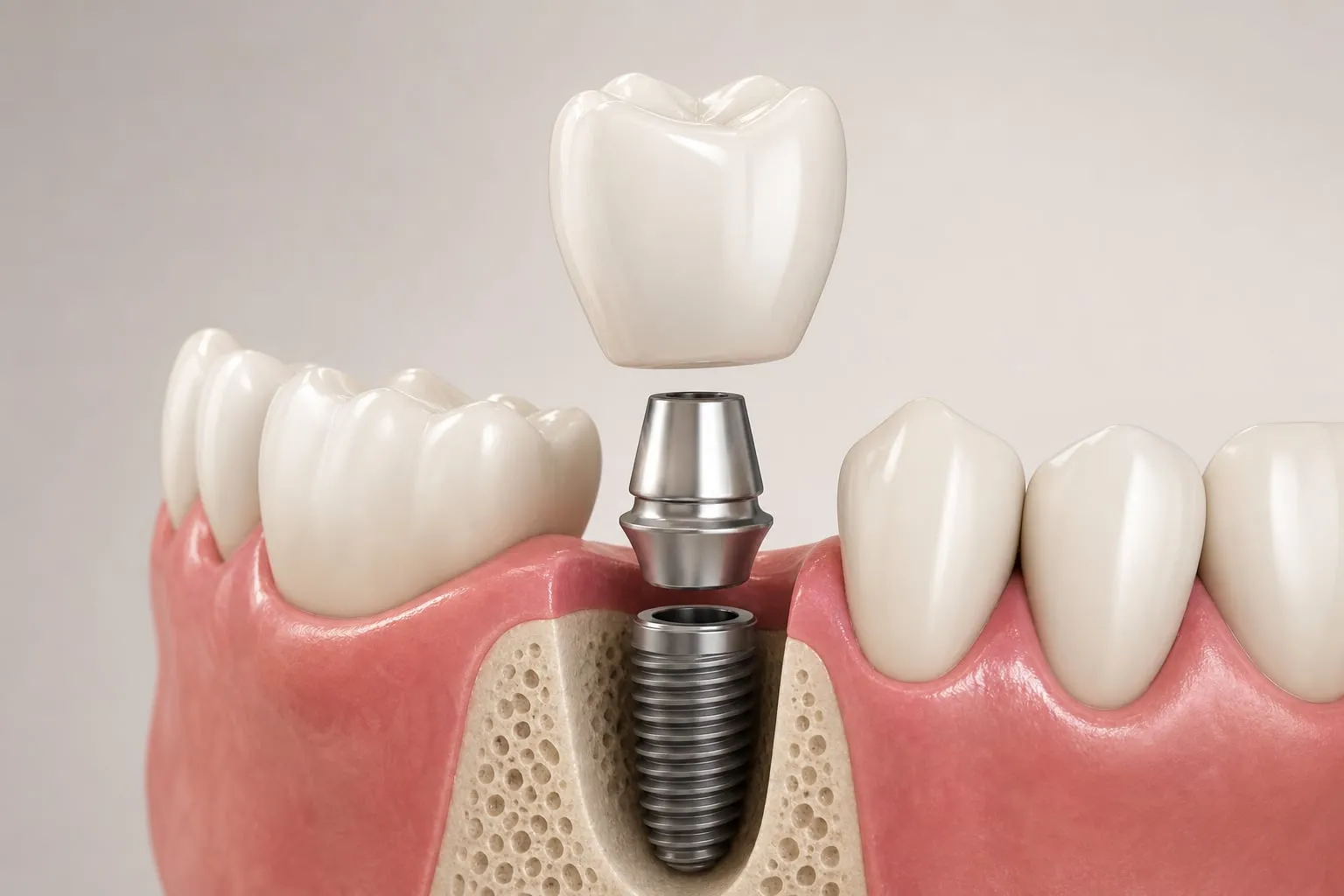
This is a common reason food catches next to an implant, and it often shows up years after the crown was fitted. Natural teeth sit in their sockets on a thin, cushioning ligament, and they can drift slightly over time. An implant is fused directly to the bone, a process called osseointegration, so it stays put. As the natural tooth beside it slowly moves, a contact that was snug when the crown went in can open up. That doesn’t mean the implant is failing.
The crown’s shape leaves a space
An implant is round and often narrower than the root of the tooth it replaced, so the crown has to widen out from the gum to reach full tooth size. Especially with back teeth, that can leave a small space near the gumline where food collects. A crown whose contact is too light or sits too low, or whose sides are contoured too flat or too bulky, can also catch food.
Gum recession or bone loss has left a triangular space
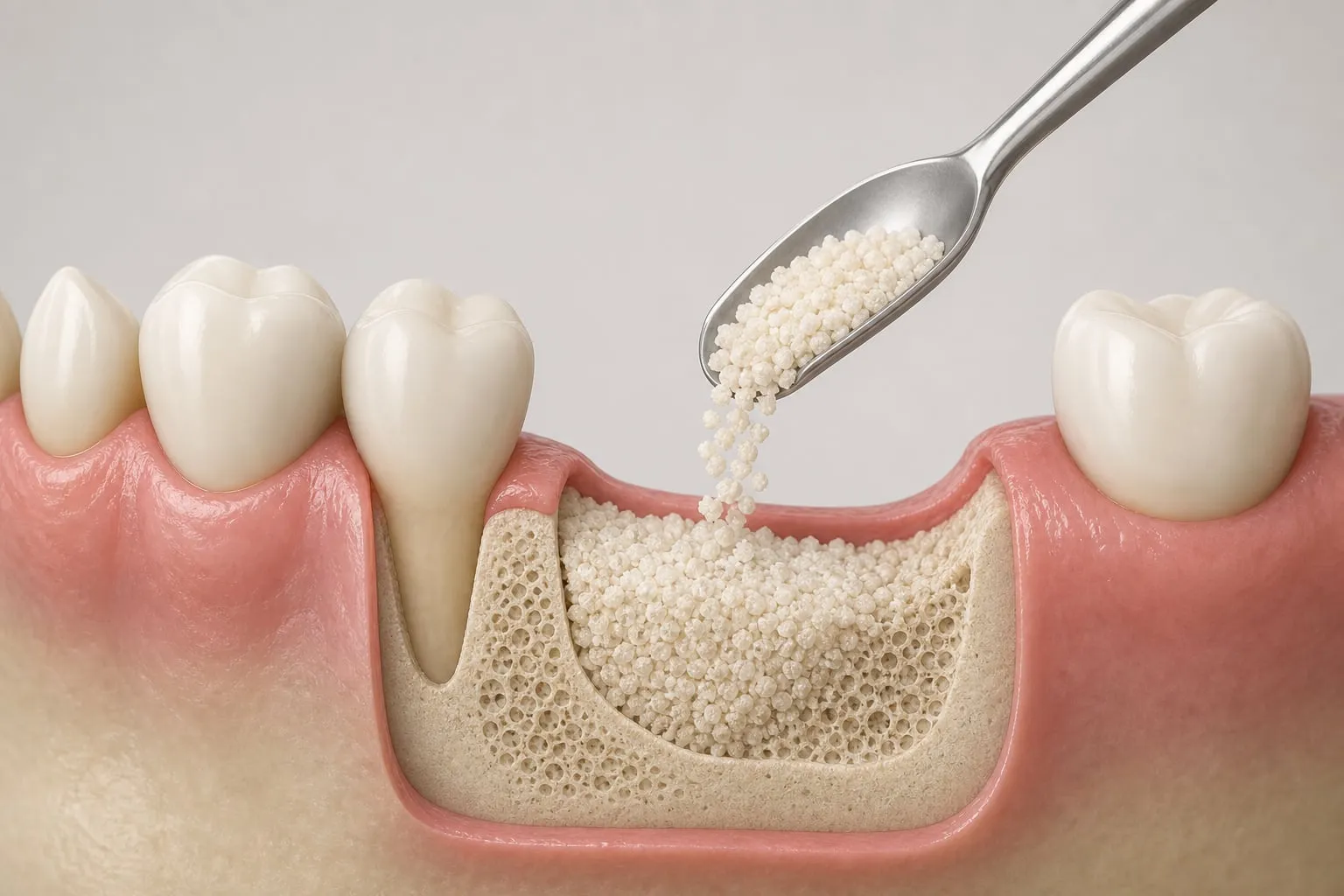
The small point of gum that fills the space between two teeth is called the papilla. If the gum recedes or the bone beneath it shrinks, a small triangular opening can form near the gumline, and food tends to settle there. Recession can be mainly cosmetic, or it can be a sign of inflammation; see gum recession around a dental implant.
Food collects under an implant bridge or full-arch teeth
An implant bridge has false teeth, called pontics, that rest on the gum between the implants. Full-arch implant teeth have a base that sits over the gum along the whole jaw. Some food getting underneath is expected, which is why cleaning beneath them every day matters. Noticeably more food than before can mean the gum has changed shape or the restoration needs a look.
Something has loosened
A crown or abutment screw that has loosened can open a small gap or let the crown shift. If the tooth feels like it moves, read why a dental implant can feel loose and call your dental office.
| Cause | What you may notice | What a dentist may do |
|---|---|---|
| Gap next to the crown | Floss slides through with little resistance; food wedges in after meals | Add to or replace the crown, or restore the neighboring tooth |
| Crown shape | Food collects in the same spot near the gumline | Reshape or replace the crown |
| Gum recession or bone loss | A triangular space; the tooth may look longer | Treat any inflammation; check the bone with X-rays |
| Bridge or full-arch teeth | Food under the restoration | Adjust the underside; recommend cleaning tools |
| Loose crown or screw | Movement, clicking, or a new gap | Retighten or replace the screw or crown |
General patterns only. An exam is needed to find the cause in your mouth.
Why does it smell or taste bad?
Food that stays trapped breaks down, and bacteria feeding on it release odors. That can leave a bad taste or bad breath that clears once the area is cleaned. A bad taste or odor that keeps coming back even after cleaning is different. Along with bleeding, swelling, or discharge, it can point to inflammation or infection around the implant; see the signs of a dental implant infection.
What helps at home?
Use the tools your dentist or hygienist recommends for your restoration. Common options include:
- Floss. Slide it gently between the teeth, curve it around the side of the crown, and ease it out. A floss threader helps under a bridge.
- A water flosser. Aim the stream along the gumline and between the teeth. Many people find it especially handy under bridges and full-arch teeth.
- Interdental brushes. These small, bottle-shaped brushes come in different sizes. Use one that fits the space without forcing it, and ask which type suits your implant.
- Rinsing with water after meals when you can’t brush right away.
Avoid metal picks, pins, or anything sharp, and don’t jam a toothpick into the gum. Our guide on how to clean implant-supported teeth covers the routine for single implants, bridges, and full arches.
Cleaning removes the food, but it doesn’t close a gap. If food packs into the same spot after most meals, the cause needs attention.
Why does trapped food matter for an implant?
Food and plaque held against the gum around an implant can inflame it. That early stage, called peri-implant mucositis, affects only the gum and is often reversible with professional cleaning and better home care. Left alone, inflammation can progress to peri-implantitis, which affects the supporting bone. Both often cause little or no pain at first.
The natural tooth next door is at risk too. An implant can’t decay, but the neighboring tooth can, especially where food and plaque sit at the contact. Our article on whether a dental implant can get a cavity explains why.
When should you see a dentist?
Call your dental office if you notice:
- Bleeding when you clean around the implant
- Red, puffy, or swollen gum
- Tenderness, or pain when you chew on that side
- A bad taste or odor that keeps returning after cleaning
- Pus or a pimple-like bump on the gum
- Any looseness of the crown or implant
- Food packing into the same place after most meals
Swelling that spreads into your face or neck, a fever with swelling, or trouble swallowing or breathing needs urgent medical care right away.
What can a dentist do about food trapping around an implant?
The first step is finding the cause. An exam typically includes checking how easily floss passes through each contact, looking at and gently measuring the gum, checking the crown for movement, and taking X-rays to see the bone level around the implant.
Depending on what that shows, options may include:
- Adjusting or replacing the crown. A screw-retained crown can often be removed so material can be added to restore the contact or improve its shape. Sometimes a new crown is the more practical fix.
- Restoring the neighbor’s contact. If the natural tooth beside the implant needs a filling or crown anyway, that work can sometimes be shaped to close the gap.
- Treating the gums. Professional cleaning and better home care often settle early inflammation. If the bone is affected, treatment is more involved; our page on failing dental implants explains the options.
- Adjusting a bridge or full arch, or recommending tools that reach underneath it more easily.
- Retightening or replacing a loose screw.
Because natural teeth can keep shifting slowly, contacts around an implant are worth checking at routine visits, even after a fix.
The bottom line
Food getting stuck around a dental implant usually has a specific, fixable cause: most often a gap beside the crown, the crown’s shape, gum or bone changes, or the underside of a bridge or full arch. Daily cleaning keeps the area healthy, but it won’t close a gap, and trapped food can inflame the gum around the implant and lead to decay in the tooth next door. If food catches in the same place again and again, or you notice bleeding, swelling, a lingering bad taste, or looseness, request an appointment or call (949) 773-4170.
This article is general education, not a diagnosis or a substitute for professional dental advice. If you have significant pain, swelling, or signs of infection, contact a dental office promptly. Individual situations vary, and only a personalized evaluation can determine what may be appropriate for you.