Short answer: grinding doesn’t disqualify you from implants. Unmanaged grinding is one of the most preventable causes of implant problems — and a nightguard is the cheapest insurance in dentistry.
Here’s the part that makes bruxism sneaky with implants specifically.
Implants don’t feel pressure the way teeth do
A natural tooth sits in a socket cushioned by the periodontal ligament — a thin layer of fibers that acts as a shock absorber and, crucially, contains nerve endings that sense pressure. Bite too hard and your tooth tells you.
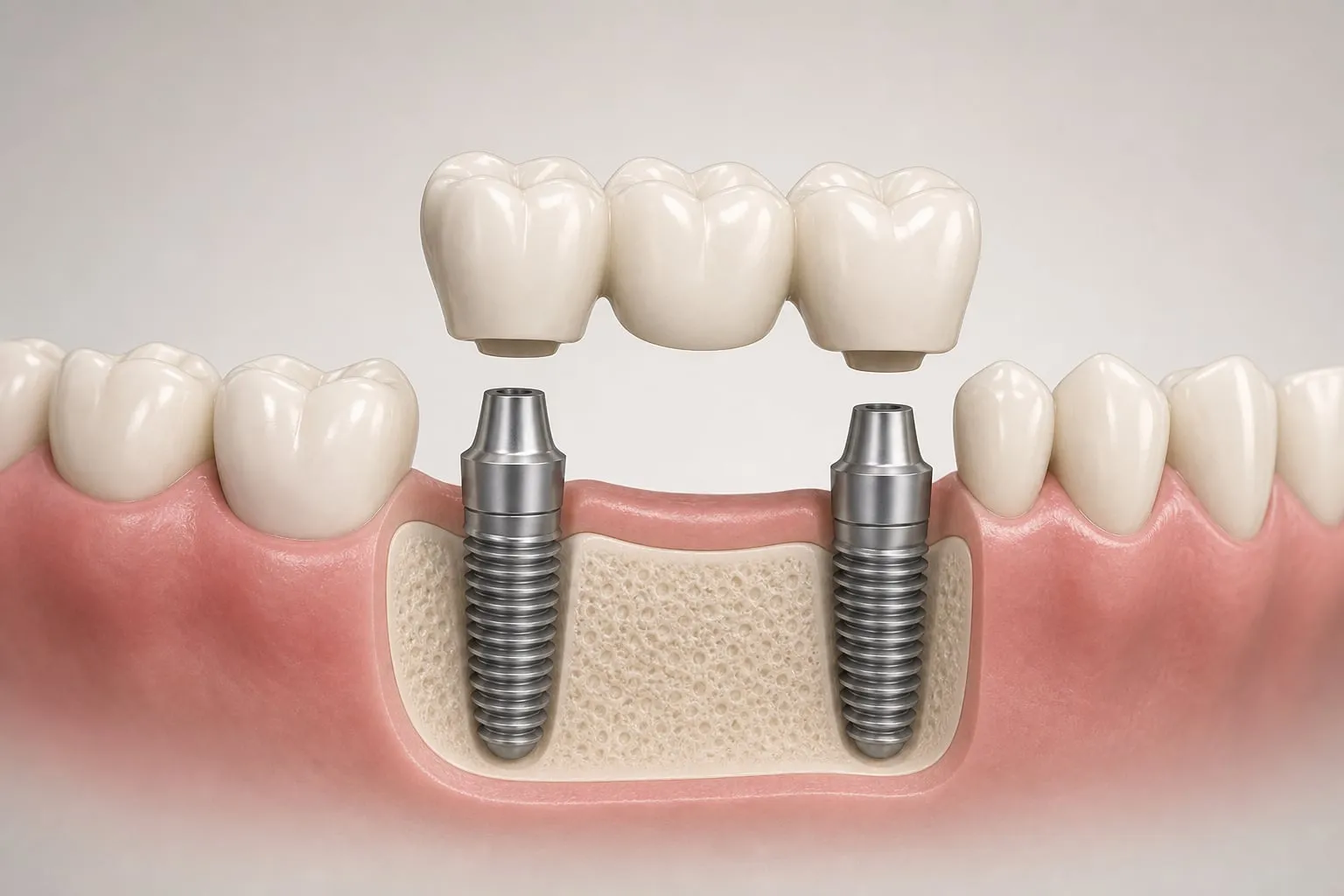
An implant is fused directly to bone. There’s no ligament, no cushion, and no pressure feedback.
Two consequences:
- Forces transfer more directly to the implant and the bone around it
- You may not notice you’re overloading it, because the warning system isn’t there
That’s why grinding damage around implants tends to build quietly and show up as a mechanical problem rather than as pain.
What unmanaged grinding can lead to
- Abutment screw loosening — often the first sign, and among the more straightforward fixes. See why an implant feels loose.
- Restoration wear or fracture — porcelain can chip under repeated heavy load
- Component fatigue over years of excessive force
- Bone loss around the implant in cases of sustained overload
- Faster wear on the opposing natural teeth
None of this is inevitable. It’s what happens when heavy grinding goes unaddressed.
Signs you may grind
Many people genuinely don’t know they do — it typically happens during sleep:
- Waking with jaw soreness or tightness
- Morning headaches, often at the temples
- Teeth that look flattened or worn at the edges
- Increased tooth sensitivity
- A partner mentioning grinding sounds at night
- Scalloped edges on the tongue or ridging on the inside of the cheek
- Existing restorations that keep chipping
If several of these are familiar, mention it at your consultation. It changes planning.
How treatment is adapted
A provider who knows you grind can plan around it:
- More implants to distribute load across a restoration
- Position and angulation chosen to direct forces favorably
- Restoration material selected for durability rather than only aesthetics
- Bite design that reduces the load on implant-supported teeth
- Wider or longer implants where bone allows
This is one of the clearest reasons to tell your provider everything, even things that seem unrelated. It’s much easier to plan for grinding than to retrofit around it.
The nightguard
For most grinders with implants, a custom nightguard is the single highest-value protective step.
Custom, not over-the-counter. A fitted guard distributes forces properly across the arch. Ill-fitting drugstore versions can load teeth unevenly and occasionally make things worse.
Wear it consistently. A guard in a drawer protects nothing. This is the most common failure mode — not the guard, the habit.
Replace it when worn. It’s a wear item. If yours is visibly chewed through, it’s doing less than you think.
Bring it to appointments. The wear pattern tells us how much force you’re generating and whether anything is changing.
Addressing the underlying cause
A nightguard manages consequences. Where possible, it’s worth looking at drivers too:
- Stress, the most commonly cited contributor
- Sleep apnea, which is associated with bruxism — worth investigating if you also snore, wake unrefreshed, or have daytime sleepiness
- Caffeine and alcohol, particularly in the evening
- Some medications, worth reviewing with your physician
- Bite issues, which can sometimes be addressed directly
The sleep apnea link deserves particular attention. It’s a genuine health matter well beyond your teeth, and grinding is sometimes the thing that surfaces it.
Daytime clenching
Grinding gets the attention, but many people clench while awake — concentrating, driving, working. It’s often invisible because there’s no sound.
A simple check: several times a day, notice where your teeth are. At rest, they should be slightly apart with your tongue on the roof of your mouth. If you keep catching them together, that’s clenching.
Living with implants as a grinder
Once your restoration is in:
- Wear the nightguard every night
- Keep your maintenance appointments — we monitor components and wear
- Report anything that feels different, especially a bite that’s changed
- Don’t chew ice, pens, or fingernails
- Mention new or worsening jaw pain
Your outcome depends far more on these habits than on which implant system was used. See how long dental implants last.
The bottom line
Grinders get implants routinely and do well. What separates good long-term outcomes from mechanical problems is whether the grinding was accounted for in planning and whether the guard actually gets worn.
Tell your provider. Wear the guard. That’s most of it.
Concerned about grinding?
Mention it at your consultation and we’ll factor it into your plan from the start. Request your free consultation or call (949) 773-4170.
This article is general education, not a diagnosis. Individual results vary; a personalized evaluation is required to determine what may be right for you.