
Dentures usually slip because the jaw ridge they rest on has gradually shrunk and changed shape since they were made, so they no longer fit closely. Worn or damaged dentures, weight changes, dry mouth, and the fact that lower dentures have less to hold onto can all make it worse. A dentist can often improve the fit with an adjustment, reline, or new denture, and dental implants are an option if you want the denture anchored in place.
A slipping denture is common, and it usually isn’t anything you did wrong. Here’s what’s typically going on, what can be done about it, and when to have it checked.
What holds a denture in place?
A conventional denture isn’t attached to anything. It rests on the gums and stays in place through a combination of:
- A close fit against the gum ridge, the curved band of gum and bone where your teeth used to be
- Suction, created by a thin film of saliva between the denture and your gums, which mostly helps an upper denture
- Your lips, cheeks, and tongue, which learn to help steady the denture over time
- Adhesive, for some people
When any of these changes, the denture can start to lift, rock, or click.
Why do dentures keep slipping?
1. Your jaw ridge has changed shape
This is the most common reason. When teeth are lost, the bone that held their roots no longer gets the stimulation it used to, and it gradually shrinks, a process called resorption. A denture is shaped to match your ridge on the day it’s made, but the ridge keeps changing underneath it.
Conventional dentures rest on the gums rather than being anchored in the bone, so they don’t slow this process. That’s why a denture that once fit well can feel loose a few years later. Our article on what to do when dentures no longer fit goes into more detail. These changes can also affect how well the lips and cheeks are supported, as explained in can dental implants change your face?
2. The denture is worn or damaged
Dentures wear too. Over time the teeth can flatten, which changes how your upper and lower teeth meet and can tip the denture when you chew. A crack, a chip, a repair that didn’t quite line up, or a base that has warped, for example after being soaked in very hot water, can all affect the fit.
3. Your weight has changed
Some people notice their denture fits differently after gaining or losing weight, because the soft tissues of the mouth and face can change too. Mention any weight change to your dentist.
4. Your mouth is dry
Saliva helps a denture sit comfortably and, with an upper denture, helps create the suction that holds it up. When your mouth is dry, the denture is more likely to rub, cause sore spots, and feel less secure.
Dry mouth is a side effect of many common medications and can be linked to some health conditions. Never stop or change a medication on your own; talk to the physician who prescribes it, and ask your dentist what may help. Our post on dry mouth and dental implants covers common causes and practical tips.
5. It’s a lower denture
An upper denture covers the palate, a large surface that helps create suction. A lower denture is horseshoe-shaped to make room for the tongue, so it rests on a narrower ridge and gets much less help from suction. The tongue and cheeks also move around it constantly when you talk and eat.

6. Adhesive is covering up a fit problem
Denture adhesive can add a little extra security, but it isn’t designed to fill gaps or make up for a denture that no longer fits. Needing more and more adhesive is often a sign that the denture or the ridge underneath has changed.
How can slipping dentures be fixed?
The right fix depends on what’s causing the problem and the condition of the denture.
| Fix | What it involves | When it may help |
|---|---|---|
| Adjustment | Smoothing pressure points and checking the bite | Rubbing, sore spots, or small bite problems |
| Reline | Resurfacing the fitting side to match your gums now | The denture is in good shape, but the ridge has changed |
| Rebase | Replacing the whole pink base while keeping the existing teeth | The base is worn or damaged, but the teeth are still sound |
| New denture | A fresh denture made to your mouth as it is now | The teeth are worn, the denture is old, or relines no longer hold |
| Adhesive, used properly | A small amount on a clean, dry denture | Extra security for a denture that already fits reasonably well |
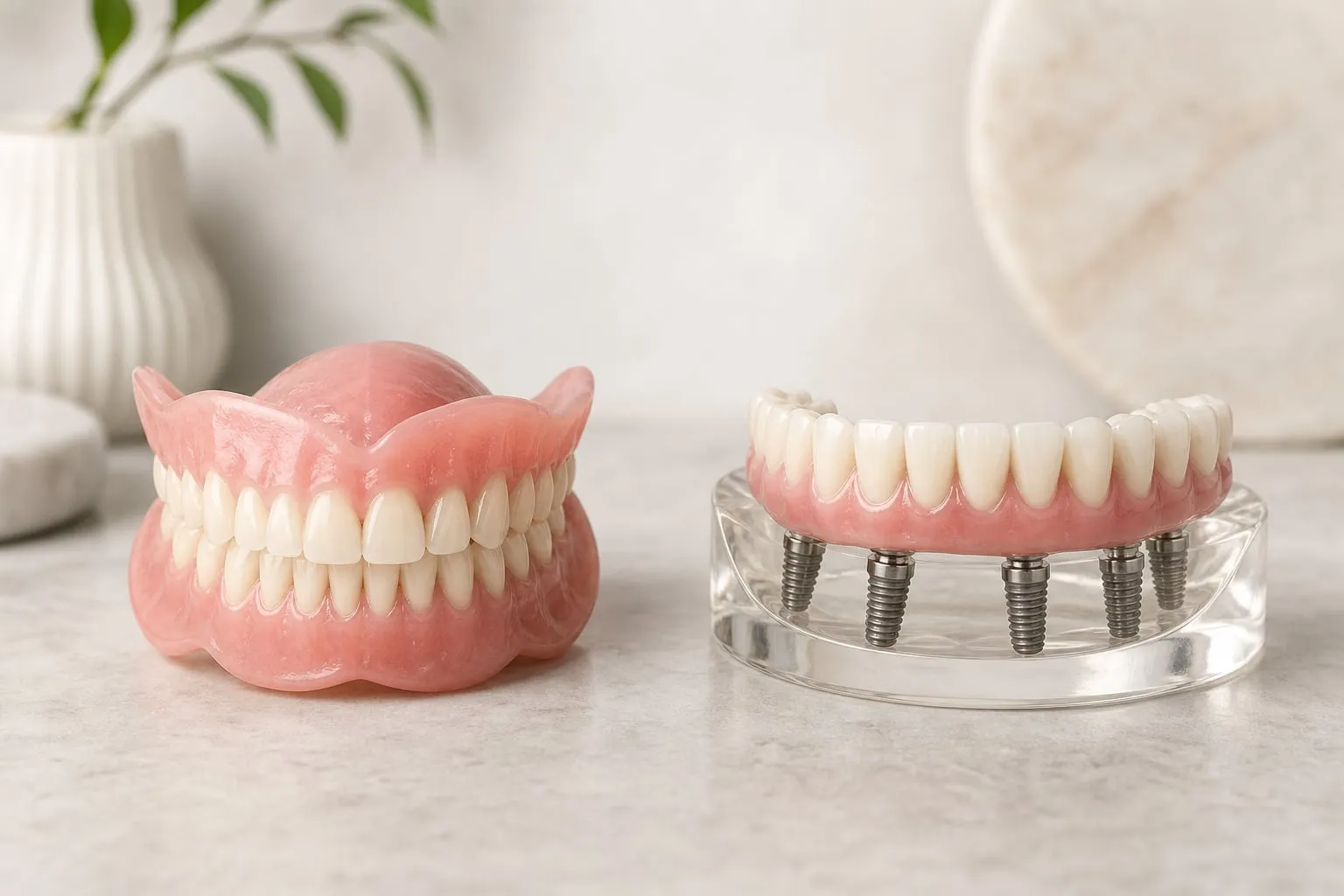
| Implant-retained or implant-supported denture | A denture anchored to implants in the jaw | You want the denture held in place rather than relying on fit and suction |
Adjustments, relines, and rebases
An adjustment is often quick and can ease a sore spot or a bite that’s slightly off. A reline reshapes the fitting surface so the denture sits closely against your gums again. A rebase goes further and replaces the entire base while keeping the teeth.
These can make a real difference in comfort, but none of them stops the bone changes underneath, so the fit may loosen again over time.
Using adhesive the right way
If you use adhesive, a few habits help:
- Apply it to a clean, dry denture
- Use a small amount, following the product directions
- Clean all of it off the denture and your gums each day
- Don’t use it to hold a denture that’s broken or badly fitting
When a new denture makes sense
If the teeth are worn down, the base has been repaired more than once, or relines no longer hold the fit for long, your dentist may recommend starting fresh. A new denture is shaped to your mouth as it is now.
Anchoring the denture with implants
When slipping keeps coming back, many long-term denture wearers look at implants. A dental implant is a small titanium post placed in the jawbone that acts like an artificial tooth root.
There are two broad approaches:
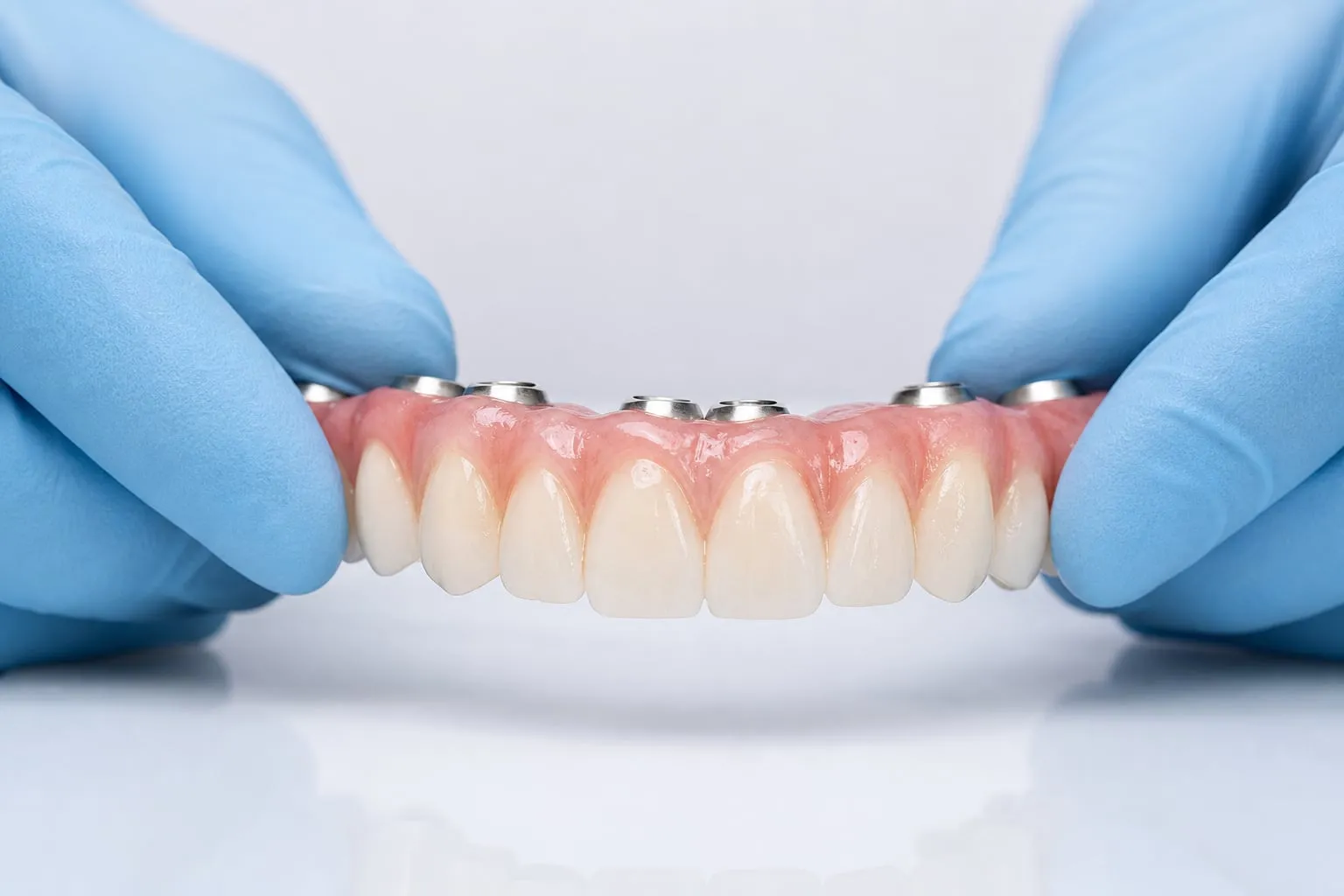
- Implant-retained (snap-in) dentures. A removable denture clips onto a small number of implants, so it stays put while you eat and speak and still comes out for cleaning. See implant-supported dentures.
- Fixed full-arch teeth. A complete set of teeth attached to implants, which only your dentist removes.
Because implants anchor the denture, it no longer depends on suction or adhesive, and the implants help slow bone loss where they’re placed. With enough implant support, an upper denture can often be made with less coverage of the palate; see palate-free upper dentures with implants. For a broader comparison, read dental implants vs. dentures, and for how long-time denture wearers are evaluated, see dental implants for denture wearers.
Implants aren’t right for everyone. They involve surgery, a healing period, enough bone, and good general health, and a conventional denture is still a reasonable choice for many people.
When should you see a dentist about a slipping denture?
Don’t wait for a routine visit if you notice:
- Sore spots or rubbing that keep coming back
- A sore, ulcer, lump, or patch in your mouth that doesn’t heal. Have it checked promptly, even if it doesn’t hurt.
- Difficulty eating, or avoiding foods you used to manage
- Needing more adhesive to get the same hold
- Clicking, or the denture dropping when you talk or laugh
- A crack, chip, or broken tooth on the denture
Until you’re seen, avoid filing, bending, or using a home reline kit, which can make the fit worse. Regular checkups are still worthwhile when you wear full dentures, so your dentist can check the fit and the health of your gums and mouth.
If you’re curious whether implants could be an option, our Mission Viejo office offers a free, no-obligation consultation. It includes an exam and 3D CBCT imaging, which shows how much bone you have, and you’ll receive a written treatment plan before any work begins.
The bottom line
Dentures most often slip because the jaw ridge has changed since they were made, though worn dentures, weight changes, dry mouth, and the shape of a lower denture can all play a part. An adjustment, reline, rebase, or new denture can often restore the fit, adhesive helps most as a small extra on a denture that already fits, and implant-anchored dentures are an option when slipping keeps returning. A sore that doesn’t heal or ongoing trouble eating is worth getting checked soon. To explore implant options, request your free consultation or call (949) 773-4170.
This article is general education, not a diagnosis or a substitute for professional dental or medical advice. Individual results vary; discuss your own situation with your dentist and physician.