An adult baby tooth usually means the permanent tooth meant to replace it never developed, a condition called hypodontia, though sometimes the permanent tooth is there but blocked from coming in. A healthy baby tooth can sometimes be kept for years, but its roots can shorten over time and it may loosen. When it needs replacing, the main options are orthodontics, a bonded or traditional bridge, or a single dental implant once jaw growth is complete.
Finding out you still have a baby tooth, or that a permanent tooth never formed, can be a surprise. There’s usually no rush to decide anything. Here’s what’s going on and what the options look like.
What is a retained baby tooth?
Baby teeth, also called primary teeth, normally fall out as the permanent teeth come in. As a permanent tooth moves up beneath a baby tooth, the baby tooth’s roots gradually dissolve, a process called resorption, until it loosens and comes out.
A retained baby tooth is one that stays in place into adulthood. The most common reasons are:
- There’s no permanent tooth underneath. Without a permanent tooth coming in beneath it, the baby tooth may simply stay put.
- The permanent tooth is impacted. It’s present but blocked, or growing at an angle, so it can’t come through. Canines are a familiar example.
- The baby tooth is fused to the bone. Less often, a baby tooth becomes joined directly to the jawbone, which is called ankylosis. It can then end up sitting lower than the teeth beside it.
An X-ray shows which of these applies, including whether a permanent tooth is waiting underneath.
What is hypodontia?
Hypodontia means that one or more permanent teeth never developed. Dentists also call these teeth congenitally missing, meaning the tooth didn’t form in the first place rather than being lost later.
Hypodontia most often involves:
- The upper lateral incisors, the narrower teeth on either side of the two front teeth
- Premolars, the teeth between the canines and the molars
- Wisdom teeth, which usually need no treatment when they’re missing
It can run in families, so if a parent or sibling is missing a permanent tooth, it’s worth mentioning to your child’s dentist. Missing teeth are often spotted on routine X-rays in childhood, which leaves time to plan.
Can you keep a baby tooth as an adult?
Sometimes, and often for years. If a baby tooth is healthy, firm, and fits your bite, there may be no reason to remove it. Keeping it can also help preserve the space and the bone around it, which matters if you want an implant later.
But baby teeth weren’t built to last a lifetime. Things to know:
- The roots can shorten. Even without a permanent tooth beneath it, the roots can slowly resorb, and the tooth may eventually loosen.
- It’s usually smaller. A baby tooth is typically smaller than the permanent tooth it stands in for, so it may leave small gaps or look slightly short. Tooth-colored bonding can sometimes improve its shape.
- It can sink below its neighbors. A fused baby tooth may end up lower than the teeth beside it, which can affect the bite.
- It can decay or crack like any tooth, and it has less root to support a large repair.
Your dentist will usually monitor a retained baby tooth with regular exams and periodic X-rays, watching root length, looseness, and the bite. There’s no set timeline: some last a long time and others don’t.
What are the options when a baby tooth needs replacing?
The right choice depends on which tooth it is, your bite, the space available, your bone, and whether jaw growth is complete.
| Option | What it involves | Things to consider |
|---|---|---|
| Keep and monitor | Leave a healthy baby tooth in place and check it regularly | Helps hold the space and bone; may loosen eventually |
| Orthodontics to close the space | Moving neighboring teeth into the gap | No replacement tooth needed; depends on the bite and face |
| Orthodontics to open or hold the space | Setting the gap to the right width for a future tooth | Followed by a retainer until the replacement is placed |
| Bonded bridge | A replacement tooth attached to the backs of the neighboring teeth | Little or no reshaping; not suitable for every bite |
| Traditional bridge | Crowns on the neighboring teeth hold a false tooth between them | The neighboring teeth are reshaped for crowns |
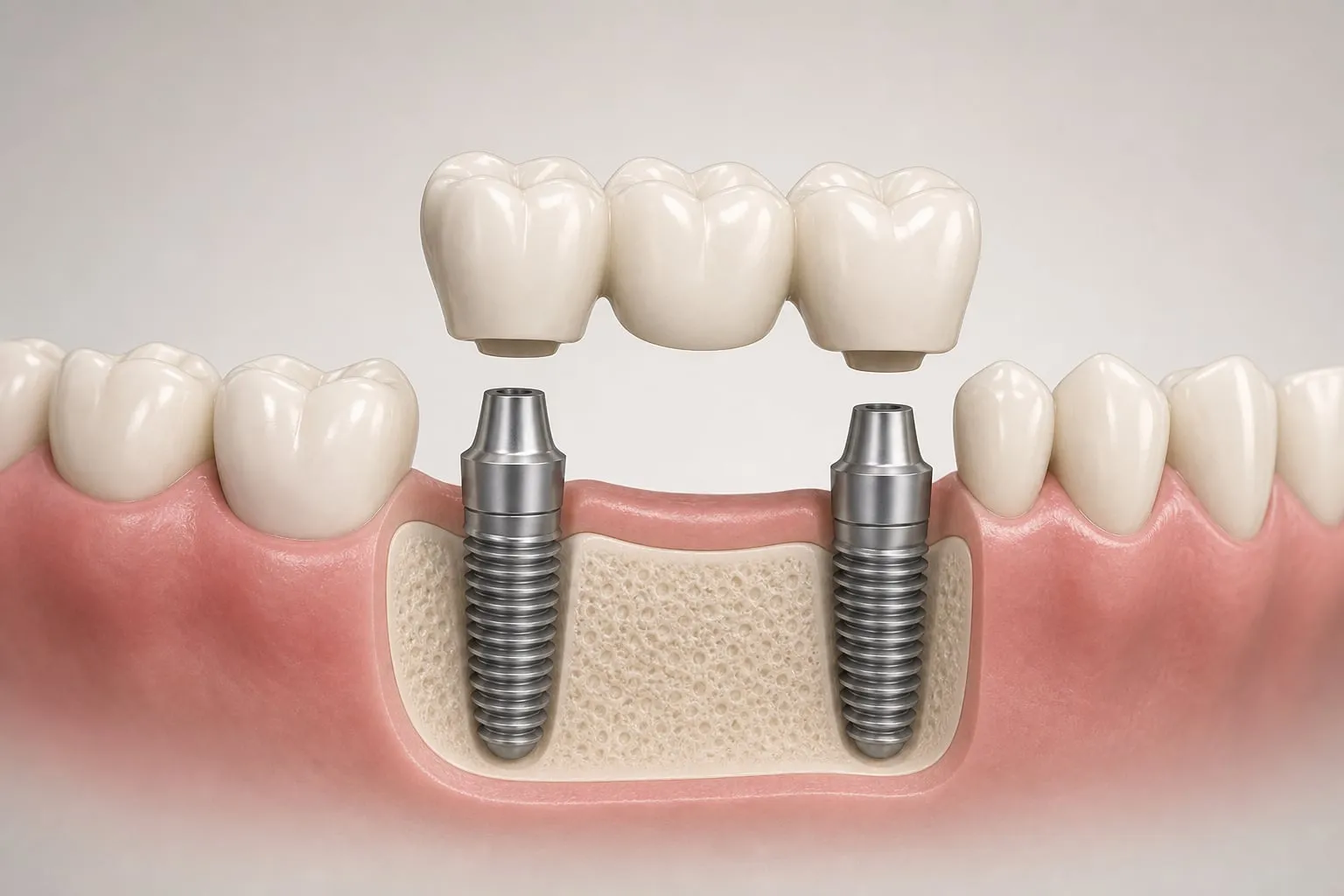
| Single dental implant | An implant replaces the root, with a crown on top | Usually waits until jaw growth is complete; needs enough bone and space |
Orthodontics: close the space or open it?
For a missing lateral incisor in particular, an orthodontist may suggest closing the space by moving the neighboring teeth into it, sometimes with reshaping so they look natural in their new positions. In other cases, opening or holding the space for a replacement tooth makes more sense. The decision depends on the bite, the face, and the size of the teeth, so it’s worth asking about both paths.
If a replacement is planned, orthodontic work generally comes first, because an implant can’t be moved once it’s in place. Our article on braces, clear aligners, and implants explains why.
Bonded and traditional bridges
A bonded bridge attaches a replacement tooth to the backs of the neighboring teeth with little or no reshaping. It’s often considered for front teeth and for younger patients who aren’t ready for an implant, though it doesn’t suit every bite.
A traditional bridge places crowns on the teeth on either side of the gap and suspends a false tooth, called a pontic, between them. It’s sturdy, but it means reshaping those neighboring teeth, which matters when they’re healthy. Our comparison of a single tooth implant vs. a dental bridge covers the trade-offs.
A single dental implant
A single tooth implant replaces the missing tooth from the root up, without involving the neighboring teeth. A small titanium post is placed in the jawbone, the bone bonds to it over time, a process called osseointegration, and then a custom crown is attached.
Timing matters for younger patients. An implant doesn’t move with a growing jaw the way natural teeth do, so it’s usually placed only once growth is complete. When that happens varies from person to person and is assessed individually, not by age. Our guide to dental implants for teens and young adults explains how readiness is judged. For a missing front tooth, where the shade and gum line need to match closely, see what makes a front tooth implant different.
At our office, single implants start at $1,995, covering the consultation, implant surgery, and crown. Pricing may vary based on individual needs, and extractions, bone grafting, or sinus lifts are quoted separately.
How do you keep the space and bone ready for an implant?
If an implant is the long-term plan, two things need protecting: the space, so there’s room for a crown, and the bone, so there’s something for the implant to anchor in.
- Keep a healthy baby tooth while it’s sound. It holds the space and helps maintain the bone around it.
- Hold the space. After orthodontic treatment, a retainer, sometimes with a replacement tooth attached, keeps the gap the right width. A small removable “flipper” is another stopgap; see what a flipper tooth is.
- Ask about the socket when the baby tooth comes out. Socket preservation, placing graft material in the empty socket when a tooth is removed, can help the ridge keep its shape. It isn’t always needed.
- Plan with imaging. A 3D CBCT scan shows the height and width of the bone and whether the neighboring roots leave a clear path for an implant.
For children and teens, these decisions are made by the dentist and orthodontist together, with the family’s physician involved if growth or health questions come up. The tooth replacement comparison tool is a useful way to see the options side by side before you talk it through.
At our Mission Viejo office, the consultation is free and comes with no obligation. It includes 3D CBCT imaging, and you’ll receive a written treatment plan before any work begins.
The bottom line
An adult baby tooth often means the permanent tooth never formed, and a healthy one can sometimes be kept and monitored for years. When it loosens or the space needs a permanent solution, options range from orthodontics and bridges to a single implant once jaw growth is complete. Keeping the space and bone in good shape in the meantime keeps more of those options open. To talk through your situation, request a free consultation or call (949) 773-4170.
This article is general education, not a diagnosis or a substitute for professional dental or medical advice. Growth and development vary from person to person, and only a personalized evaluation, together with input from an orthodontist or physician where appropriate, can determine what may be right for you.