Gum recession around a dental implant means the gum has pulled back from the implant tooth, so the crown can look longer or a grey edge of metal can show at the gumline. Common contributors include thin gum tissue, inflammation around the implant, the implant’s position, brushing too hard, and bone loss beneath the gum. It’s worth having checked soon rather than waiting, because the right next step depends on the cause.
Noticing a change around an implant you’ve had for years can be unsettling. Sometimes it’s mainly cosmetic; sometimes it’s an early sign of a problem that’s easier to manage when caught early. Here’s how to tell what you’re looking at, and what can be done.
What does gum recession around an implant look like?
The signs are usually visual rather than painful:
- A tooth that looks longer than its neighbors, or longer than it used to
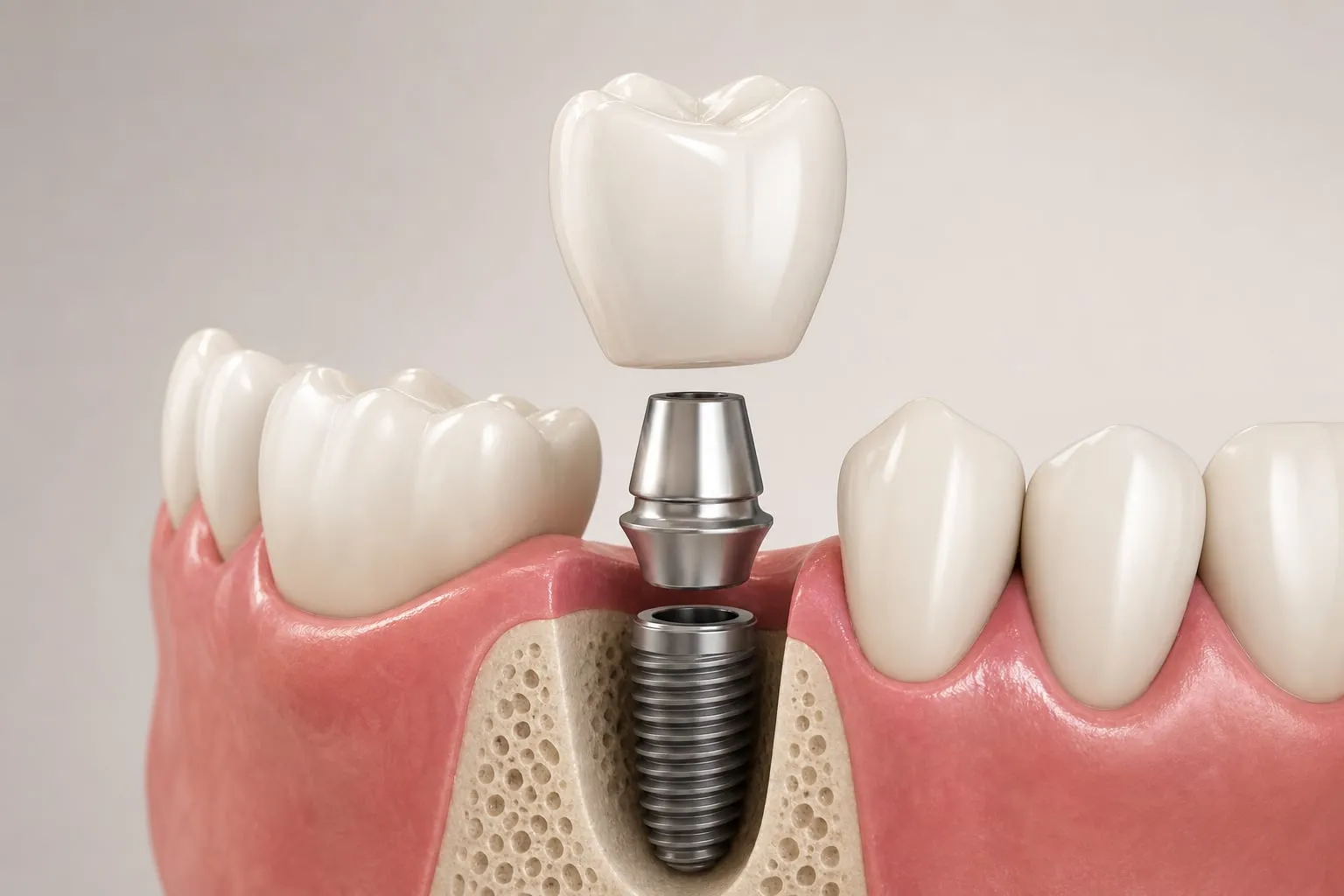
- A grey or dark line at the gumline, or visible metal from the implant or its abutment (the connector between the implant and the crown)
- An uneven gumline compared with the teeth on either side
- Food catching more easily around the implant
Recession may come with other signs: gums that bleed when you brush, redness, swelling, or a bad taste. Those point toward inflammation and make an evaluation more pressing. Because an implant has no nerve, an exposed implant surface usually doesn’t feel sensitive the way an exposed tooth root can, so recession can go unnoticed for a while.
What causes gum recession around a dental implant?
Often more than one factor is involved. Common contributors include:
- Thin gum tissue. Some people naturally have thin, delicate gums, and thin tissue tends to be more prone to receding. A narrow band of firm, attached gum around the implant may also play a part.
- Inflammation and peri-implant disease. Plaque at the gumline can cause peri-implant mucositis, inflammation of the gum alone, which can progress to peri-implantitis, where the supporting bone is affected too. As bone is lost, the gum often follows it.
- Implant position. An implant placed toward the lip or cheek side, where the covering bone is thin, may be more prone to recession over time.
- Thin or lost bone. The gum rests on bone. If the bone over the implant is thin or resorbs, the gum can recede with it.
- Brushing too hard. A hard-bristled brush, a scrubbing motion, or an abrasive toothpaste can wear the gum back over time.
- Other factors, such as smoking, heavy grinding, or a crown that’s bulky or hard to clean at the gumline.
Is gum recession around an implant serious?
It can be a stable cosmetic issue or a sign of something active, and you can’t reliably tell which in the mirror.
That’s the main reason to have it checked rather than wait. Peri-implant disease often causes little or no pain in its early stages, so recession or bleeding may be the only clues. Inflammation caught early is generally more manageable than once bone has been lost. Our guides to the signs of a dental implant infection and to failing implants and second opinions describe the other warning signs.
Call promptly, rather than waiting for a routine visit, if recession comes with bleeding, swelling, discharge, pain, or any looseness.
What happens at an evaluation?
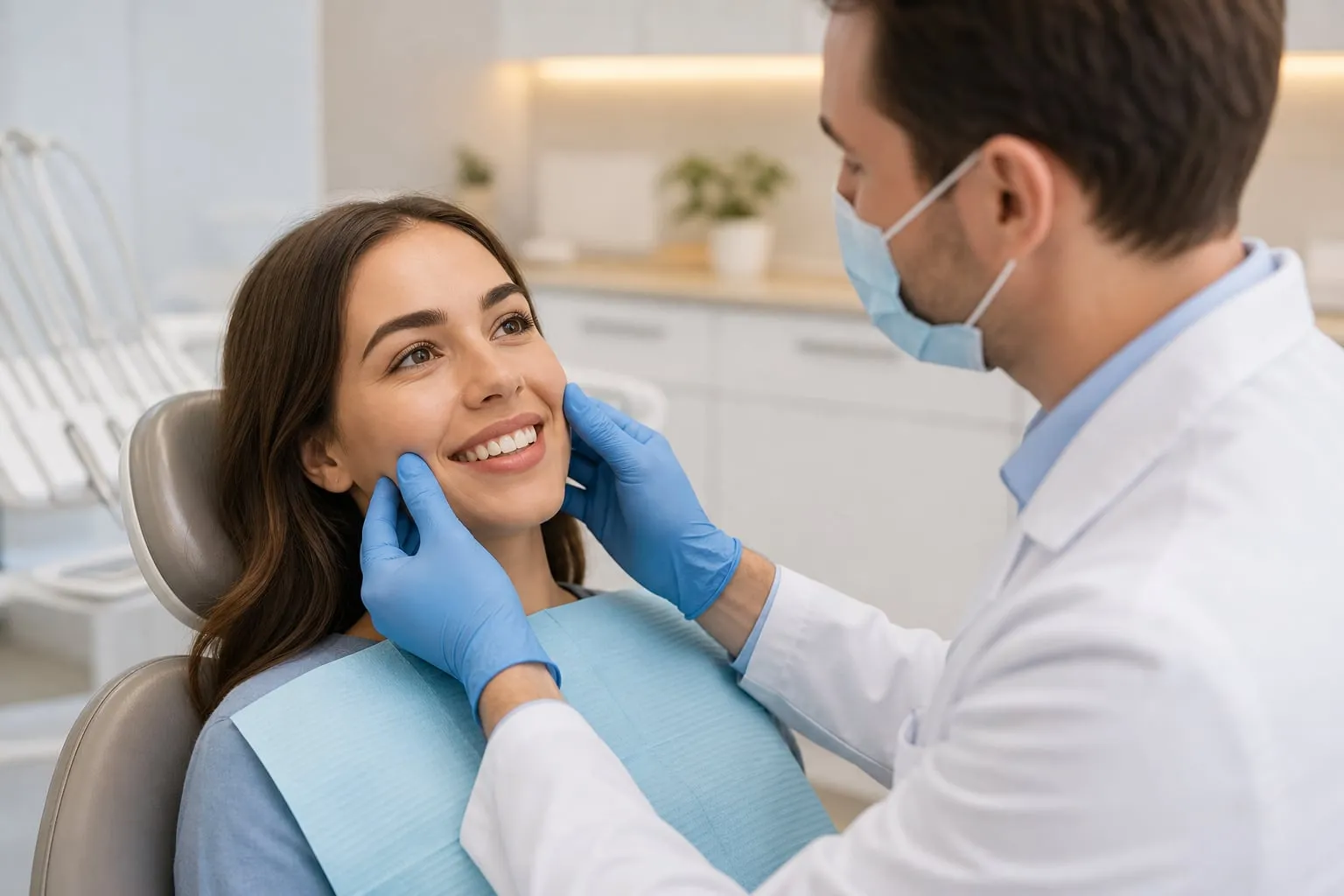
A dentist is trying to answer two questions: what’s causing the recession, and is it still active? An evaluation usually includes:
- Your history: when you noticed it, whether it’s changing, how you clean, and habits such as smoking or grinding
- A look at the gum: color, swelling, bleeding, and how much firm tissue surrounds the implant
- Gentle measurements of the space between the gum and the implant, known as probing
- A check of the implant and crown for movement, and of how your bite meets them
- Imaging, such as X-rays or a 3D scan, to see the bone level around the implant
If your implant was placed elsewhere, bring any records or previous X-rays you have. Comparing old and new images helps show whether things are changing.
What are the options for gum recession around an implant?
Treatment depends on the cause, so it’s described here only in general terms.
| If the main contributor is… | Options that may be considered |
|---|---|
| Inflammation without bone loss | Professional cleaning and improved home care |
| Inflammation with bone loss | Treatment aimed at the infection and the affected bone, depending on its extent |
| Thin gum tissue | Monitoring, or soft-tissue grafting in some cases |
| Crown or abutment design | Reshaping or replacing the restoration so it’s easier to clean or looks more natural |
| Brushing technique | A softer brush and a gentler technique |
| Grinding | A night guard and a check of the bite |
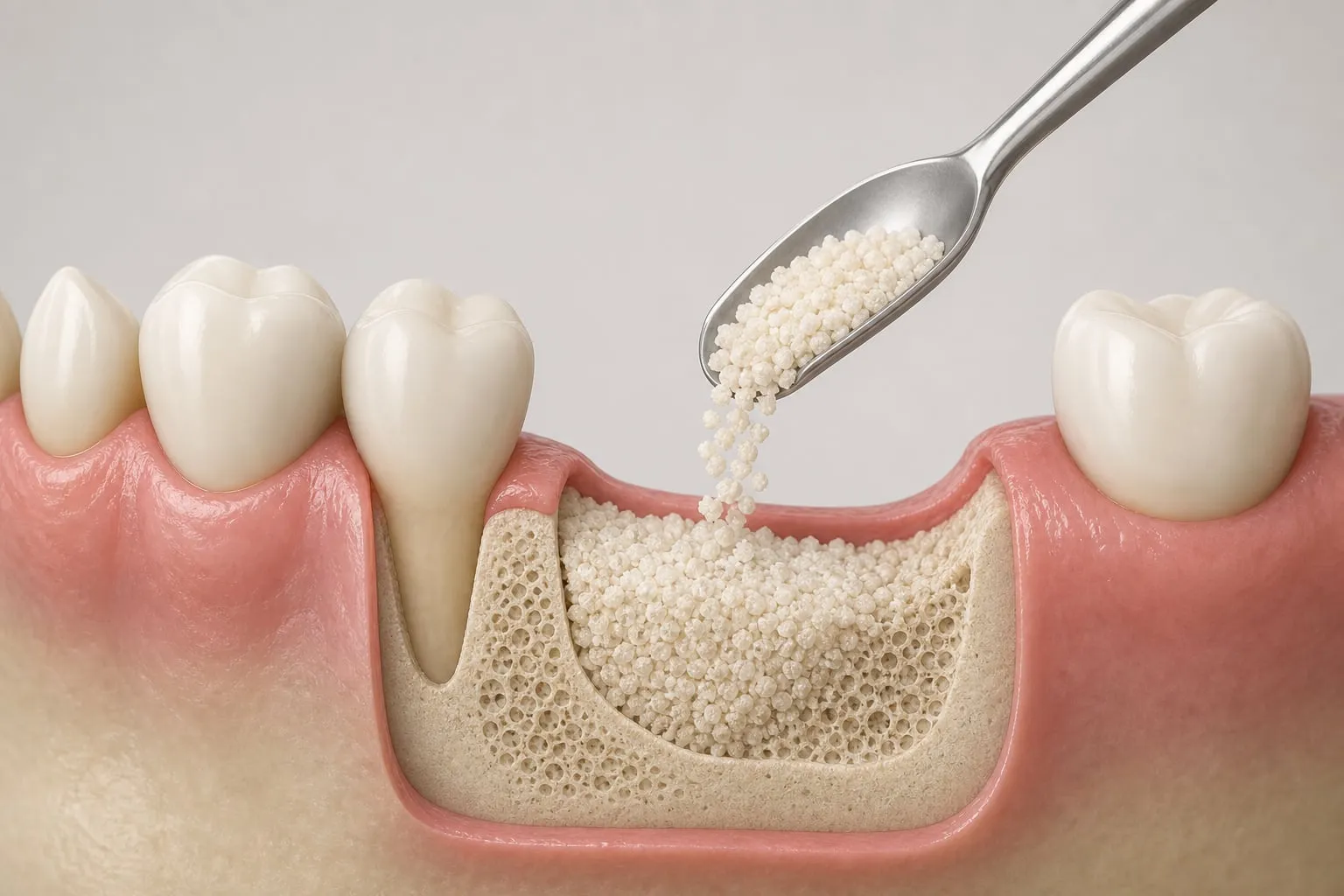
Soft-tissue grafting, in which gum tissue or a substitute material is added to thicken or cover the area, may be an option in some cases. Not every area of recession can be fully covered, and your dentist will explain whether it suits your situation and who would perform it.
If recession is stable and mainly cosmetic, careful monitoring at regular checkups may be reasonable. If an implant has lost too much bone support, removing it and later considering a new one may be discussed.
How can I help prevent gum recession around my implant?
- Use a soft-bristled brush and angle it gently toward the gumline, without scrubbing
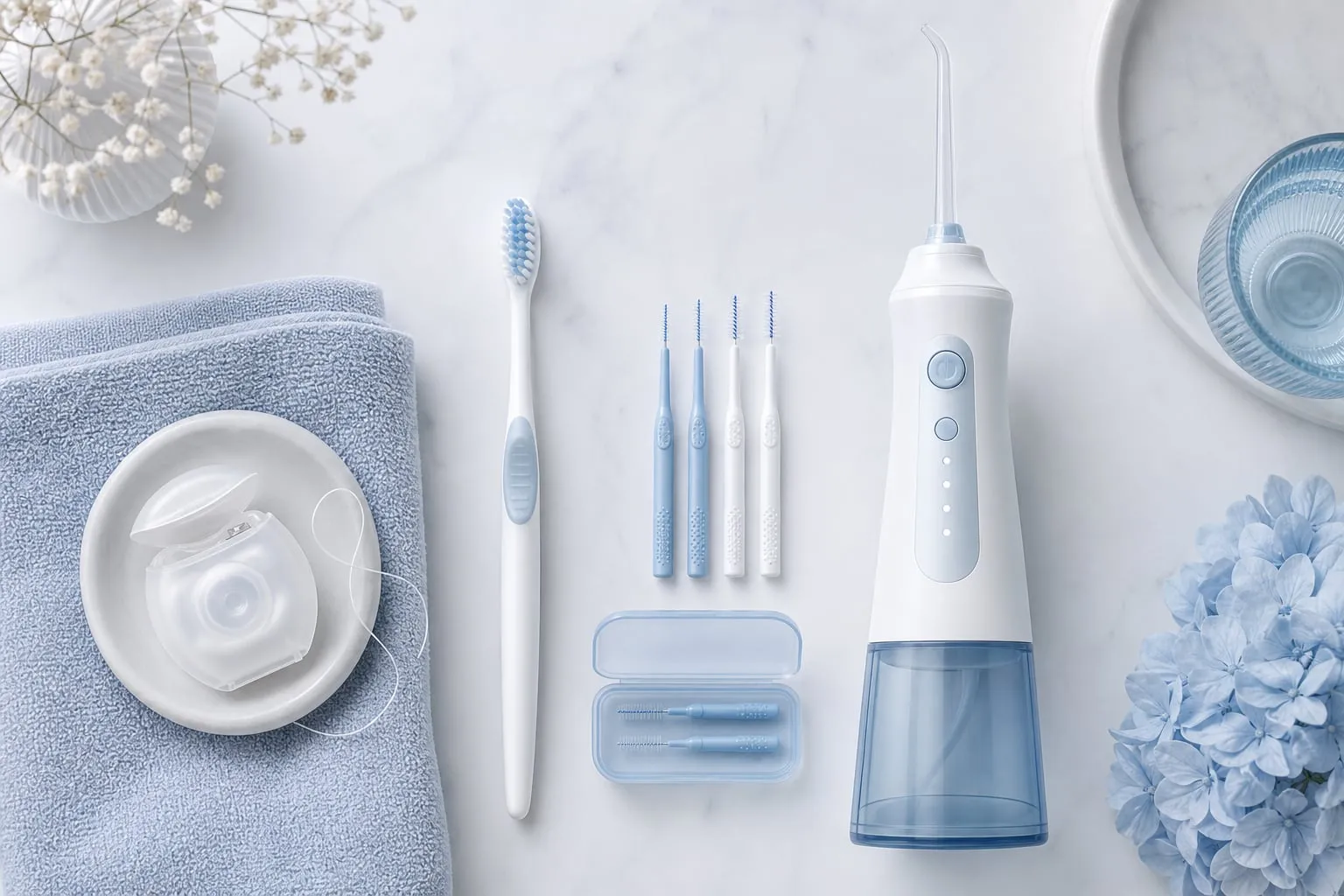
- Clean around and between implants daily with floss, interdental brushes, or a water flosser; see how to clean implant-supported teeth
- Skip abrasive pastes and harsh whitening products
- Keep professional cleanings and checkups, where the tissue around implants can be measured over time
- Don’t smoke, since it affects gum and bone health
- Ask about a night guard if you grind or clench
- Report bleeding early, rather than waiting for it to go away
An implant can’t decay, but the tissue around it still needs daily care. Our article on whether a dental implant can get a cavity explains why.
The bottom line
Gum recession around a dental implant can be a stable cosmetic change or an early sign of inflammation or bone loss, and only an evaluation can tell which. Common contributors include thin gum tissue, peri-implant disease, implant position, brushing too hard, and bone loss. The options depend on the cause, which is why it’s worth having checked now rather than waiting. If you’ve noticed a change around an implant, request an appointment or call (949) 773-4170.
This article is general education, not a diagnosis or a substitute for professional dental advice. If you have significant pain, swelling, or signs of infection, contact a dental office promptly. Individual situations vary, and only a personalized evaluation can determine what may be appropriate for you.