
Numbness after dental implant surgery is expected while the local anesthetic wears off, which usually takes a few hours. Numbness, tingling, or altered sensation that lasts after the anesthetic should have worn off is different: call your dental office promptly rather than waiting to see whether it settles. Your dentist can examine the area, check the implant’s position, and decide what follow-up is needed.
Most people simply wait out a numb lip for an afternoon and never think about it again. But because nerves sit close to some implant sites, it helps to know what’s expected and what isn’t.
Why are you numb after implant surgery?
Implant placement is done with local anesthesia, a medication placed near the surgical site that temporarily blocks the nerves there from sending signals. That’s what lets you feel pressure and movement during the procedure rather than pain. If you have sedation as well, it helps with anxiety and awareness, but the local anesthetic is what does the numbing. Our page on comfort and sedation options explains how the two work together.
The numb area is often wider than the implant site itself. In the lower jaw, the anesthetic is commonly placed near a nerve that serves a larger area, so it’s normal for the lip, chin, and part of the tongue on that side to feel numb too.
How long it lasts varies with the type and amount of anesthetic, where it was placed, and the person. As feeling returns, a tingly, pins-and-needles sensation is common. Once it wears off, some soreness is expected; our article on whether dental implants hurt covers what that’s usually like.
What should you avoid while you’re still numb?
While you can’t feel the area properly, it’s easy to hurt yourself without noticing:
- Don’t bite your lip, cheek, or tongue. People often chew on a numb lip without realizing it.
- Avoid hot drinks and hot food. You can burn your mouth and not feel it until later.
- Wait before chewing. Many instructions suggest waiting until feeling returns before eating anything that needs chewing.
- Don’t tug your lip or cheek to look at the surgical site.
- Follow your written instructions, which are specific to your procedure.
How can you tell normal numbness from a problem?
| Usually expected | Worth a prompt call | |
|---|---|---|
| Timing | Numbness while the anesthetic is wearing off, usually a few hours | Numbness that lasts past the time the anesthetic should have worn off |
| How it changes | Feeling returns gradually, often with tingling | Feeling doesn’t return, or tingling, burning, or a “partly there” feeling persists |
| Where | The area that was numbed, which may include the lip, chin, or tongue on one side | Lip, chin, tongue, or gums on one side that still feel numb or different |
If you aren’t sure which column you’re in, call. It’s a short conversation, and it’s much better to check than to wait.
Why can numbness last longer than the anesthetic?
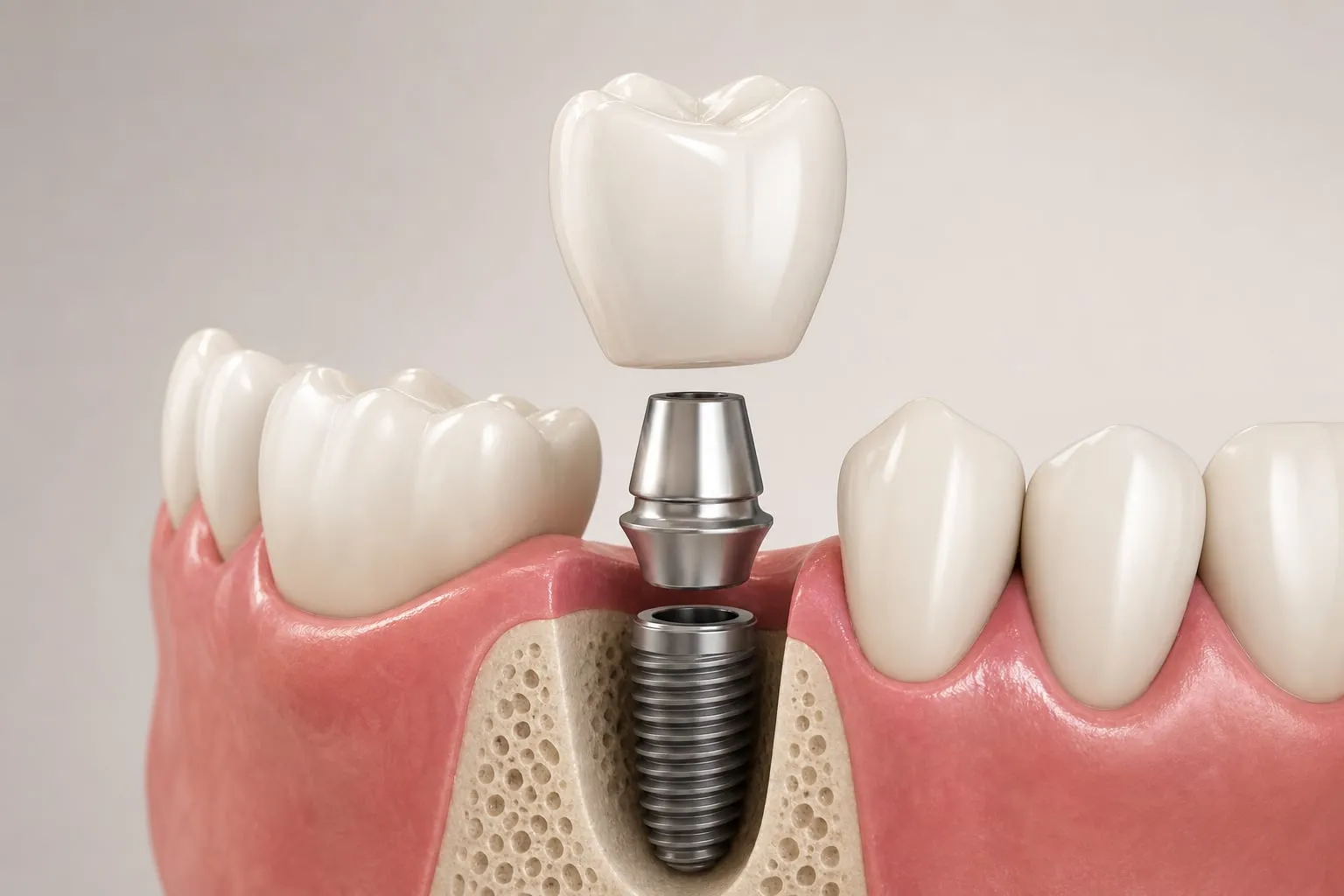
It comes down to anatomy. In the lower jaw, a nerve runs through a canal inside the bone, below the roots of the back teeth. It gives feeling to the lower lip, the chin, and the teeth and gums on that side. Near the premolars, a branch of it exits the bone through a small opening to supply the lip and chin. Another nerve runs along the tongue side of the lower jaw and gives feeling to the tongue.
If one of these nerves is irritated during or after surgery, from pressure, swelling, or being close to the implant, sensation can change. Dentists sometimes call this paresthesia, meaning altered sensation: numbness, tingling, burning, or feeling that’s only partly there.
Changes that outlast the anesthetic are not the usual experience, but they are the reason careful planning matters, and the reason early reporting matters if it does happen.
How does 3D imaging help protect nerves?
A CBCT scan (cone beam computed tomography) is a 3D X-ray of your jaw. Unlike a flat dental X-ray, it shows the nerve canal’s path in three dimensions and lets the bone above it be measured.
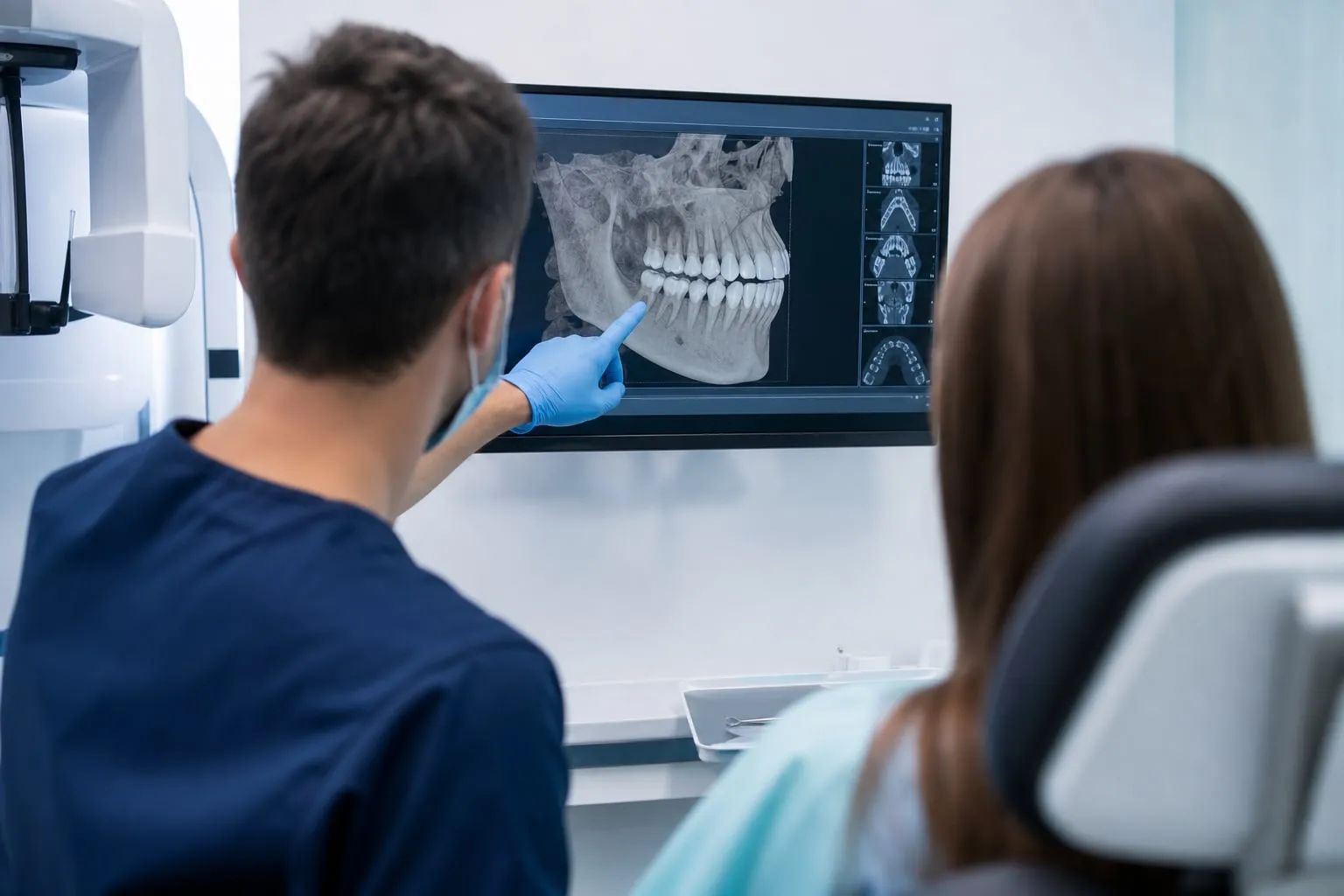
With those measurements, the implant’s length, angle, and position can be planned with a margin of space between the implant and the nerve, rather than estimated. Our practice uses 3D CBCT imaging for implant planning. You can read more about 3D imaging and implant planning, or see what a CBCT scan is and why implants need one.
Good planning lowers the risk of a nerve problem. It can’t remove every risk, which is why knowing the warning signs still matters.
What happens if sensation doesn’t return as expected?
Call your dental office promptly. Don’t wait for your next scheduled visit. Early evaluation generally gives your dentist more options. What happens next depends on what they find, but it typically involves:
- Questions about when the numbness started, exactly where it is, and what it feels like
- An exam, which may include gently testing which areas have normal feeling and which don’t, so changes can be tracked
- Imaging, such as an X-ray or a CBCT scan, to check where the implant sits in relation to the nerve
- A plan, which may mean monitoring with follow-up visits, a change to the treatment plan, or in some cases adjusting or removing the implant or referring you for further evaluation
- Follow-up visits to see whether sensation is changing over time
Sensation that has changed can come back gradually, so tracking it over time is part of the process. Your dentist will explain what they’re seeing and what to watch for.
Numbness that spreads beyond the mouth and jaw, or comes with facial drooping, weakness, confusion, or trouble speaking, is not a dental issue. Seek emergency medical care right away.
What can you do before surgery?
A few things make it easier to plan around your anatomy and spot a problem early:
- Mention past anesthetic trouble, including numbness that lasted unusually long after earlier dental work, or anesthetic that didn’t work well for you
- Ask to see your scan, and how close the planned implant sits to the nerve
- Ask how long numbness should last for your specific procedure, so you know when to call
- Save the office phone number where you can find it easily
Our checklist on how to prepare for dental implant surgery covers the rest, and the recovery and aftercare guide explains what to expect in the days afterward.
The bottom line
Numbness for a few hours after implant surgery is expected, and the main job while it lasts is to avoid biting your lip or burning your mouth. Numbness, tingling, or altered sensation that lasts after the anesthetic should have worn off isn’t expected, and it’s worth a prompt call rather than a wait. 3D CBCT imaging before surgery helps the implant be planned around the nerves in your jaw. If you’d like to see how your own anatomy would shape an implant plan, request a free consultation or call (949) 773-4170.
This article is general education, not medical advice or a diagnosis. Individual experiences vary. Follow the specific instructions your dental team gives you, and contact your dental office about any change in sensation.