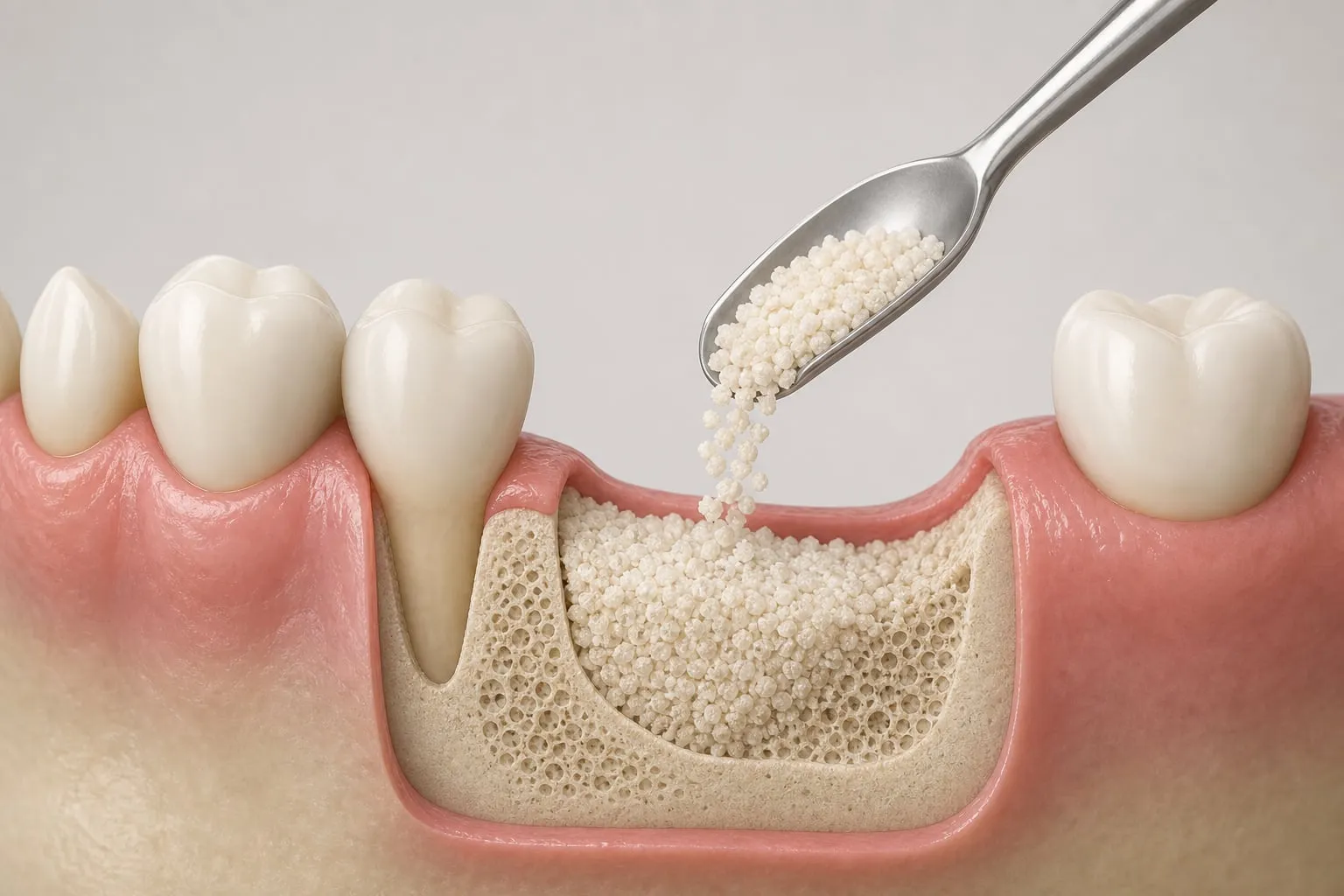
A sinus lift, also called sinus augmentation, is a procedure that adds bone to the upper jaw above the back teeth so there is enough height to hold a dental implant. The thin membrane lining the floor of the sinus is gently raised, and bone graft material is placed in the space beneath it. It’s only needed when a 3D scan shows too little bone under the sinus, and plenty of upper back implants don’t need one.
If you’ve been told you “might need a sinus lift,” the name alone can sound alarming. It’s a well-established step in implant treatment, and understanding what it does, and doesn’t do, usually makes it far less intimidating.
Why do upper back teeth sometimes lack bone?
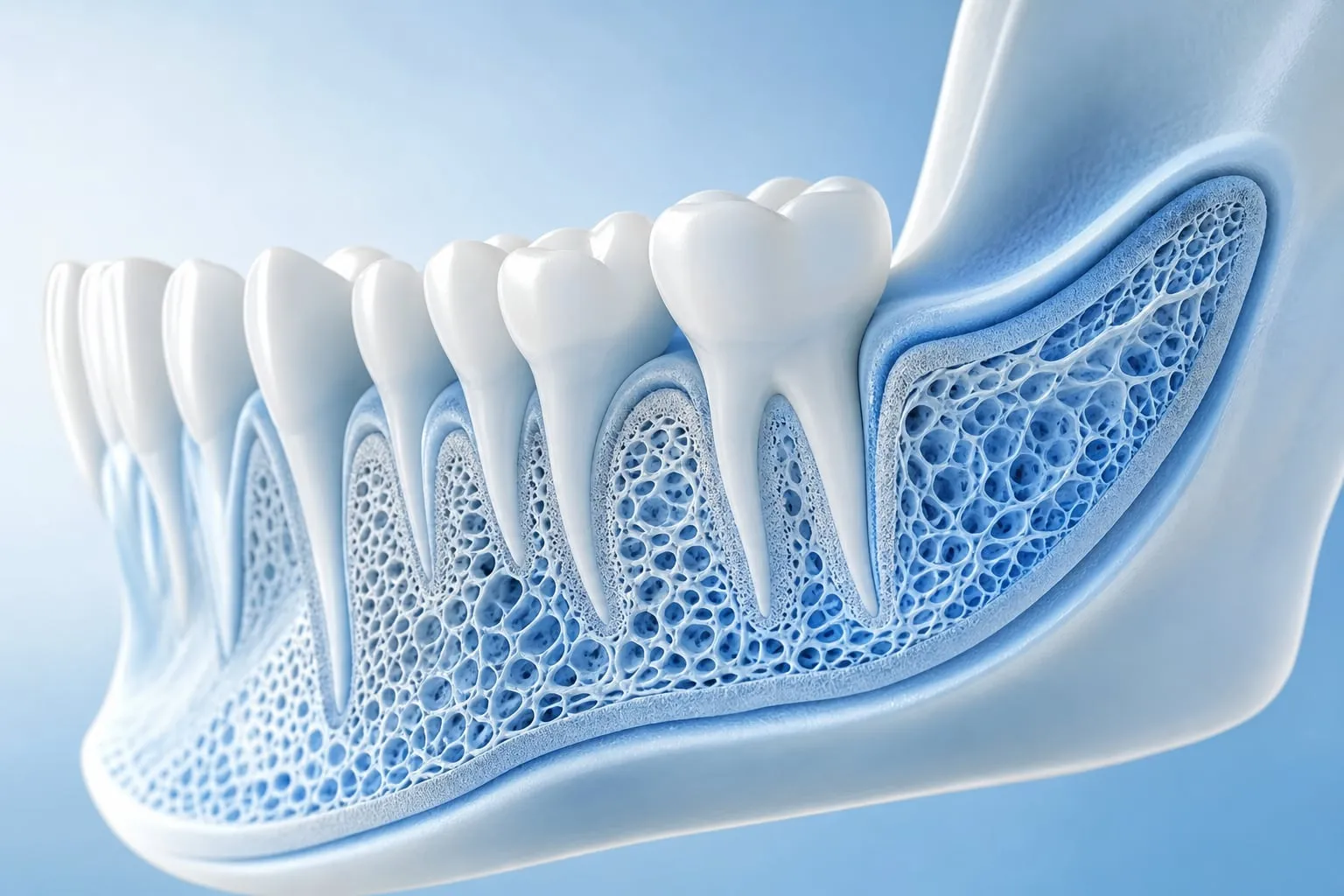
Your maxillary sinuses are air-filled spaces in the upper jaw, behind your cheekbones. Their floor sits just above the roots of your upper premolars and molars, sometimes with only a thin layer of bone in between.
An implant needs enough bone height to anchor in. In the upper back jaw, that height can be limited for a few reasons:
- Bone shrinks after a tooth is lost. Tooth roots stimulate the bone around them. Once a tooth is gone, the bone gradually resorbs, meaning the body breaks it down and reabsorbs it.
- The sinus can expand downward. After back teeth are lost, the sinus often enlarges into space the bone used to occupy. Bone loss from below plus sinus expansion from above can leave a thin floor.
- Gum disease or infection around the original tooth may have already reduced the bone.
- Natural anatomy. Some people simply have a larger sinus or a lower sinus floor.
Bone in the upper back jaw also tends to be softer than in the lower jaw, which is one more reason this area gets careful planning. Our guide to dental implants for missing back teeth covers the other things that make molar sites different.
What does a sinus lift actually do?
The inside of the sinus is lined with a thin, delicate membrane. In a sinus lift, that membrane is gently lifted away from the sinus floor, and bone graft material is placed in the space created underneath it. The aim is to keep the lining intact while building up the floor.
Over the following months, the body gradually integrates the graft into its own bone. The result is a thicker layer of bone above the back teeth, with enough height for an implant to anchor in.
A few things it is not:
- It doesn’t remove or seal off your sinus. The sinus stays where it is, with more bone beneath it.
- It isn’t a different kind of implant. It’s a way of preparing the site, much like other forms of bone grafting before dental implants.
- It isn’t automatic for every upper back tooth. It’s recommended only when measurements show it’s needed.
You may also see it called sinus augmentation or a sinus graft. The sinus lift entry in our implant glossary links the related terms.
How does a 3D scan show whether you need one?
A standard dental X-ray flattens the jaw into a single image, so the sinus floor shows up only as an approximate, overlapping shadow. A CBCT scan (cone beam computed tomography, a type of 3D X-ray) records the jaw as a volume that can be measured from any angle.

For an upper back implant site, the scan shows:
- Bone height between the top of the gum ridge and the sinus floor
- Bone width, which a flat X-ray can’t show at all
- Bone density, which affects how the site is prepared
- The shape of the sinus floor, which is rarely flat
- The condition of the sinus itself, which may be worth discussing before any treatment
Those measurements decide the plan: whether an implant fits in the bone you already have, whether a different position or angle could make better use of it, or whether a sinus lift should come first. Our page on 3D imaging and implant planning explains how the scan becomes a plan.
What are the different approaches?
Without getting into surgical detail, dentists generally describe two broad approaches:
| Lateral window approach | Crestal (internal) approach | |
|---|---|---|
| How the area is reached | Through a small opening in the side wall of the upper jaw, on the cheek side | From below, through the ridge where the implant will go |
| Typically considered when | More height needs to be added | A smaller amount of height needs to be added |
| Implant placement | Same visit or after healing, depending on the bone that remains | Often in the same visit, if the implant can be held steady |
Which approach fits depends on how much bone you have, how much is needed, the shape of your sinus, and your dentist’s clinical judgment. Your provider should explain the reasoning behind your specific plan.
Is the implant placed at the same time?
It depends on how much bone is already there.
- In the same procedure. If there’s enough existing bone to hold the implant steady, the lift and the implant may be done together.
- In two stages. If the bone is very thin, the graft is usually allowed to heal first, often for several months, and the implant is placed at a later visit.
Either way, the crown doesn’t go on right away. The implant first needs to bond with the bone, a process called osseointegration. We don’t offer same-day teeth or immediate loading; the final crown is placed once integration has been confirmed. A sinus lift does lengthen the overall timeline, and your written plan will show what that looks like for you.
What is recovery like?
Bone grafting, including a sinus lift, is typically performed with local anesthesia, and sedation options are available where appropriate. Afterward, some soreness and swelling for a few days is normal, and some people notice mild stuffiness on the treated side early on. These generally ease as healing progresses, though everyone heals differently.
Because the graft sits right below the sinus, aftercare instructions commonly include sinus precautions while the area heals, such as:
- Avoiding forceful nose-blowing
- Sneezing with your mouth open rather than holding a sneeze in
- Skipping straws and other suction
- Holding off on strenuous exercise and heavy lifting
- Asking before you fly, since cabin pressure changes affect the sinuses (see dental implants and an active lifestyle)
Treat this list as general background, not as your instructions. Your dental team will give you written aftercare for your procedure, and those are the ones to follow. Call the office if pain or swelling gets worse after the first few days instead of easing, bleeding won’t settle with gentle pressure, or you develop a fever, discharge, or sinus symptoms that keep getting worse.
How much does a sinus lift cost?
At our Mission Viejo office, a single implant starts at $1,995, which covers your consultation, implant surgery, and crown. A sinus lift, like extractions and other bone grafting, is quoted separately.
Pricing may vary based on individual needs. Contact the office for a personalized estimate.
You receive a written treatment plan with pricing before any work begins, so if a sinus lift is part of your plan, you’ll know about it, and what it costs, ahead of time. We accept most dental insurance and can help you understand your benefits, and third-party financing options are available, with terms set by the lender. This is general information, not insurance advice; your insurer decides what is covered.
The bottom line
A sinus lift adds bone beneath the sinus so an implant can be placed in the upper back jaw when there isn’t enough height on its own. Whether you need one is a measurement question, answered by a 3D scan rather than a guess, and many people don’t. Our page on bone grafting and sinus lift explains how grafting fits into treatment. To find out what your own scan shows, request a free consultation or call (949) 773-4170.
This article is general education, not a diagnosis or a substitute for professional dental advice. A sinus lift is a surgical procedure with risks that should be discussed with your provider. Individual results vary, and only a personalized evaluation can determine what may be appropriate for you.