
Elective dental implant surgery, and the 3D scan used to plan it, are commonly postponed until after pregnancy. Waiting a few months rarely changes what’s possible for a missing tooth. In the meantime, routine dental care is generally considered an important part of a healthy pregnancy, and your dentist and your OB should decide together what happens now and what waits.
If you’re pregnant, or hoping to be, and you also have a missing or failing tooth, it’s natural to wonder whether to act now or hold off. Here’s how the timing usually works.
Why is implant treatment usually postponed during pregnancy?
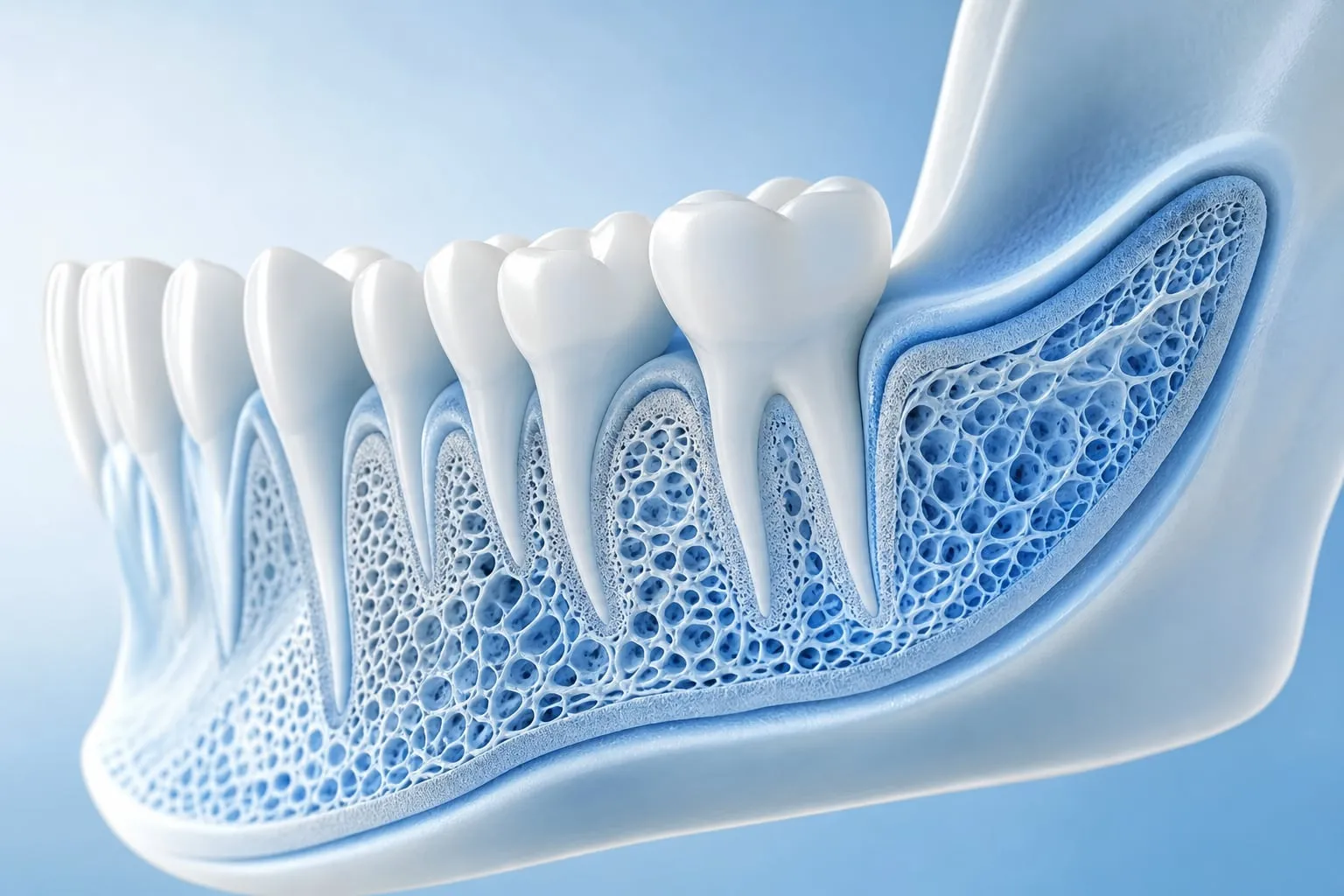
A dental implant is a small post, usually titanium, placed in the jawbone to replace a tooth root. Getting one involves several steps that are easy to schedule around a pregnancy:
- It’s elective. A missing tooth is rarely an emergency. Unlike pain or infection, it can usually wait.
- It involves surgery, along with local anesthesia, sometimes sedation, and often medication afterward. Each of those is its own conversation during pregnancy.
- Planning relies on imaging. The 3D scan used to plan an implant uses X-rays (more on that below).
- It’s a long process anyway. After placement, the bone needs time to bond with the implant, a process called osseointegration, before the crown goes on. Starting a few months later rarely makes a meaningful difference to the end result.
There’s a comfort side, too. Long appointments, lying back in a dental chair, and recovering from surgery can all be harder late in pregnancy or with a newborn at home.
What about the 3D scan?
Implant planning normally relies on a CBCT scan (cone beam computed tomography), a 3D X-ray that measures bone height and width and shows where the nerve and sinus sit. Our page on 3D imaging and implant planning explains why the scan matters.
A CBCT scan involves more radiation than a single dental X-ray, though generally well below a medical CT. It’s taken when it will genuinely change the plan, not routinely. That’s why we ask patients to tell us if you are pregnant or think you might be, and we’ll talk through timing. Since the purpose of an implant-planning scan is to prepare for surgery, it usually makes sense to take it closer to when treatment can actually begin. For more on what the scan shows, see what is a CBCT scan?
Imaging for an urgent problem, such as a suspected infection, is a different question. That’s a decision for your dentist and OB together.
What dental care is still recommended during pregnancy?
Postponing an implant doesn’t mean postponing dental care. Routine care is generally considered important during pregnancy, for a few reasons:
- Gums often change. Hormonal shifts can make gums more prone to inflammation and bleeding. Gingivitis, meaning inflammation of the gums, is common in pregnancy, and regular cleanings help keep it in check.
- Problems are easier to manage early. A small issue found at a checkup is simpler to deal with than an infection that flares up later.
- Pain and infection shouldn’t simply be endured. If you have a toothache, swelling, or a broken tooth, call your dentist. How and when it’s treated is something your dentist and OB can decide together.
Tell every dental office you visit that you’re pregnant, and share any guidance from your OB.
| During pregnancy | Notes | |
|---|---|---|
| Cleanings and checkups | Generally encouraged | Let the office know you’re pregnant |
| Pain, swelling, or infection | Usually not put off | Treatment coordinated with your OB |
| A planning conversation | Can happen any time | Options, timeline, and questions |
| 3D CBCT scan for implant planning | Commonly postponed | Usually taken closer to treatment |
| Implant surgery or bone grafting | Commonly postponed | Elective, so it can usually wait |
| Temporary tooth replacement | Sometimes possible | Ask whether any step should wait |
Can you start planning while pregnant?
Yes, and it can make the “after” part easier. A conversation doesn’t involve imaging or surgery. You can talk about your goals, learn the general options for your situation, and think about timing and budget.
What a conversation can’t do without imaging is produce a final plan. The written treatment plan and pricing come after the scan, once the bone has actually been measured. For reference, single implants at our office start at $1,995, covering consultation, implant surgery, and crown, with extractions, bone grafting, and sinus lifts quoted separately. Pricing may vary based on individual needs.
What if you’re breastfeeding?
Breastfeeding raises its own questions, mostly about medication. Local anesthetic, pain relief, antibiotics if they’re prescribed, and any sedation all deserve a specific conversation. Medications and sedation choices should be discussed with your dentist and your physician before treatment is scheduled, so don’t assume either way.
Our page on comfort and sedation options explains how sedation decisions are made based on your medical history and medications.
There are practical questions as well: how appointments fit around feeding, who can help at home for the first day or two, and whether you’ll get the rest that healing benefits from. None of these is a reason to rule implants out. They’re simply things to plan around.
What can you do about a missing tooth in the meantime?
If the gap is visible or bothers you, a temporary option may help bridge the time. Depending on your situation, a dentist may discuss:
- A removable temporary tooth, such as a small partial denture
- A clear, retainer-style appliance with a replacement tooth built in
- Leaving a back gap for now, if it isn’t affecting your bite or comfort
Some temporary options involve impressions, scans, or minor adjustments, so ask whether any step should wait until after pregnancy. Our guide to flipper teeth and other temporary options compares them in more detail.
Waiting a few months is rarely a problem for a missing tooth. Over longer periods, though, the bone can shrink and neighboring teeth can drift, which is why it helps to have a plan rather than leave the gap indefinitely. Our article on what happens if you don’t replace a missing tooth explains what changes over time.
When can you get implants after pregnancy?
There’s no single answer. It depends on your recovery, whether you’re breastfeeding, any guidance from your physician, and, frankly, when life with a new baby allows for a few appointments. Some people start sooner and others wait until things settle, and either is reasonable. Because the implant process unfolds over months, what matters most is that the timing works for you.
The bottom line
Implant surgery and the 3D imaging that plans it are commonly postponed until after pregnancy, and a missing tooth can usually wait that long. Keep up with routine dental care, tell your dental team you’re pregnant, and let your dentist and OB decide together on anything beyond that. When you’re ready to plan, request a free consultation or call (949) 773-4170.
This article is general education, not medical advice. Pregnancy and breastfeeding involve individual considerations, so discuss any dental treatment, imaging, or medication with your dentist and your OB or physician. Only a personalized evaluation can determine what may be right for you.